THE POOL NATIVE LIBRARY

Safety & accessibility.

Find resources on barriers, access and safer ownership.

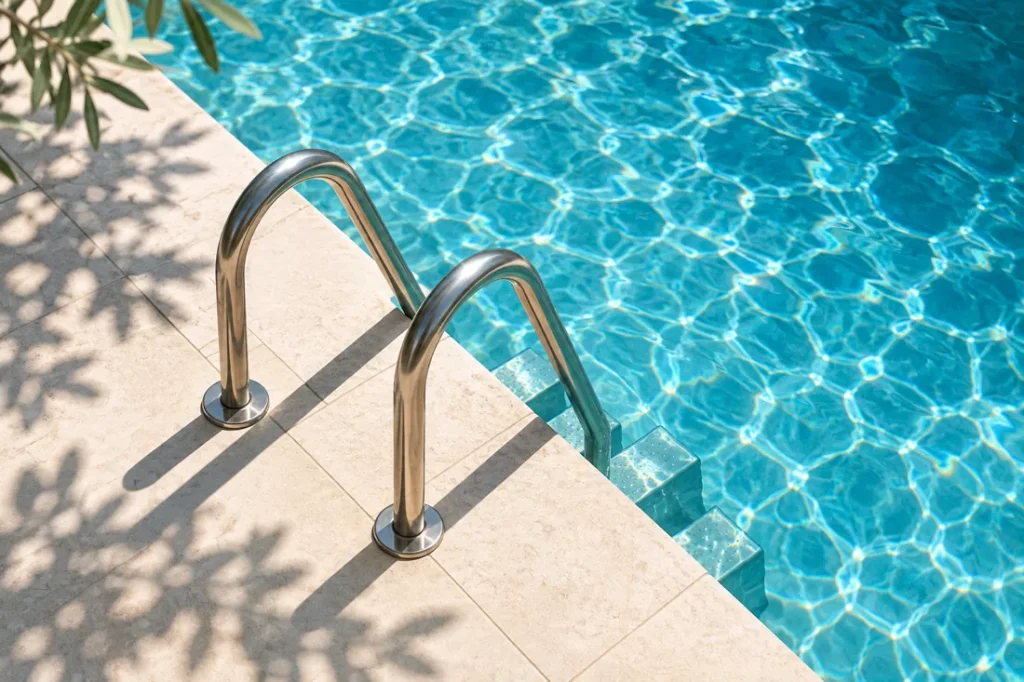
Stainless steel pool ladder beside sunlit water

From the library

4 guides to explore

Protect access and use. Secure barriers; Active supervision; Suitable entry and exit.

Residential Pool Safety and Accessibility

Home pool safety depends on several protections working together: controlled access, attentive supervision, sound equipment, safe water, and a practiced emergency response. No single cover, alarm, or swimming lesson replaces the others. Check the arrangements both during swimming and after everyone leaves.

Read the guide →
Store chemicals separately. Original containers; Dry approved location; Keep incompatibles apart.

Pool Chemical Storage at Home

Pool chemical storage should keep each product secure, dry, correctly labeled, and separated from incompatible materials. Choose the space around the products’ labels and safety data sheets. A lockable box alone does not establish that the contents will remain safely cool or ventilated.

Read the guide →
Prevent concentrated contact. Separate chemicals; Dedicated tools; Follow every label.

Pool Chemicals That Must Not Be Mixed

Never mix concentrated pool chemicals together. That includes chlorine with acid, different chlorine products, and old material with a fresh container. Products that can be used separately in a pool are not necessarily safe to combine in a bucket, scoop, or feeder.

Read the guide →
Respond to the incident. Close the pool; Identify contamination; Follow CDC procedure.

Poop in a Home Pool: Safe Incident Response

If there is poop in your home pool, get everyone out and keep the pool closed. Remove the material without vacuuming, then follow the CDC’s backyard pool disinfection instructions. A scoop of shock and a clear appearance do not establish that the response is complete.

Read the guide →

LESS GUESSWORK. MORE POOL TIME.

Let’s do the numbers.