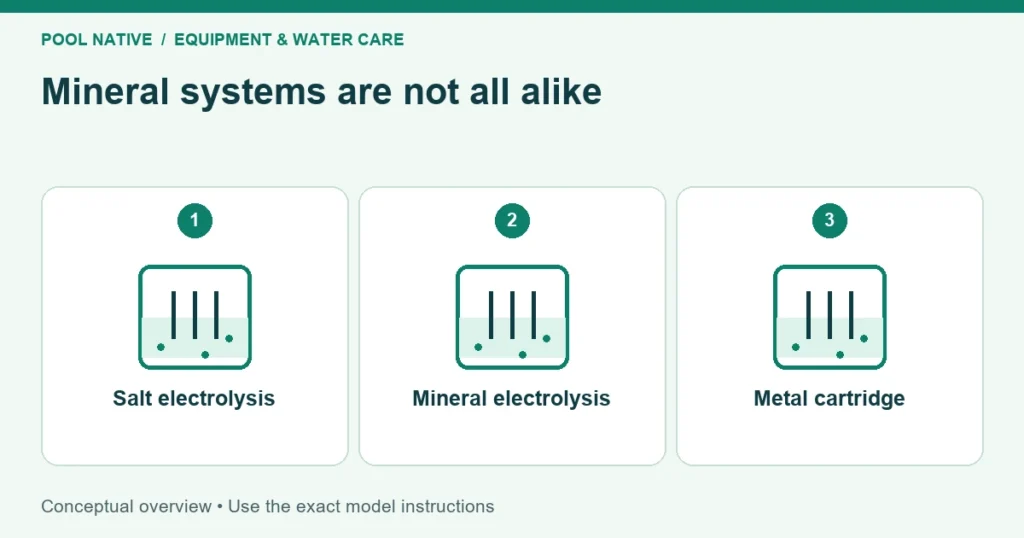
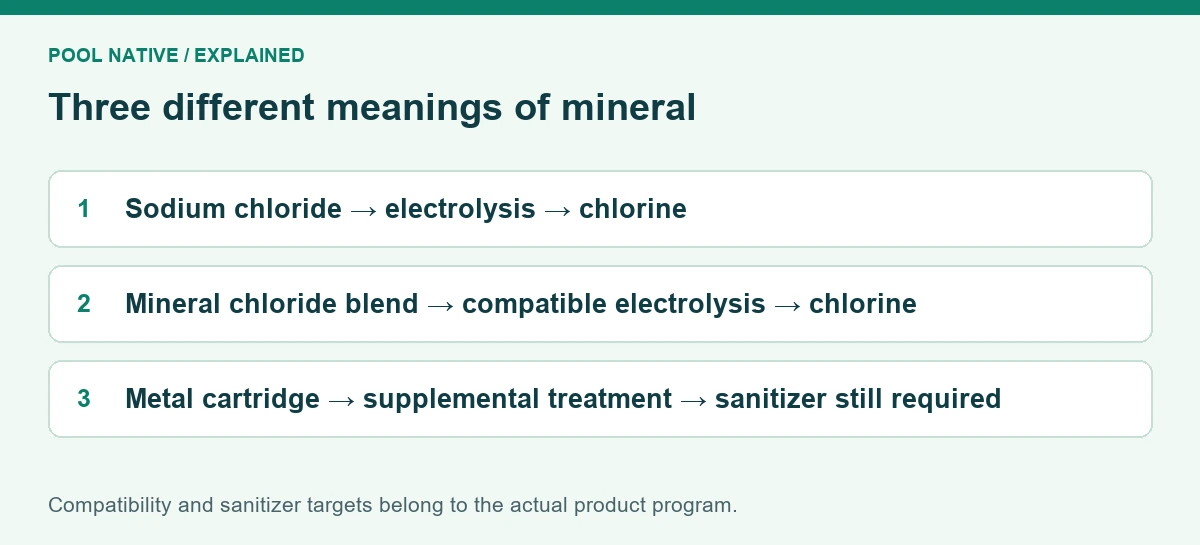
A mineral pool and a saltwater pool are not always different sanitation systems. Some mineral pools generate chlorine from dissolved chloride salts, while others use a metal based cartridge alongside chlorine. Identify the actual equipment and ingredients before comparing comfort, maintenance, or cost.
The word mineral is too broad to tell you what keeps the water sanitized. Ask which product supplies the disinfectant, what residual must remain in the pool, and how it is tested. Those answers are more useful than the label on the brochure.
Three systems commonly described this way
| Description | What it commonly means | What to confirm |
|---|---|---|
| Conventional saltwater pool | A cell generates chlorine using dissolved sodium chloride | Approved salt level, cell output, and water balance |
| Magnesium mineral pool | A specified mineral blend used with compatible equipment, often chlorine generating | Exact blend and approved generator or complete system |
| Mineral cartridge pool | Metal based mineral treatment used with the required sanitizer program | Cartridge identity, chlorine requirements, and replacement schedule |
These categories can overlap. A pool may use a salt chlorine generator and an approved mineral cartridge. That does not mean every cartridge, salt blend, and controller can be combined safely or effectively.
This distinction is particularly useful when comparing Australian or New Zealand magnesium systems with American mineral cartridge products. They may share a marketing word while using different chemistry. Compare the named products rather than assuming a regional term defines one universal system.
What a conventional salt system does
A salt chlorine generator produces chlorine through electrolysis while suitable water flows through its cell. The pool still contains chlorine and needs testing. Adding salt alone does not replace a working generator or establish a sanitizer residual.
The equipment has an approved salinity range and operating conditions. Cell output, runtime, water temperature, and chlorine demand affect the result. You still need to maintain the pool’s water balance and inspect the cell as instructed.
If your goal is to reduce the frequency of manually adding chlorine, a salt system addresses that delivery task. It does not make the pool chemical free or eliminate adjustments. The saltwater conversion planning guide explains what to check before installation.
What magnesium mineral systems change
Some products add magnesium chloride to a compatible saltwater program. Other systems require their own blend, generator, and filtration arrangement. Do not pour a mineral product into an existing pool until its compatibility is confirmed in writing.
Zodiac’s MagnaPool Minerals are a specific example containing magnesium chloride and potassium chloride. The Hydroxinator is the associated mineral chlorinator using electrolysis. This is different from assuming magnesium itself replaces disinfection.
Chemically, magnesium chloride and potassium chloride are salts too. A claim about avoiding sodium chloride does not mean there are no dissolved salts. Keep that distinction separate from the brand’s wording about a no salt or sodium free experience.
Do not substitute Epsom salt or an unidentified magnesium blend because the name sounds similar. Ingredients, concentrations, and equipment approval matter. The controller’s readings and dosing instructions must suit the intended water composition.
What a mineral cartridge adds
Nature2 describes its pool mineral technology as silver and copper used with chlorine. That is a different approach from a magnesium chloride blend. Cartridge replacement and the complete product directions form part of the maintenance program.
Do not copy a low chlorine number from a different mineral product or a spa program. Follow the exact pool product directions and applicable requirements, with advice for any conflicting guidance. The presence of a cartridge is not permission to stop measuring sanitizer.
Ask whether other metal containing products, such as an algaecide, are compatible. More minerals are not automatically better. A product already releasing metals changes the compatibility questions for additional treatments.
Compare comfort claims carefully
Water feel can influence a purchase, but it does not establish how well a system disinfects. Marketing descriptions about skin, hair, or relaxation are not a diagnosis or a treatment guarantee. A clear pool can still have an inadequate sanitizer residual.
If swimmers experience irritation, check the water and maintenance conditions rather than assuming the word chlorine identifies the cause. pH, disinfectant management, and other factors need assessment. Persistent symptoms deserve appropriate medical advice rather than another unverified pool additive.
A trial swim may tell you which water feel you prefer. It cannot prove that a system will prevent irritation for every person. Keep personal preference separate from the measurable requirements for operation.
Testing remains part of both choices
Confirm which tests the system requires and whether your existing kit measures them. A conventional salt reading does not necessarily quantify a mixed mineral blend correctly. Use the manufacturer’s specified method before adding more product to correct a controller display.
Continue testing free chlorine and pH in a chlorine based program. CDC’s general home pool guidance calls for at least 2 ppm chlorine when cyanuric acid is used. That is a baseline, not a complete operating target for every stabilizer level or system.
Record the manufacturer targets, the test method, and the adjustment product together. This avoids combining a mineral system’s salinity reading with another generator’s salt chart. The salt testing comparison explains why different readings need interpretation.
Compare the complete cost and routine
Request a quote for the equipment, installation, approved starting product, and necessary filtration or plumbing changes. Then price recurring minerals or salt, cartridges, cell replacement, testing, and service. Compare the same pool and cleaning schedule.
Do not assume a mineral system costs less because it uses fewer of one chemical. It may introduce a different consumable or a more specific supply requirement. Likewise, a higher initial cost does not establish lower maintenance over time.
Ask who supplies compatible parts locally and what happens if a product becomes unavailable. Confirm the written warranty and approved chemistry. A cheap substitute can undermine the comparison if the equipment manufacturer does not support it.
Questions to answer before converting
- What exact device or chemical supplies the sanitizer, and what must be measured in the pool?
- Which mineral blend or cartridge is approved, and are existing additives compatible?
- What equipment, testing, and recurring replacement work changes after installation?
If the current pool uses biguanide, treat the change as a sanitizer conversion rather than a simple mineral addition. Follow the biguanide to chlorine conversion guide before introducing chlorine generating equipment. Incompatible chemistry needs a planned transition.
Choose the system whose complete routine fits your pool and maintenance preferences. For automated chlorine delivery, compare compatible generators and service support. For a particular mineral water feel or cartridge program, verify what is added, what remains required, and what the change actually costs.


