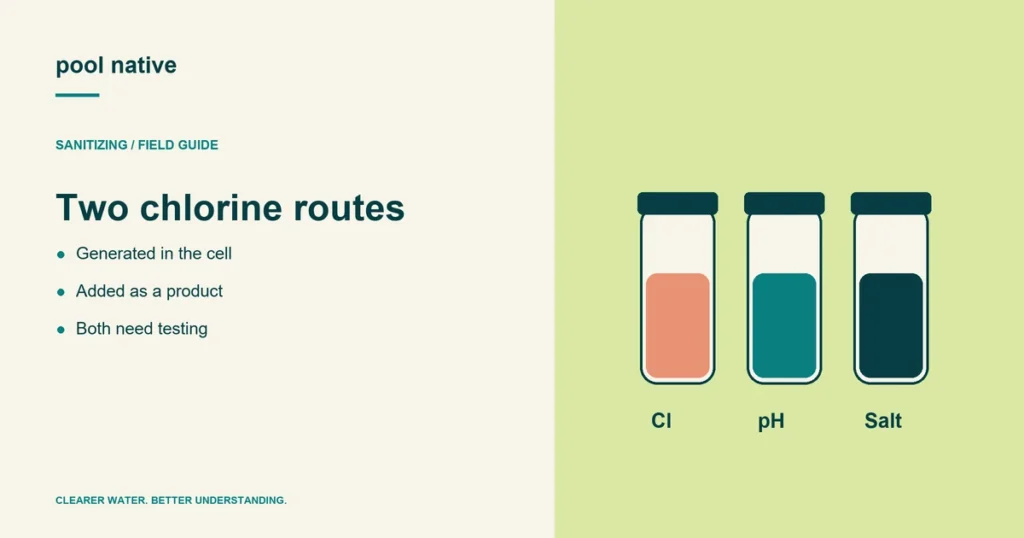
The salt water pool vs chlorine pool decision is mainly about chlorine delivery. A salt system makes chlorine with an electrolytic cell; a conventional system adds a chlorine product manually or through a feeder. Both need testing, balanced water, filtration, and cleaning.
Choose by equipment fit, costs, and the routine you can maintain. Don’t pay for a conversion expecting a chlorine free pool. Don’t dismiss conventional dosing if an existing routine already works reliably.
Salt water pool vs chlorine pool: practical differences
| Decision | Salt generation | Conventional chlorine |
|---|---|---|
| Routine delivery | Cell production during suitable operating periods | Measured additions or a compatible feeder |
| Equipment commitment | Cell, controls, installation, and service | Manual tools or the selected feeding equipment |
| Recurring care | Tests, output checks, salinity, and cell inspection | Tests, product supply, storage, and feeder checks if used |
| Capacity limit | Output and available generating time | Product supply and safe delivery capacity |
| Compatibility | Required salinity plus system and material approval | Product chemistry plus equipment and material approval |
Which reduces your actual work?
Salt can reduce carrying and adding routine chlorine products. It replaces some of that work with checking equipment and maintaining the cell. A conventional automatic dosing arrangement can also reduce manual additions.
Write down the task you most want to remove. If it is repeated product handling, generation may help. If it is brushing, vacuuming, or learning water tests, conversion won’t remove that task.
Review salt maintenance before deciding the routine is easier for you. Equipment alarms and independent readings need attention even when the water looks clear.
Compare costs over the same ownership period
Use itemized quotes and your local product prices. For salt, include installation, electricity, cell replacement, salt additions, and service. For conventional treatment, include chlorine, any feeder, its maintenance, and delivery costs.
Keep common costs separate: both pools need water testing, circulation, cleaning, and other balance adjustments. Don’t count all current chemical spending as a salt system saving. A conversion doesn’t eliminate every chemical.
Make a second estimate with an earlier cell replacement or a repair. That shows whether the decision depends on an optimistic service life. No universal payback period fits every climate, tariff, and pool.
Compare two five year budgets
The following figures are hypothetical and show the method, not local prices. Replace every assumption with your quotes and records.
| Cost over five years | Salt generation | Existing conventional dosing |
|---|---|---|
| Initial installation or feeder work | $1,800 | $0 |
| Delivery related annual costs | $150 × 5 = $750 | $450 × 5 = $2,250 |
| Assumed cell replacement during period | $700 | Not applicable |
| Total in this example | $3,250 | $2,250 |
The assumed salt annual figure must include its extra electricity, salt, and relevant routine service. The conventional figure must include chlorine supply and delivery equipment care. Common testing, cleaning, and ordinary circulation costs are excluded from both columns.
If no cell replacement occurs during the period, the salt total falls to $2,550. If another $700 replacement becomes necessary, it rises to $3,950. This example favors conventional dosing on cost, while another pool’s prices and use could change the result.
Keep convenience as a separate reason for choosing salt. You can value reduced chemical handling without claiming a saving the calculation does not show. Ask about parts coverage and labor before assigning the replacement allowance.
Check fit before comparing comfort claims
Confirm the finish, heater, nearby materials, and other equipment can operate with the intended salinity. Include manufacturer startup restrictions for new surfaces. Get any required changes into the installation quote.
Comfort claims shouldn’t replace measured water quality. Either pool can be poorly maintained. If discomfort is the concern, investigate water readings and the existing treatment routine before assuming a conversion will solve it.
Where each option makes sense
Salt is worth considering when compatible equipment and dependable local service support a routine you prefer. Choose adequate generator capacity, not simply the smallest unit labeled for the pool volume. Leave room for real operating conditions.
Conventional dosing can suit owners who want lower equipment commitment or already have reliable automation. Compare the actual chlorine products rather than treating them as identical. Keep the correct product in each feeder.
Before choosing, request a complete salt system specification and a comparable conventional plan. Include the failure backup and seasonal routine. Select the option whose ongoing responsibilities you can realistically meet.


