Pool algae problems are best approached by combining appearance, location, brushing behavior, sanitizer readings, and recurrence. Color alone is not enough. Pollen, metals, sand, and other deposits can resemble growth and need different responses.
Keep swimmers out when visibility or sanitation is inadequate. Use a valid water test and inspect from a safe position. Don’t enter cloudy water to investigate a suspected patch.
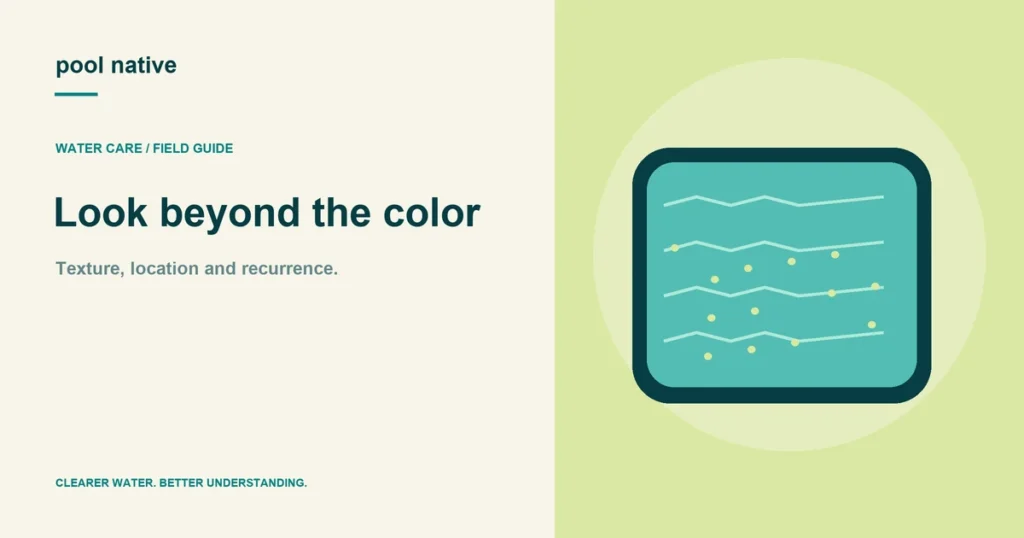
Use the appearance to choose questions
| Observation | Questions to investigate |
|---|---|
| Green cloudy water or slippery growth | Is sanitizer inadequate, and is material attached to surfaces? |
| Yellow dusty deposits | Could this be pollen, sediment, or recurring attached growth? |
| Dark persistent spots | Is this biological growth, staining, or a finish defect? |
| Green tint immediately after oxidation | Are metals or incompatible chemicals involved? |
These categories help organize diagnosis, not identify an organism with certainty. The label black algae often refers to cyanobacterial growth in pool discussions. Pink slime and white water mold are also different problems despite sometimes being grouped with algae.
Check the conditions that support the diagnosis
Measure free chlorine, pH, and CYA where relevant. Review missed dosing, poor circulation, inaccessible dirty areas, and recent heavy debris. A normal reading immediately after a large addition doesn’t show that the previous days were adequately managed.
Inspect steps, seams, corners, and shaded areas using a brush approved for the finish. Note whether material detaches, smears, or returns to the same area. Don’t use a metal brush simply because the deposit looks stubborn.
For yellow deposits, use mustard algae versus pollen. For immediate post treatment tint, use green water after shock. Sand near returns may require a filter investigation rather than an algaecide.
Match treatment to the confirmed problem
Use an appropriate labeled sanitizer or algaecide treatment and follow the pool surface restrictions. Physical brushing and removal can be important alongside chemistry. The filtration system must also be capable of removing suspended material.
An enzyme, phosphate product, clarifier, or metal treatment is not automatically an algae killing product. Check its actual registered claims and purpose. Don’t infer sanitation from marketing language about cleaner water.
Avoid mixing several products because the first treatment didn’t clear the pool immediately. Record what was added and allow its instructed process to work. The shock treatment guide explains why different formulations require different handling.
Reduce recurrence by fixing the route back in
Clean compatible tools, toys, and accessories as the treatment instructions require. Inspect overlooked surfaces and circulation patterns. Keep the sanitizer supply adequate through normal use rather than relying on occasional corrective doses.
If a patch returns despite correct treatment, reconsider the identification and access problem. A stain cannot be killed, and a dirty inaccessible area can undermine otherwise careful work. Seek qualified help when the diagnosis or finish compatibility is uncertain.
Return to routine water care once sanitation, clarity, and treatment completion conditions are satisfied. Keep the event in the record so a future recurrence starts with evidence rather than another guess.