THE POOL NATIVE LIBRARY

Water care.

Understand test results, balance and water problems.

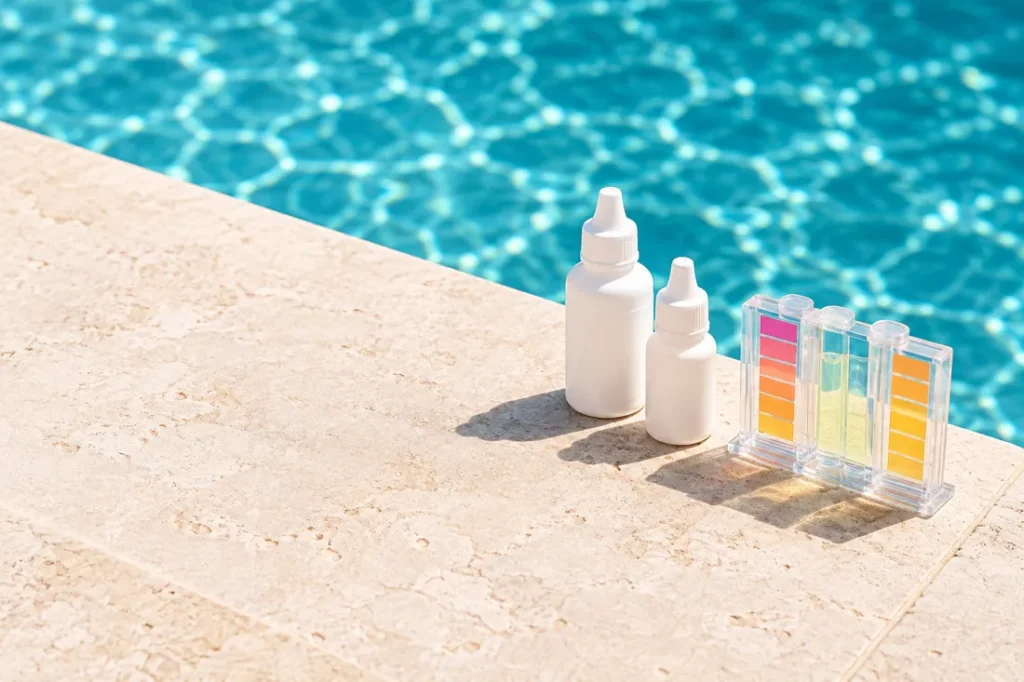
Water testing kit on limestone beside a swimming pool

From the library

73 guides to explore

Read the bleach label. Strength and additives; Approved pool use; Measured correction.

Can Household Bleach Be Used in a Pool?

Some household bleach formulations can supply chlorine to a maintained swimming pool. That does not make every bottle suitable. Check the manufacturer’s pool use instructions, ingredients, and actual strength before treating bleach as a substitute for liquid pool chlorine.
Read the guide →
Does removal help?. Verify phosphate test; Review sanitation; Include filter cleanup.

Do You Need Phosphate Remover for Your Pool?

A high phosphate reading alone does not establish that your pool needs phosphate remover. Check the result against the pool’s sanitation, algae history, and ongoing sources of contamination. Removal is an additional maintenance choice, not a replacement for disinfecting the water.

Read the guide →
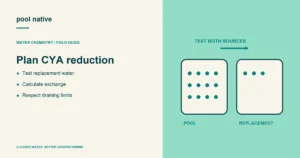
Plan CYA reduction. Test replacement water; Calculate exchange; Respect draining limits.

How to Lower Cyanuric Acid in a Pool

Lowering cyanuric acid usually involves replacing some pool water with water containing less CYA. Confirm the starting reading before calculating that exchange. A test that stops at 100 ppm may be reporting its limit, not your pool’s actual concentration.

Read the guide →
Yellow dust returns?. Confirm identification; Review sanitation; Clean missed locations.

Mustard Algae Keeps Returning

If suspected mustard algae keeps returning, check the diagnosis and the whole cleanup before increasing the next dose. Yellow dust can also be pollen, dirt, or material returning through the filtration system. Brushing it into a cloud does not identify it by itself.

Read the guide →
Stabilizer remains visible. Identify the product; Review application; Respect retest timing.

Pool Stabilizer Is Not Dissolving

Undissolved pool stabilizer can mean the product is still dispersing, but it can also reveal an application or circulation problem. Check where the material is sitting and whether water still moves normally. Do not add another dose just because an early CYA test remains low.

Read the guide →
Calcium is one input. Finish requirements; Saturation balance; Actual calcium test.

Calcium Hardness in Pool Water

Calcium hardness tells you how much dissolved calcium is in pool water, expressed as equivalent calcium carbonate. It helps assess water balance and protect suitable surfaces and equipment. The reading needs context: calcium alone cannot tell you whether the pool will scale or a finish will deteriorate.

Read the guide →

LESS GUESSWORK. MORE POOL TIME.

Let’s do the numbers.