THE POOL NATIVE LIBRARY

Water care.

Understand test results, balance and water problems.

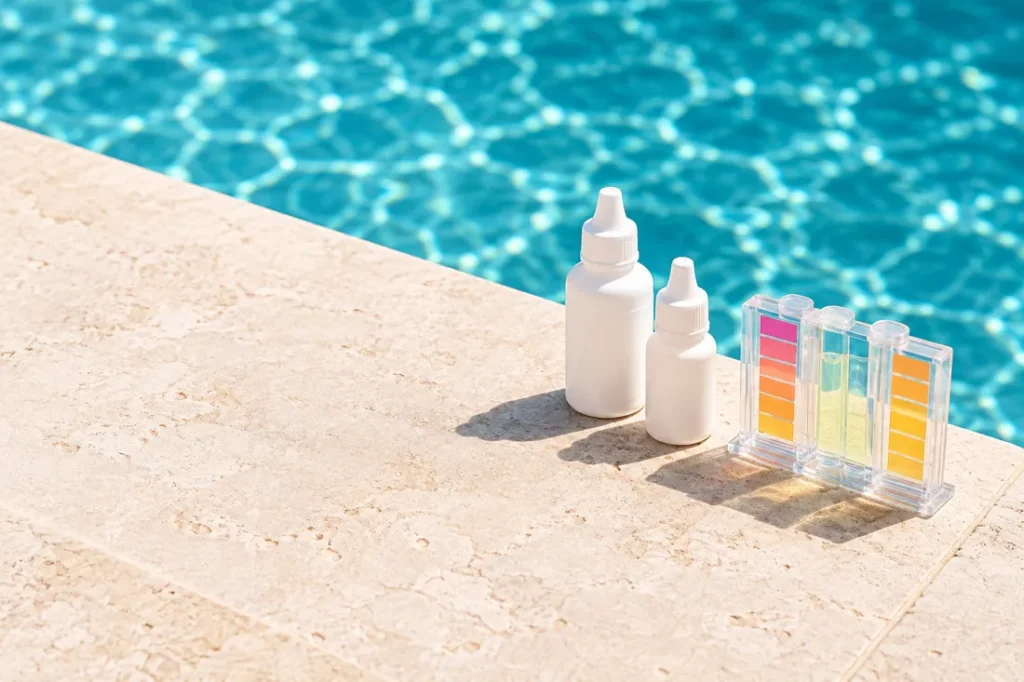
Water testing kit on limestone beside a swimming pool

From the library

73 guides to explore

Make your sample count. Collect, measure and record.

How to Test Pool Water

To test pool water reliably, take a representative sample, use the exact sample volume, and follow the timing for your test. Small shortcuts can change the result enough to send treatment in the wrong direction. Start with clean equipment and a kit suited to the measurement you need.

Read the guide →
Lower pH carefully. Verify, measure and retest.

How to Lower Pool pH

To lower pool pH, confirm the reading, measure alkalinity, and use a pool acid product according to its label. The amount depends on pool volume, starting chemistry, target, and product strength. A high pH reading alone cannot tell you how many cups to pour.

Read the guide →
Color or drop counting?. Two chlorine testing methods.

FAS-DPD vs DPD Pool Chlorine Tests

DPD color comparison and FAS-DPD titration both use DPD chemistry, but you read them differently. A conventional DPD kit compares a developed color with a scale. FAS-DPD adds a titration step: you count drops until the specified endpoint, then apply the sample factor.

Read the guide →
Choose how to raise pH. Check alkalinity before adjusting.

How to Raise Pool pH

To raise pool pH, first confirm that the reading is genuinely low and check total alkalinity. A suitable pH increaser can raise it, but controlled aeration may fit when alkalinity is already adequate or high. The right choice depends on what else needs to change.

Read the guide →
Check your reagents. Freshness matters to the result.

Do Pool Test Reagents Expire?

Pool test reagents do expire, and poor storage can shorten their useful life before the printed date. Heat, sunlight, moisture, and contaminated droppers all matter. A bottle looking full or the test producing a color does not prove the reagent still performs correctly.

Read the guide →
Raise alkalinity with care. Label based amounts, then retest.

How to Raise Pool Alkalinity

Sodium bicarbonate is commonly used to raise total alkalinity in a pool. Before adding it, confirm the reading and choose a target that suits the sanitizer, finish, and wider water balance. Low pH alone does not prove that alkalinity needs increasing.

Read the guide →

LESS GUESSWORK. MORE POOL TIME.

Let’s do the numbers.