THE POOL NATIVE LIBRARY

Water care.

Understand test results, balance and water problems.

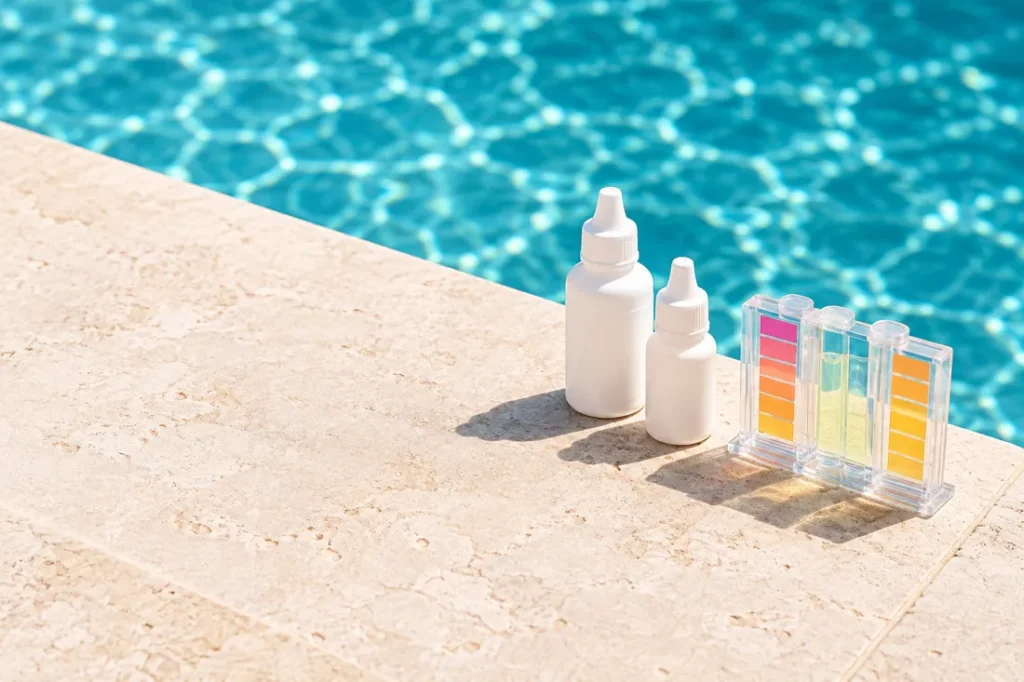
Water testing kit on limestone beside a swimming pool

From the library

73 guides to explore

Track the chlorine loss. Reliable tests; Delivery and demand; CYA and sunlight.

Pool Chlorine Drops Quickly: Find the Cause

If pool chlorine drops quickly, first establish whether the expected residual was ever measured. Chlorine that never reached the intended reading suggests a different investigation from chlorine that rose normally and then disappeared. Test technique, product strength, dosing, sunlight, and demand all matter.

Read the guide →
Trace falling pH. Check the test; Review acid inputs; Inspect dosing faults.

Pool pH Keeps Falling

When pool pH keeps falling, look for a continuing acid input and check the alkalinity that buffers it. Repeated pH increaser additions can hide the pattern without resolving it. Start by separating a drop after treatment from a drop that happens between treatments.

Read the guide →
Interpret the CYA level. Outdoor protection; Sanitizer relationship; Equipment requirements.

Cyanuric Acid in Pools: Interpret the Level

Cyanuric acid, usually called CYA or stabilizer, helps protect chlorine from sunlight in outdoor pools. It also reduces chlorine’s disinfection effectiveness at a given free chlorine reading. The useful level therefore depends on the sanitizer system and its operating requirements.

Read the guide →
Compare pool acids. Product strength; Sulfate contribution; Equipment restrictions.

Muriatic Acid vs Dry Acid for Pools

Muriatic acid and dry acid can both lower pool pH and total alkalinity. The better choice depends on the actual concentration, equipment restrictions, and how you can handle and store the product. They are not interchangeable by scoop, ounce, or feeder setting.

Read the guide →
Dichlor or trichlor?. Different strength; Both add CYA; Different application.

Dichlor vs Trichlor: What Each Adds to Pool Water

Dichlor and trichlor both add chlorine and cyanuric acid to pool water. Trichlor commonly provides slow delivery through an approved tablet feeder, while dichlor is commonly sold as soluble granules. Their effects on stabilizer and water balance differ, so they are not interchangeable products.

Read the guide →
Shock is not one chemical. Read active ingredient; Sanitizer or oxidizer?; Testing interference.

Nonchlorine Shock vs Chlorine Shock

Nonchlorine shock usually supplies an oxidizer called potassium monopersulfate, or MPS. It does not replace the sanitizer your pool needs. Chlorine products can supply sanitizer as well as oxidation, but their ingredients and application requirements differ.

Read the guide →
Cal hypo or dichlor?. Calcium contribution; CYA contribution; Label and system fit.

Cal Hypo vs Dichlor Pool Shock

Calcium hypochlorite shock adds calcium; dichlor shock adds cyanuric acid. Start with those two readings before choosing between the bags. If both calcium and stabilizer are already high for your pool, neither may be the best fit.

Read the guide →

LESS GUESSWORK. MORE POOL TIME.

Let’s do the numbers.