THE POOL NATIVE LIBRARY

Water care.

Understand test results, balance and water problems.

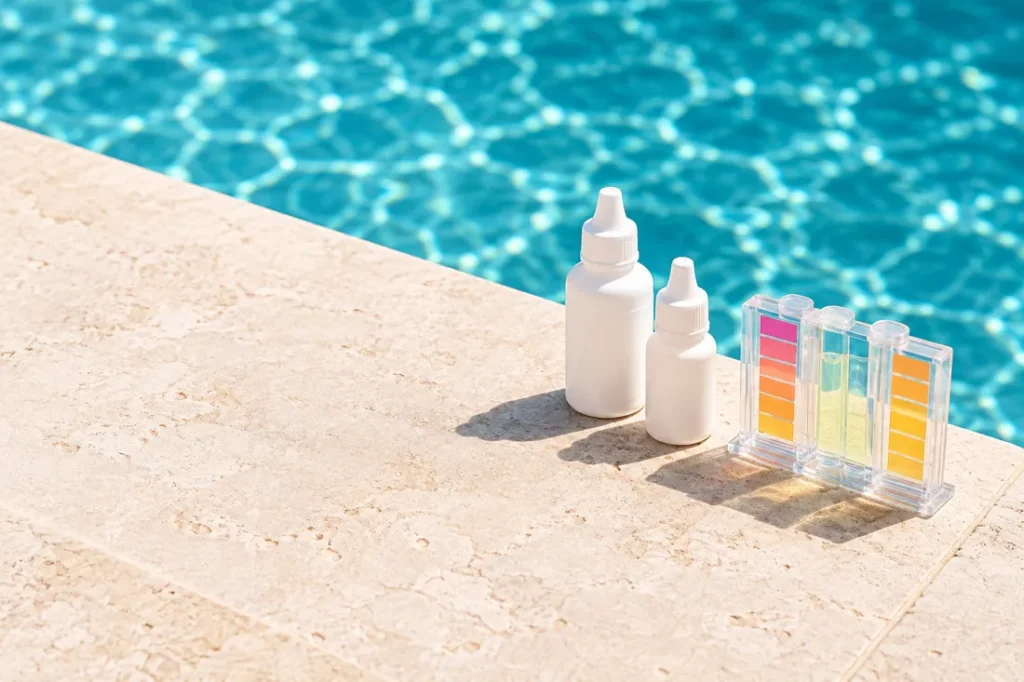
Water testing kit on limestone beside a swimming pool

From the library

73 guides to explore

Choose the needed tests. Measurements included; Usable range; Repeatable technique.

Pool Test Strips vs Liquid Test Kits

Choose between pool test strips and a liquid test kit by the measurement you need. Strips make quick checks convenient, while suitable drop tests can resolve smaller changes and additional parameters. But a basic yellow chlorine kit is not equivalent to a complete FAS-DPD kit.

Read the guide →
Purple hardness endpoint?. Follow interference steps; Count required drops; Confirm the endpoint.

Calcium Hardness Test Stays Purple

A calcium hardness test that stays purple may have an unclear endpoint or metal interference. It does not tell you to add calcium to the pool. First confirm the test method, then repeat using the manufacturer’s troubleshooting instructions.

Read the guide →
Calibrate the pH meter. Fresh buffers; Stable readings; Correct probe storage.

How to Calibrate a Digital Pool pH Meter

Calibrate a pool pH meter with fresh reference buffers that match its settings. Prepare the probe first, complete the manufacturer’s calibration sequence, then check a fresh buffer before trusting the pool reading. A stable number on the screen is not proof of accuracy.

Read the guide →
Bring chlorine down. Confirm the reading first.

How to Lower High Chlorine in a Pool

To lower genuinely high pool chlorine, first stop unnecessary sanitizer additions and confirm the reading with a suitable test. Then choose between allowing the residual to decline, a controlled water replacement, or a labeled chlorine reducer. The right route depends on the concentration, urgency, equipment, and pool structure.

Read the guide →
Read the water together. Different tests, different decisions.

Pool Water Care: Understand Your Test Results

Pool water chemistry becomes easier when each result has a job. Free chlorine tells you about available sanitizer, pH describes acidity, and alkalinity helps explain resistance to pH change. Calcium hardness, cyanuric acid, temperature, and salt add context that a single color strip cannot summarize.

Read the guide →
Liquid or tablets?. Delivery changes water care.

Liquid Chlorine vs Chlorine Tablets for Pools

Liquid chlorine and chlorine tablets can both supply sanitizer, but they change the water differently and require different delivery routines. Pool liquid chlorine normally uses sodium hypochlorite. Common stabilized tablets use trichlor, which adds cyanuric acid along with chlorine.

Read the guide →
Choose the right method. Match the test to the question.

Pool Water Testing: Methods, Sampling and Accuracy

Choose a pool testing method by the measurements and range you need, not by how many colors appear on the package. A basic sanitizer and pH kit can support frequent checks, but it may not measure stabilizer or calcium hardness. A digital display can simplify reading without eliminating sampling errors.

Read the guide →

LESS GUESSWORK. MORE POOL TIME.

Let’s do the numbers.