THE POOL NATIVE LIBRARY

Water care.

Understand test results, balance and water problems.

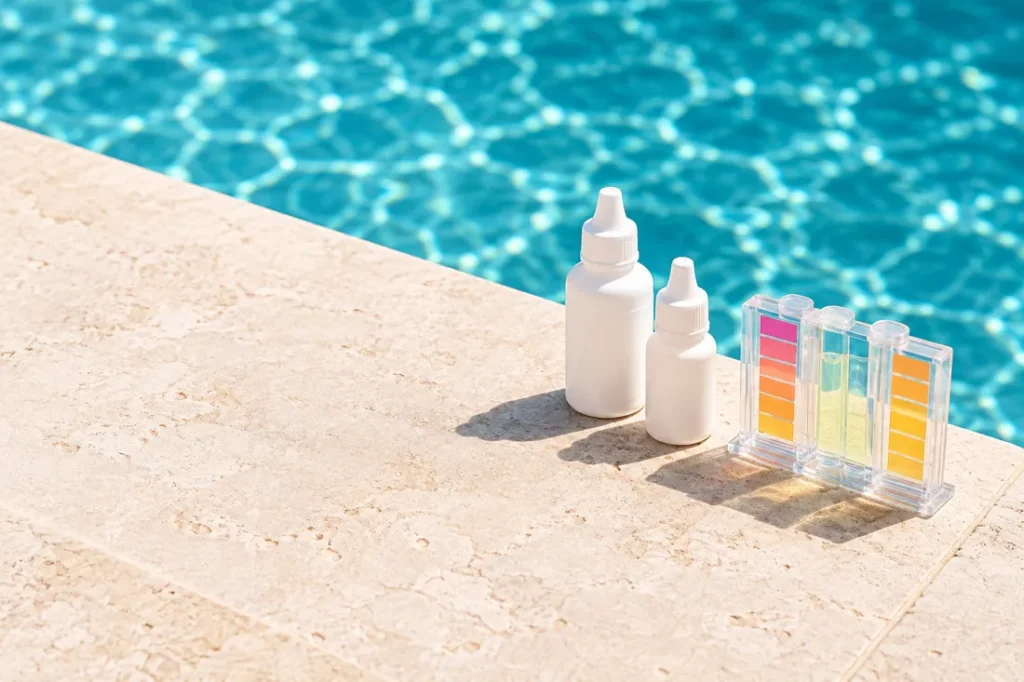
Water testing kit on limestone beside a swimming pool

From the library

73 guides to explore

Lower calcium thoughtfully. Compare fill water; Calculate replacement; Assess structural limits.

How to Lower Calcium Hardness in a Pool

To lower calcium hardness, remove calcium from the water or replace water with a source containing less calcium. A scale control product may help manage deposits, but that is a different result. Test both the pool and proposed replacement water before choosing a method.

Read the guide →
Raise calcium by the label. Actual pool volume; Product concentration; Mix and retest as directed.

How to Raise Calcium Hardness in a Pool

Raise calcium hardness with a suitable calcium chloride product after confirming the pool needs it. Choose the target from your surface and equipment requirements, then calculate the increase from a reliable test. Don’t add calcium just to match another pool owner’s number.

Read the guide →
Brown after filling?. Source sample; Timing of color change; Metal or particle testing.

Pool Water Turns Brown After Filling

Brown water after a pool fill often points to material introduced with the water, especially when the change follows chlorination. Iron is one possibility, but sediment and other contaminants can also discolor a new fill. The timing helps you choose the right tests; it does not identify the cause by itself.

Read the guide →
Use the right inputs. Current measurements; Calcium hardness; Temperature and corrections.

How to Use a Pool Saturation Index Calculator

A pool saturation index calculator estimates whether water tends to deposit or dissolve calcium carbonate. Use fresh readings for pH, calcium hardness, alkalinity, and water temperature, plus the corrections the calculator requests. The result helps manage water balance; it does not certify swimming safety.

Read the guide →
Total is not calcium. Calcium plus magnesium; Check reported units; Use the required test.

Total Hardness vs Calcium Hardness in Pool Tests

Total hardness and calcium hardness can give different results for the same pool without either test being wrong. Total hardness includes calcium and magnesium; calcium hardness measures the calcium contribution. Use the value requested by the equipment instructions or water balance calculation.

Read the guide →
Green but transparent?. Lighting and finish; Compare a water sample; Test before treatment.

Pool Water Looks Green but Is Clear

A pool can look green while remaining transparent. That differs from an opaque green pool, but it does not prove the water is free of algae or safe to swim in. Check whether the color comes from the water, the finish, or the surroundings before choosing a treatment.

Read the guide →
Find the pH pattern. Carbon dioxide loss; Alkalinity and aeration; Repeated measurements.

Pool pH Keeps Rising: Diagnose the Pattern

If pool pH drops after acid and then climbs again, the acid may have worked exactly as expected. Carbon dioxide can leave the water afterward, raising pH without restoring the alkalinity consumed by the acid. Track both readings before deciding that the treatment failed.

Read the guide →
Odor needs investigation. Free and combined chlorine; Recent oxidizers; Indoor air movement.

Pool Chlorine Smell: What to Test First

A strong chlorine smell is a reason to check the pool, not a measurement of its chlorine level. Chloramines can produce the familiar irritating pool odor when chlorine reacts with contaminants. Water chemistry and ventilation both matter, especially indoors.

Read the guide →
Clarifier or flocculant?. Filter collection; Settling and removal; Equipment compatibility.

Pool Clarifier vs Flocculant

Choose pool clarifier or flocculant by how the collected material will leave the pool. A filtration clarifier helps the filter capture suspended particles. A settling flocculant collects material on the floor for removal, usually by vacuuming to waste as its label directs.

Read the guide →

LESS GUESSWORK. MORE POOL TIME.

Let’s do the numbers.