Choose a pool testing method by the measurements and range you need, not by how many colors appear on the package. A basic sanitizer and pH kit can support frequent checks, but it may not measure stabilizer or calcium hardness. A digital display can simplify reading without eliminating sampling errors.
Build one reliable testing workflow and learn its limitations. Use a second method to investigate a discrepancy, not to produce a more reassuring number. The most expensive instrument is still vulnerable to a contaminated vial or the wrong reagent.
Match the method to the measurement
| Method | Useful role | Limitation to check |
|---|---|---|
| Test strips | Convenient screening across several measurements | Color resolution, timing, storage, and interference |
| DPD color comparison | Chlorine measurements within a defined color range | Off scale readings and possible bleaching at high chlorine |
| FAS-DPD titration | Chlorine results calculated from a color change endpoint | Correct sample volume, drop factor, and reagent condition |
| Photometer | Instrument reading of a prepared sample | Range, clean vials, correct blanking, and reagent procedure |
| Specialized tests | CYA, salt, metals, or other particular questions | Whether the method actually measures the needed substance |
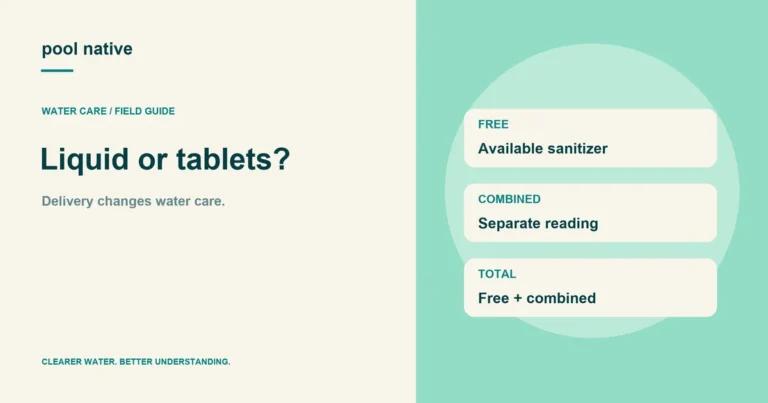
Some simple chlorine tests measure total chlorine without separately resolving free chlorine. That matters when deciding whether the available residual is adequate. Read the kit’s factor list rather than assuming that any chlorine result answers the same question.
Separate accuracy, resolution, and range
Resolution is the smallest increment displayed or calculated. It isn’t a guarantee that the true result is that precise. A digital display showing two decimal places can still have a wider uncertainty.
Range defines the results the method is designed to report. A sample darker than the highest comparator block is not a trustworthy exact number. Use a manufacturer approved range extension or another suitable method.
The FAS-DPD and DPD comparison explains that choice for chlorine. For stabilizer, a turbidity test uses a different endpoint and needs different reading habits. Don’t transfer a technique from one test to another.
Standardize sampling and handling
Follow the kit’s specified sampling location, depth, timing, and sample volume. Avoid water directly from a return or a freshly treated area. Test promptly and keep the vial away from contamination.
Use the exact reagent and comparator combination. Products from different brands may have different concentrations or calibrated color scales. A bottle that fits the case isn’t necessarily interchangeable.
Keep caps matched to bottles, avoid touching dropper tips, and rinse test cells as instructed. Store supplies away from heat and direct sun. Use reagent storage guidance to decide when replacement is appropriate.
Choose a repeatable schedule
CDC recommends checking residential pool chlorine and pH at least twice daily, with more checks during heavy use. Other measurements depend on the system and recent changes. A refill, stabilized chlorine use, or unexplained treatment response can justify broader testing.
Keep the method name alongside unusual results. If a store test differs, compare samples taken at the same time before blaming either method. These disagreement checks help distinguish timing differences from a real testing fault.
Once you’ve chosen the method, use the step by step sampling workflow. Consistency makes trends useful and helps prevent unnecessary chemical corrections.