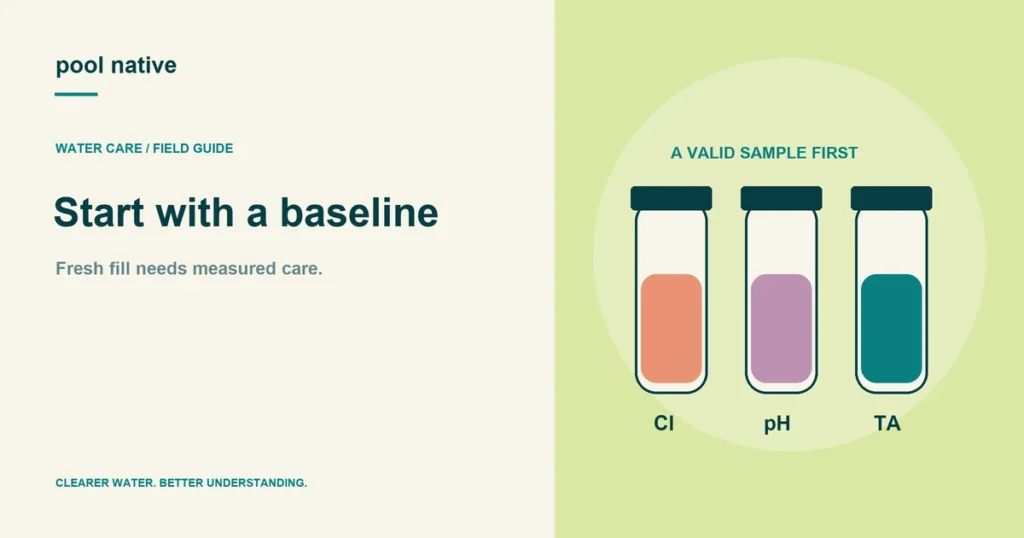
Fresh pool water needs testing before it needs a shopping list of chemicals. The correct startup order depends on the fill water, finish, sanitizer system, and product instructions. There is no reliable rule that every refill needs the same bags added in the same sequence.
This guide covers a refill in an existing pool or commissioning a finish without a separate plaster startup requirement. Fresh plaster, newly applied finishes, and builder managed commissioning must follow the finish provider’s process. Do not replace that process with routine refill advice.
Before filling, confirm the pool can be refilled normally
Check the installation or service instructions for the required fill level and any restrictions on interrupting the fill. Draining and refilling can create structural or groundwater problems in some pools. Get professional advice before emptying a pool to solve a water reading.
Inspect the equipment configuration and confirm that winter or service plugs are dealt with in the correct sequence. Keep pumps and heaters off until their water supply and operating conditions are ready. Filling the pool doesn’t automatically fill every equipment circuit.
Test the source water and the filled pool
Measure pH, alkalinity, calcium hardness, and any sanitizer or stabilizer relevant to the source. Consider iron or copper testing when using well water or a supply known to contain metals. A basic hose sediment filter doesn’t necessarily remove dissolved metals.
Once circulation is safely established and the water is mixed, test the pool itself. Record actual volume and temperature. Retained water in plumbing or an incomplete drain can make the pool different from the hose sample.
Choose corrections from the results
| Finding | Startup implication |
|---|---|
| Metals present or suspected | Resolve the metal management plan before aggressive oxidation |
| pH or alkalinity outside the intended range | Choose a measured correction using both readings |
| Calcium does not suit the finish or equipment | Use finish guidance and water balance assessment |
| No adequate sanitizer residual | Establish the labeled sanitizer program before swimming |
| Salt system installed | Check salt requirements and startup conditions before activating the cell |
The water chemistry overview explains these measurements. Don’t add calcium merely because it came in a startup bundle. Don’t add stabilizer before considering what your chosen chlorine product already contributes.
Add one product at a time
Use the exact label’s dose, addition method, circulation requirement, and separation instructions. Keep chemicals and measuring tools separate. Never mix concentrates, and never pour acid and chlorine together.
Some products require dilution; others specifically warn against it. Follow the product in your hand. A generic instruction to dissolve every powder in a bucket is not safe for every pool chemical.
Retest after the specified mixing period before making the next correction. Use the actual observed change to guide the next step. If an expected change doesn’t appear, verify the test and product rather than repeatedly adding more.
Check the operating equipment too
Confirm steady circulation, an intact filter setup, and no leaks. Keep a heater or salt cell disabled until its own required water conditions are satisfied. Establish a clean filter reference at a known pump setting.
Start the maintenance log with the fill date, source, initial readings, and every addition. Those entries are particularly useful if water changes color after chlorination. Green water after shock needs a different response when metals, rather than algae, are responsible.
Allow swimming only after sanitation, pH, clarity, and every product’s reentry conditions are satisfied. A freshly filled pool may look inviting well before those checks are complete.