Brown water after a pool fill often points to material introduced with the water, especially when the change follows chlorination. Iron is one possibility, but sediment and other contaminants can also discolor a new fill. The timing helps you choose the right tests; it does not identify the cause by itself.
Keep the pool closed while you investigate unclear water or unresolved sanitation. Pause unplanned clearing chemicals and record what has already gone in. Repeated shock treatments can make a metal problem harder to manage.
Reconstruct the color change
Write down the source, filling times, and first appearance of brown water. Include every chemical addition and whether the pump was operating. A simple timeline often separates a source problem from a reaction during startup.
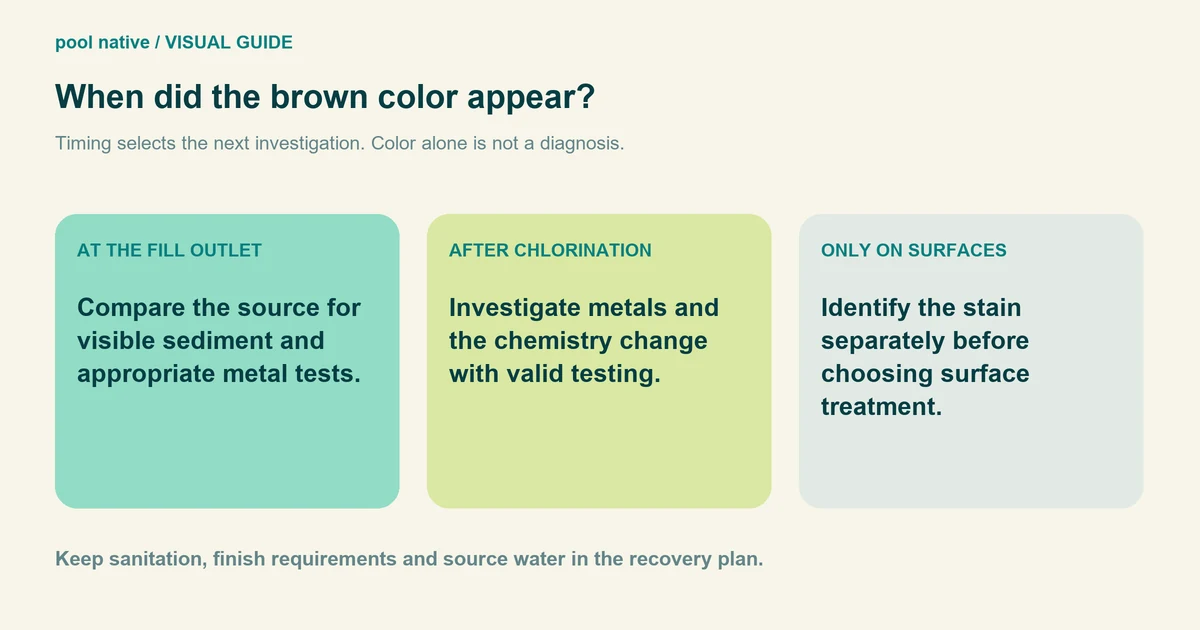
| When brown appeared | What to check first |
|---|---|
| At the hose before any pool chemicals | Source water color and suspended sediment |
| After clear water entered and chlorine was added | Metals and the chemistry change |
| After prolonged filling from a well | Changes in the actual supply and possible sediment |
| Only after circulation began | Material in the pool system as well as the fill source |
| Brown marks remain after the water clears | A separate surface stain assessment |
If a contractor is filling a newly finished pool, contact them before interrupting the prescribed startup. Do not independently drain it or change the chemical sequence. New finishes can have requirements that differ from routine maintenance.
Compare the supply with the pool
Collect separate samples from the actual fill outlet and the pool using the testing provider’s instructions. Label their locations and collection times. Water after household treatment may differ from water at an outdoor hose.
View a sample in a clean, clear container against a white background. Note whether it has an even tint or visible particles. Photograph any sediment that settles, without adding chemicals to create a homemade reaction test.
Settling suggests particles, but it does not prove they are harmless dirt. Some dissolved metals become particles after conditions change. Clear water from the hose can still contain dissolved material.
Request the tests that answer this problem
Measure sanitizer, pH, alkalinity, and calcium hardness for startup management. Request iron and other relevant metal testing for both samples. Include copper when the equipment or treatment history makes it plausible.
Tell the testing provider about any sequestrant or stain treatment already used. A test for unbound metal may not describe all metal present. Ask whether its method includes bound or suspended forms.
A standard chlorine and pH kit cannot rule out iron. Likewise, brown water is not a substitute for a metal result. Bring the timeline alongside the measurements so the treatment addresses both.
Choose a treatment that matches the material
For filterable particles, use the installed filter within its operating instructions. Track pressure and flow, then clean or backwash by the required method. Do not pack homemade material into a suction fitting to imitate a finer filter.
Dissolved metal needs a different plan. A sequestrant can manage staining risk, but binding metal does not physically remove it. Actual removal may require suitable treatment media, a specialist process, or an appropriate replacement supply.
Keep sanitation part of that plan. Avoid leaving the pool untreated indefinitely because chlorine revealed the discoloration. Coordinate the selected metal product’s instructions with sanitizer restoration and the finish requirements.
Do not assume flocculant will solve an unidentified brown tint. Settling treatments require compatible equipment and a way to remove the settled waste. They also do not make a dissolved metal test unnecessary.
Avoid refilling with the same unresolved source
Replacing the water from the same supply can bring the same material back. Before considering replacement, test the alternative source and assess the pool’s drainage restrictions. Delivered water should also be checked rather than assumed suitable.
A basic sediment filter and a device rated for dissolved metal removal perform different jobs. Check what the proposed fill treatment removes, its capacity, and its required flow. A small cartridge may not treat an entire fill under every condition.
Include future top ups in the plan. A pool can clear after treatment and then receive another metal load through the same hose. Record the amount added and any required maintenance treatment.
Verify the water and inspect the finish
Recheck clarity and chemistry after completing the selected procedure. Confirm that the floor is visible and the sanitizer, pH, and product reentry conditions are appropriate. Clear appearance alone does not establish sanitary water.
If brown patches remain on the finish, have their cause identified before treating the surface. Water treatment and stain removal are related but separate tasks. Avoid escalating to concentrated spot chemicals or acid washing without identifying the mark.