How long do pool pumps last? There is no single dependable lifespan for the complete assembly. The motor, electronic drive, seals, and wet end can need attention at different times, so age alone is a poor replacement test.
A pump that has operated seasonally for years has a different history from one running continuously in harsh conditions. Start with its symptoms and service history, then compare repair with replacement.
Use lifespan figures as planning assumptions
A California Energy Commission analysis reproduces DOE’s 2016 average lifetime assumptions: seven years for self priming filter pumps and five for booster pumps. Integral cartridge or sand filter pump assemblies were assigned four years. These were category assumptions for analysis, not promises for a particular model.
They provide a more useful budgeting reference than assuming every pump will last the same ten years. They also show why filter pumps and cleaner boosters should not be grouped indiscriminately. Current condition and repair options still decide whether replacement is justified.
For an aging pump, get a current replacement quote and keep a reserve before failure creates an urgent purchase. That does not require discarding a sound pump at the modeled age. Review the plan after a major repair or a change in operating conditions.
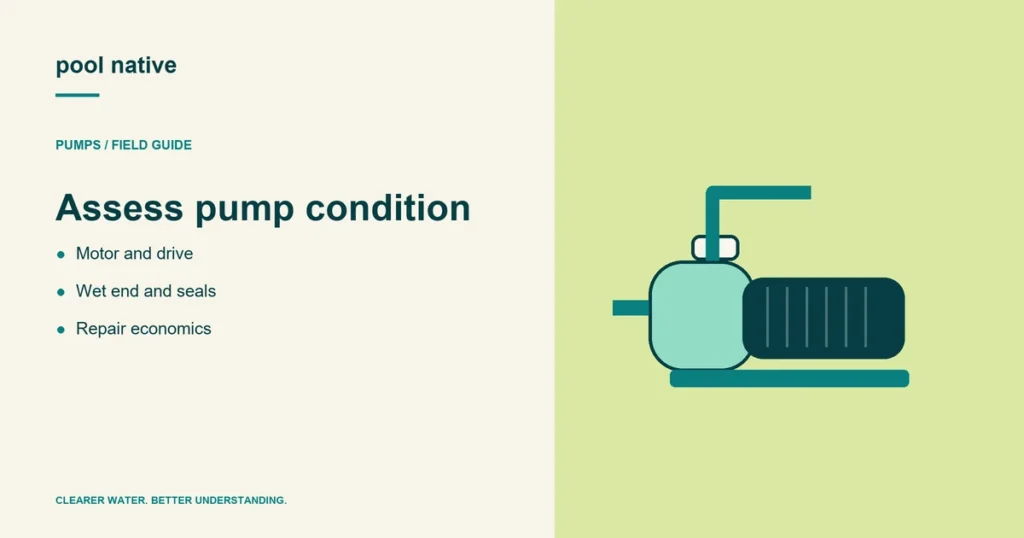
How long do pool pumps last by component?
| Component | What to assess |
|---|---|
| Motor | Starting, noise, heat, electrical condition, and a technician’s diagnosis |
| Drive or controller | Fault history, control response, compatibility, and parts availability |
| Wet end | Housing, impeller, diffuser, threads, and signs of damage |
| Seals and lid | Water leakage, air entry, cracks, and correct seating |
A leaking replaceable seal doesn’t necessarily mean the pump has reached the end of its useful life. A cracked housing or repeated major failures changes the decision. The failed part must be identified before comparing options.
Count operating history as well as calendar years
Calculated example: Eight hours daily for 180 days is 1,440 operating hours per year. Continuous operation is 8,760 hours in a 365 day year. Equal calendar age can therefore conceal very different use.
Hours still don’t predict an exact failure date. Speed, environment, installation, maintenance, and previous repairs also matter. Keep these details in your equipment log.
Conditions that deserve attention
Keep the motor ventilated and protected from avoidable water exposure. Don’t enclose an operating pump in airtight material or direct sprinklers at it. Follow the manufacturer’s clearance and weather protection instructions.
Maintain baskets, correct leaks, and investigate repeated loss of water supply promptly. Don’t let a pump continue running dry. Our pump care routine focuses on those practical checks.
Repeated early failures warrant investigation of the underlying system. Replacing the same part again may leave a supply, moisture, installation, or operating problem untouched. Give the technician the dates and symptoms of each failure.
Repair or plan a replacement?
Repair deserves consideration when the fault is isolated, the retained components are sound, and compatible parts remain available. Compare a complete repair price with a properly sized new pump. Include labor and the warranty on the actual work.
Replacement becomes more attractive when several major components are damaged or the existing system is a poor fit. Use the motor versus whole pump comparison to make the scope explicit.
A warranty period isn’t a predicted lifespan. It defines coverage under stated terms. Likewise, an owner’s unusually long or short experience doesn’t establish a reliable average for your model.
Prepare the model number, installation date, repair history, and photos before requesting quotes. The replacement cost worksheet helps compare equivalent jobs. Replace based on condition and a defensible plan, not a birthday alone.