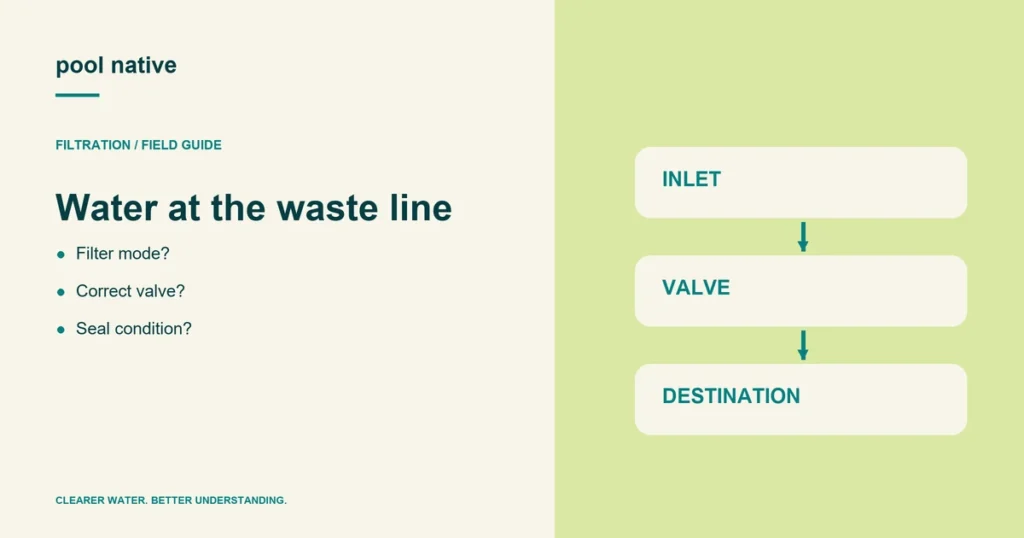
A pool filter leaking from the backwash line during normal filtering usually points to the control valve or its position. First distinguish continuing discharge from water left inside the hose after backwashing. Don’t cap the waste outlet to hide the leak.
The filter tank can be dry outside while the pool quietly loses water through that route. Look at the outlet itself when the equipment is operating normally and safely.
Confirm the pool filter leaking from the backwash line
Read the valve label and identify its normal filtering position. Don’t assume every handle points the same way or every slide valve uses the same up and down positions. Keep the pump off whenever changing a valve setting.
| Observation | Meaning |
|---|---|
| A small amount drains from the hose after backwashing, then stops | It may be residual hose water rather than continuing bypass. |
| Water keeps flowing to waste in confirmed Filter mode | The intended internal separation isn’t holding. |
| Handle sits between marked positions | The valve may not be fully seated in the intended route. |
| Leak began after valve service | Part compatibility, orientation, and assembly deserve review. |
Record whether discharge stops when the pump is off. Continued drainage can depend on plumbing elevation as well as valve sealing. That observation is useful, but it doesn’t identify one failed part.
Why an internal valve leak occurs
A multiport valve separates water paths with an internal sealing assembly. Debris, a damaged seal, an impaired rotor, or an assembly problem can prevent the intended separation. Many designs use a spider gasket, but not every waste leak calls for that part.
A slide valve uses a different internal arrangement. Ordering a generic multiport gasket for it won’t solve the problem. Identify the actual valve design and settings before buying parts.
If the problem appeared after cleaning, compare the valve position with the correct manual. Don’t repeatedly turn the handle under flow to “work it loose.” That can damage sealing components.
What to check before arranging service
- Photograph the valve label and model markings.
- Record the filter model separately.
- Describe whether the discharge is a drip, stream, or full flow.
- Note the current mode, pump speed, and recent maintenance.
- Keep any previous replacement part number or invoice.
Internal service needs full shutdown, pressure relief, and the manufacturer’s procedure. Some seals are supplied as part of a larger assembly. Don’t assume a separate gasket can be glued into every valve.
If the body itself leaks, follow the external leak guide. A wet tank joint and an internal waste leak are different faults, even when both start after maintenance.
Don’t block the symptom
Capping the waste line can create a dangerous obstruction when the valve is later set to backwash or waste. It also leaves the underlying sealing fault unresolved. Shut down the affected system and arrange the proper repair.
Manage any ongoing water loss and keep the discharge within local disposal requirements. Don’t let the pool level fall until the skimmer draws air.
Check the result in normal operation
After service, verify that Filter mode sends water back to the pool without continuing waste discharge. Confirm the normal pressure and return flow. Use the specified backwash procedure when cleaning is next required.
If the leak returns, revisit the valve identity, assembly, and internal condition. A repeated seal replacement without inspection can miss the part causing the seal to fail.