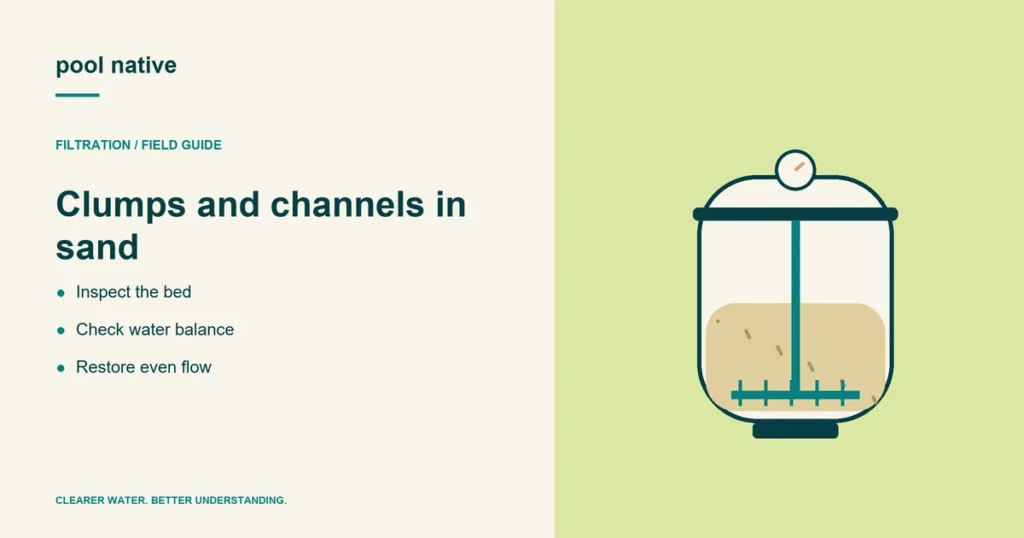
Pool filter sand clumping can restrict flow through part of the bed. Channeling describes a different problem: water follows easier paths instead of passing evenly through the media. The two can occur together, but a pressure reading cannot confirm either one.
Start with what you have actually observed. Visible hardened lumps during a safe inspection are evidence of media condition. Cloudy water or a short filter cycle is only a reason to investigate.
What suggests pool filter sand is clumping?
Mineral deposits, oils, and accumulated debris can leave a sand bed difficult to clean. The filter may remain above its usual clean pressure after proper backwashing. It may also collect dirt unevenly.
Those symptoms have other causes. A restricted return line can raise pressure, while an inaccurate gauge can mislead the whole diagnosis. A high pressure reading immediately after cleaning is not proof that the sand needs replacement.
| Observation | Useful next check | What it does not prove |
|---|---|---|
| Pressure never returns to baseline | Backwash performance, gauge, return route, deposits | That the media is physically hardened |
| Pressure returns, then rises quickly | Current dirt load and water conditions | That the last cleaning failed |
| Hardened masses found during service | Deposit type, cleaning history, compatible treatment | A universal cause or required chemical dose |
| Uneven bed or apparent paths | Media loading, internal distribution, cleaning flow | That a stronger pump will fix it |
Check the history before opening the tank
Record the clean pressure, pump speed, and current pressure under the same valve arrangement. Note when the change began. Include algae treatment, heavy debris, construction work, and any media change.
Confirm the installed medium and quantity. Glass, zeolite, and fiber products do not all follow sand instructions. An unknown replacement medium makes a generic deep cleaning procedure a poor starting point.
Review water balance and the products recently added. A deposit problem can recur if its cause remains. Testing and cleaning should answer different questions rather than replace each other.
Cleaning or replacing the bed
The Triton manual provides a chemical cleaning route for oils, scale, and rust. Its method belongs to that filter and the chosen cleaner. It should not become a universal acid recipe for every sand tank.
Ask whether the deposits can be removed with an approved treatment. Replacement is more reasonable when the bed cannot be restored or its contents are unsuitable. Include inspection of the diffuser, standpipe, and laterals during that service.
Do not attack hard lumps with a metal tool inside an assembled tank. The internals can be damaged beneath the media. Use the correct sand replacement procedure when removal is necessary.
Distinguish three patterns that look similar from the deck
First, pressure may stay high immediately after backwashing. That calls for checking whether cleaning flow was adequate and whether a downstream restriction remains. It does not establish that the bed contains hardened chunks.
Second, pressure may recover and then rise during a dirty cleanup. That can mean the filter is collecting material from the pool. Compare the current load with ordinary operation before deciding that another media change is needed.
Third, water can remain cloudy without a dramatic pressure increase. Uneven flow through the bed is one possible explanation, but so are other filtration and water problems. The gauge cannot show whether every part of the bed receives equal flow.
What a useful inspection should establish
Ask the technician to document the bed condition before disturbing it. Photographs of a hard surface layer, separated masses, or unusual loading can help explain the next decision. A description such as “old sand” does not identify the failure.
The inspection should also consider the distributor and internal collection parts. A damaged or misplaced component can affect flow even if the media itself is serviceable. Include any evidence of an incorrect quantity or a previous unsupported media substitution.
Do not probe the bed with a screwdriver through an opening while the system is assembled. That can damage parts hidden under the sand. Inspection and removal should follow the filter’s safe service method.
Prevent the same condition after service
Keep a record of the water balance and treatment history that accompanied the problem. If deposits were confirmed, address their likely source using appropriate testing and the pool’s finish requirements. Replacing sand without changing the relevant conditions can simply start the process again.
Likewise, correct an inadequate backwash arrangement before expecting new media to clean properly. Record the intended pump setting and disposal route. A constricted waste hose or changed valve arrangement can matter even when the normal returns seem acceptable.
Schedule the next observation around the original symptom. If the old bed reloaded within a few hours, check the replacement after a comparable run. If the original concern was persistent cloudy water, evaluate that separately from the pressure reading.
Confirm the result under comparable conditions
After service, follow the exact startup and pressure relief instructions. Record a fresh clean baseline at the normal pump setting. Check that water returns properly and that no media appears in the pool.
If pressure recovers but climbs again within hours, investigate rapid filter loading next. If sand reaches the returns, investigate damaged or misplaced internals. Repeating a cleaning treatment without those distinctions can hide the real fault.