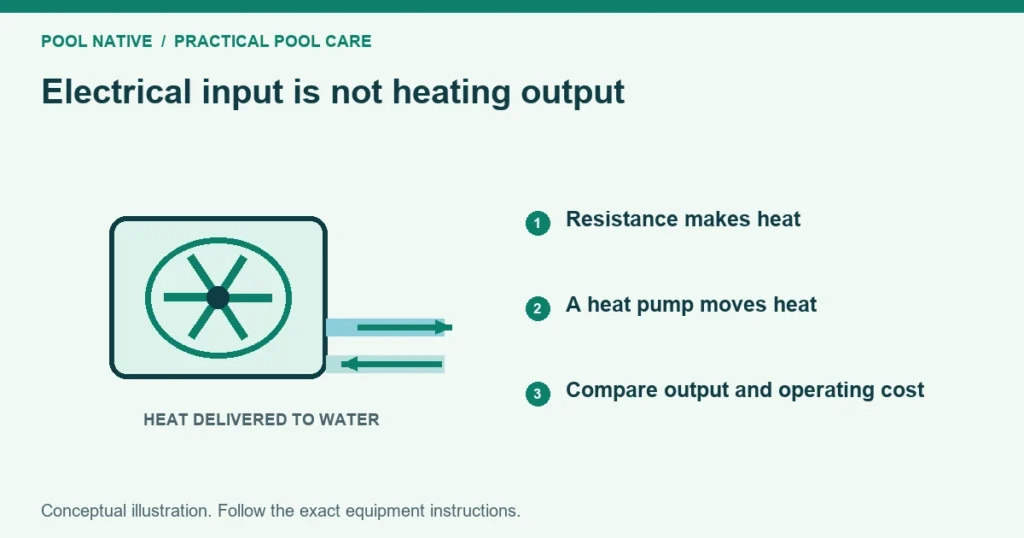
A pool heat pump and an electric resistance heater both use electricity, but they use it differently. The heat pump transfers additional heat from the air. Resistance equipment converts electrical energy directly into heat.
For the same delivered heat, a heat pump can use substantially less electricity under suitable conditions. That does not mean every heat pump is faster. Heating speed depends on actual thermal output after pool losses.
Read the word electric carefully
Retail listings sometimes call both products electric pool heaters. Look for a compressor and a stated COP to identify a heat pump. A resistance heater usually specifies heating element power and its electrical supply requirements.
Confirm the exact model rather than judging by cabinet size. The important comparison is thermal output in kW or Btu per hour. Electrical input is the energy you buy to obtain that output.
| Feature | Heat pump | Resistance heater |
|---|---|---|
| Heat source | Air plus electrical input | Electrical input |
| Useful efficiency measure | COP at stated conditions | Thermal efficiency near the stated rating |
| Air temperature dependence | Capacity and COP can change substantially | No air source heat collection, but pool losses still change |
| Physical needs | Airflow, refrigeration system and condensate drainage | Model specific mounting, enclosure and electrical supply |
| Main selection risk | Using warm test output for cold conditions | Choosing too little output or ignoring electrical capacity |
Compare equal output, not equal electrical input
Hypothetical example: a heat pump takes 5 kW of electricity while operating at COP 4. It delivers 20 kW of heat. A resistance heater delivering the same 20 kW needs approximately 20 kW of electrical input at near unity efficiency.
If each supplies the pool with 20 kW under the same conditions, their ideal warming speed is the same. One is not slower simply because it transfers heat from the air. The difference in this example is purchased electricity.
If the resistance heater instead delivers 6 kW, it is a different capacity comparison. It will add less heat per hour. Do not compare a small element with a large heat pump and attribute the result solely to technology.
What COP tells you
COP is thermal output divided by electrical input, using the same units. A COP of 4 means four kWh of heat delivered for each kWh consumed at that operating point. It does not violate energy conservation because environmental heat contributes to the output.
COP changes with conditions and operating mode. Ask for air temperature, water temperature, humidity and output associated with the rating. A maximum efficiency claim alone cannot predict your seasonal bill.
For resistance equipment, most input becomes heat, but that does not make it equally economical. A heat pump can transfer several times its purchased energy as useful heat. Compare costs per delivered unit, not just percentages on different labels.
Work through an electricity example
Suppose the pool needs 100 kWh of delivered heat and electricity costs $0.20 per kWh. These are hypothetical inputs. Ignore circulation and other charges for this simple comparison.
| Assumed equipment performance | Electricity for 100 kWh of heat | Energy cost |
|---|---|---|
| Heat pump at COP 5 | 20 kWh | $4.00 |
| Heat pump at COP 3 | About 33.3 kWh | About $6.67 |
| Resistance at 100% thermal efficiency | 100 kWh | $20.00 |
The resistance efficiency is a simplifying assumption, not a guarantee for every installation. Actual operation and standby losses can differ. Use the cost calculator to change the assumptions.
The example does not include how fast the heat is delivered. A unit with lower output may need more circulation hours. Include incremental pump electricity when evaluating the complete setup.
Check cold weather performance and freezing separately
A heat pump may deliver less heat as air gets colder, even before reaching its operating limit. Defrost can interrupt heating. Use data near the conditions when you intend to swim.
A resistance heater does not depend on extracting heat from cold air. It still needs enough output to overcome the pool’s losses. Its water passages and plumbing can also freeze when left unprotected.
Neither technology makes winterizing unnecessary. Review cold weather heat pump limits and seasonal protection. An operating temperature rating is not a promise that trapped water survives an outage.
Electrical capacity can decide the choice
Large resistance output demands substantial electrical input. An existing circuit may not support it. Have an electrician assess the actual appliance and site requirements before ordering.
A heat pump also needs a correctly sized supply, protective devices and installation. Do not select cable or breaker size from a generic kW calculation alone. Starting behavior, nameplate requirements and local rules matter.
Regional products can differ in voltage, phase and frequency. A UK or European heater specification should not be transferred directly to a US installation. Use the exact locally approved version.
Compare space, noise and service
A heat pump needs unobstructed air movement and produces fan and compressor sound. Place it according to clearances and local requirements. Do not enclose it to reduce noise without approval.
Resistance equipment may be physically compact, but its manual can require a dry permanent enclosure and particular plumbing. It is not automatically an outdoor unit you can place beside the pool. Confirm the complete mounting instructions.
Both need water chemistry and flow within limits. Heat pumps add refrigeration service needs; resistance units can need element and scale assessment. See maintenance planning before comparing ownership costs.
When each deserves consideration
A heat pump is worth evaluating for regular pool heating where its conditions and capacity suit the site. Resistance can be worth evaluating for a smaller thermal job or a specific compatible installation. Neither choice should begin with the assumption that electric means simple plug in use.
Compare full installed cost and expected annual energy use. A higher purchase price only pays back through actual savings over actual use. Use sizing and the installation budget to complete that decision.