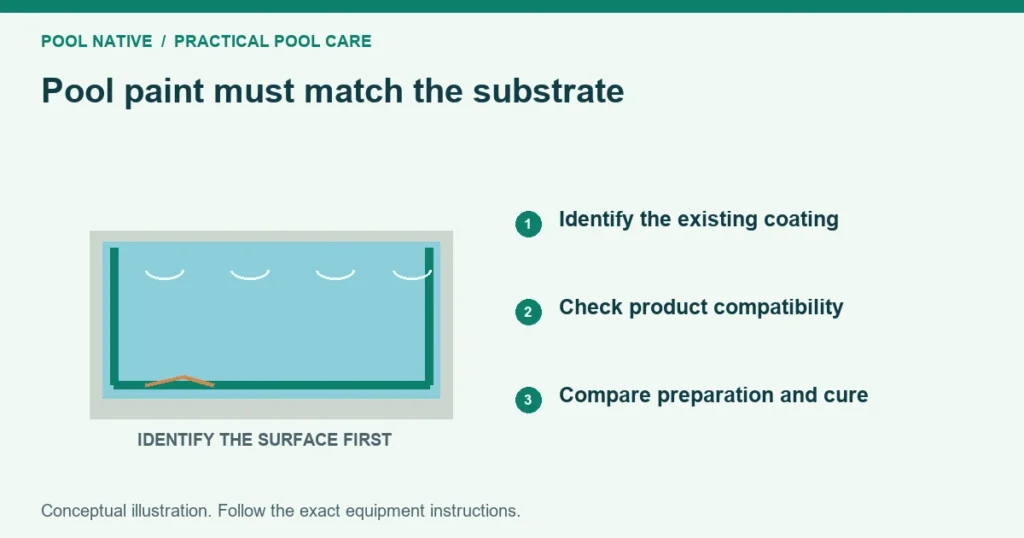
The right pool paint must bond to the existing surface and tolerate the intended service. Epoxy, acrylic and rubber describe coating families. Those names alone do not establish whether one particular product can cover another.
Start with the surface you have, including every old coating layer that will remain. Then compare approved products on preparation, application conditions and downtime. A coating that requires complete stripping may be a different project from a compatible maintenance coat.
The main differences
| Coating family | Practical distinction | Main selection question |
|---|---|---|
| Epoxy | Usually a resin and hardener mixed before application | Can the substrate and remaining coating accept this exact system? |
| Waterborne acrylic | Commonly a single component product with water cleanup | Which old coatings and bare surfaces does this product approve? |
| Chlorinated or synthetic rubber | Usually a single component solvent coating | Is the existing rubber type compatible with the replacement product? |
Epoxy involves a chemical reaction after mixing. Its working time, mixing ratio and any required waiting period come from the product instructions. Adding solvent later cannot restore an expired mixed batch.
Single component does not mean forgiving of contamination or bad weather. Acrylic and rubber coatings still need a sound surface, specified film thickness and adequate cure. None of these paints can secure loose plaster or repair a moving structural crack.
Identify the surface before comparing brands
Find invoices, leftover cans and installer records. Record the full product name rather than just blue epoxy. If the history is unknown, use the evidence process in identifying existing pool paint.
A smooth fiberglass finish may be original gelcoat rather than paint. A concrete pool can have exposed plaster, old paint or both. The proposed coating must address each surface it will actually touch.
Old layers matter even when the top layer looks sound. A new coating can bond to the latest paint while an older layer releases underneath. Buying stronger paint does not strengthen that buried interface.
Peeling, hollow or crumbly areas require a repair assessment before paint selection. See diagnosing peeling and blistering. Do not drain the pool merely to start shopping; first arrange a safe drain and refill plan for its construction and groundwater conditions.
Acrylic is not a universal bridge coat
Two acrylic products can have different approved uses. Ramuc DS is intended for specified existing rubber coatings and excludes previously epoxied surfaces. Its guide also excludes fiberglass and does not recommend it on bare concrete or plaster.
INSL-X Waterborne Pool Paint has a different scope. Its current US data sheet permits most sound existing pool coatings and listed masonry surfaces. It excludes fiberglass, metal, vinyl liners, hot tubs and spas.
These examples are compatibility references, not interchangeable recommendations. An acrylic label does not authorize covering any unknown paint. Confirm the exact existing coating, preparation and use with the chosen manufacturer.
Ask about the next maintenance cycle too. A conversion can restrict what may be applied later without stripping. Save the approved system and preparation instructions with the pool records.
Where epoxy can make sense
An approved epoxy system may suit a sound masonry pool or a fiberglass surface specifically listed by that manufacturer. Ramuc EP, for example, lists concrete, plaster and fiberglass. That approval does not extend automatically to every epoxy sold for pools.
Epoxy requires disciplined mixing and application. The installer must plan batch size around working time and cover the surface at the specified rate. Treating a two component system like ordinary wall paint creates avoidable problems.
A thicker film is not automatically better. Excess material can create drying and adhesion problems, while spreading it too far leaves insufficient coverage. Match the primer, repair material and finish coat as one approved system.
An epoxy finish can also chalk with outdoor exposure. That surface change does not, by itself, prove that every paint layer has failed. Chalky pool paint needs a different assessment from sheets of loose coating.
Rubber paints need their own compatibility check
Chlorinated rubber and synthetic rubber should not be treated as one guaranteed match. The replacement product determines which existing coatings it accepts. Do not substitute a similar name for written compatibility.
The INSL-X chlorinated rubber guide approves specified rubber coatings but excludes epoxy and waterborne coatings. It also excludes fiberglass, vinyl and metal pools. These limits rule out several combinations before price or color becomes relevant.
Solvent handling and ventilation are part of the job. Read the safety data sheet and plan appropriate protective equipment, ignition control and ventilation. An empty deep end can retain vapors even when the pool is outdoors.
Compare the whole drying window
The job includes surface preparation, drying before painting, time between coats and final cure before filling. Each is a separate requirement. A paint advertised as quick drying may only be quick to recoat.
The current INSL-X waterborne data sheet lists seven days for outdoor cure and fourteen indoors under its stated conditions. Cool temperatures and high humidity extend service times. That is why a blanket claim that acrylic always permits a three day refill is unreliable.
Ramuc EP gives a different outdoor and indoor drying schedule. Use the instructions for the exact product and conditions, with clarification where documents disagree. The refill timing guide explains how to record that decision.
Check both surface and air conditions. A sunny wall can be hotter than the forecast, while a shaded deep end dries differently. Choosing a product that needs conditions the site cannot provide is a poor saving.
Compare complete job quotes
Ask each contractor to price the same scope. Separate coating materials from removal, repairs, surface preparation, application, water disposal and refill. Include the time needed to return the pool to balanced operation.
A useful quote comparison asks:
- What evidence establishes the old coating type?
- Which layers remain, and how is their adhesion assessed?
- What repair work is included before coating?
- Which product and primer are specified?
- How are weather delays and damaged fresh paint handled?
- Who authorizes draining and confirms readiness to refill?
- What maintenance conditions and exclusions apply to the warranty?
Do not compare only the price per gallon. Coverage varies by product and surface. Calculate material from the actual paintable area, specified coats and product spread rate, then allow for the manufacturer’s stated losses.
A larger material allowance is not permission to apply thicker coats. The estimate and application thickness must agree. Record the amount used against the area coated to help investigate any later problem.
Make the decision in this order
First eliminate systems incompatible with the substrate, existing layers or intended water temperature. Next confirm that the surface can be repaired and prepared adequately. Then compare products that the site’s weather, ventilation and schedule can support.
Only after those checks should color, initial price and expected maintenance interval decide between suitable options. No universal lifespan ranking can account for a weak old layer or an improperly cured film. Use the broader pool paint planning guide to turn the selected system into a complete job plan.


