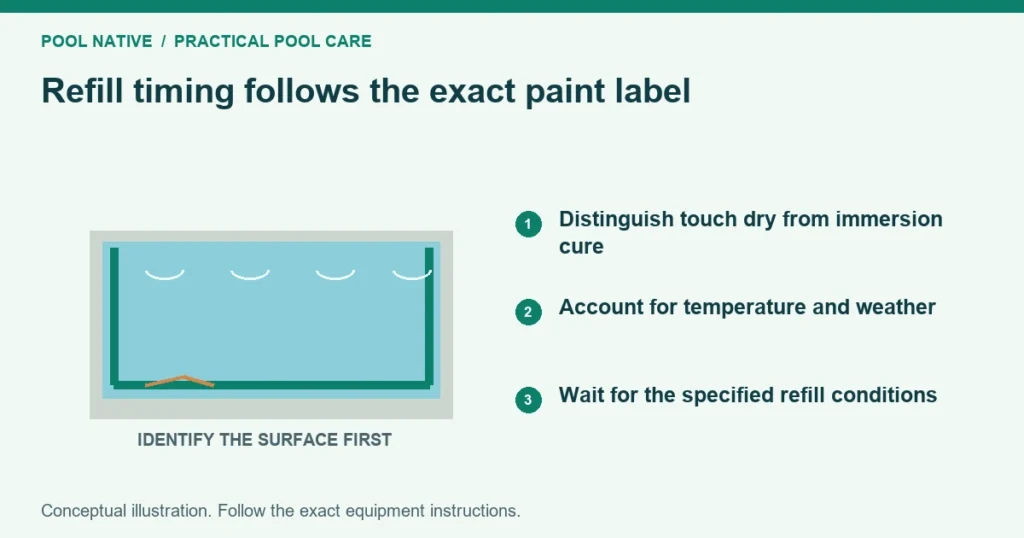
Refill a painted pool only after the exact coating’s required cure period has been met under suitable conditions. Count from the final coat, including later touchups. A surface that feels dry may still be unready for continuous immersion.
There is no single refill interval for all epoxy, acrylic and rubber pool paints. Product formulation, temperature, moisture, ventilation and film thickness affect the decision. Use the current label and technical instructions for the paint actually applied.
Keep three different clocks separate
| Stage | What the waiting period is for | Where the timing starts |
|---|---|---|
| Surface drying before paint | Preparing the substrate for the chosen coating | After the relevant cleaning, rinsing or repair step |
| Time between coats | Allowing another coat to bond correctly | After the preceding coat under the stated conditions |
| Final cure before filling | Preparing the film for continuous water exposure | After the last coat or later repair coat |
A quick recoat time does not shorten the final cure requirement. Nor can several days of surface drying before painting count toward cure afterward. Write the three dates separately on the job record.
For epoxy, working time after mixing is another limit. It governs how long the mixed batch can be applied. It is not the same as any of the three drying periods above.
Examples show why the product name matters
The current US INSL-X Waterborne Pool Paint data sheet lists seven days outdoors and fourteen days indoors for full cure. Its stated drying conditions are 77°F and 50% relative humidity. It also says cool temperatures and high humidity lengthen drying and return to service.
Ramuc EP’s application guide gives five to seven dry days outdoors and ten to fourteen days indoors with adequate ventilation. Its rain instructions add drying time. Those are instructions for that product, not a universal epoxy rule.
The INSL-X chlorinated rubber guide specifies at least seven days outdoors and fourteen indoors after the final coat. Matching numbers on two products do not make their preparation or application requirements interchangeable.
These examples explain the range of published answers. They do not authorize choosing the shortest interval from a search result. Read the document for the precise product and market shown on the can.
Resolve conflicting instructions before scheduling water
A website, old brochure and current data sheet may not agree. Even a single guide can contain inconsistent timing. Ramuc DS’s published guide, for example, contains different outdoor drying periods in its application and troubleshooting sections.
Do not average conflicting numbers or choose the one that fits a weekend plan. Send the manufacturer the product label, document versions and site conditions. Ask for written confirmation of the required immersion cure and any weather adjustment.
Preparation instructions can also differ from refill instructions. A statement allowing a damp application surface does not mean rain is harmless after painting. Keep the question specific: when may this applied coating be continuously submerged?
Start from the last actual application
Record the date and time when the final coat was completed. Mark later touchups separately by location. A patch applied two days later has not cured as long as the rest of the pool.
The whole pool must be ready before filling because the water will reach those newer areas too. Ask the manufacturer how a repaired section affects the schedule. Do not assume that a small patch can be submerged early.
Keep a photo of the paint label and record batch information if available. Those details help technical support identify the correct instructions. The color alone is not enough.
Track conditions throughout the wait
Record daily temperatures, cold nights, rainfall, standing water and unusual humidity. Include whether the pool is indoors or poorly ventilated. A warm afternoon does not describe the entire cure period.
Surface conditions matter as well as the weather forecast. A shaded deep end may remain damp, and a sunlit wall may have exceeded the application temperature limit. Report those observations if the coating looks uneven or stays soft.
Do not speed cure with an improvised heater or ignore solvent precautions. Ventilation equipment must be suitable for the product’s safety requirements and the site. Ordinary electrical equipment can be inappropriate around flammable vapors or wet conditions.
If rain enters before cure is complete
Record when rain occurred relative to the final coat and how long water remained. Follow the manufacturer’s method for removing standing water safely. Avoid dragging equipment across soft paint or creating an electrical hazard in the empty pool.
Some instructions require extra dry days after rain. That timing adjustment does not establish that paint exposed very early remains undamaged. Report soft areas, color in puddles, whitening or washed sections to the manufacturer.
Do not cover the pool with a tarp as an assumed cure aid. INSL-X warns that a cover can trap material that needs to escape during drying. A rain plan must preserve the required ventilation rather than simply hide the surface.
Inspect without treating touch as a cure test
Look for tacky areas, blistering, unusual whitening, pooled material and debris embedded in the film. Pay attention to corners, steps and repaired sections. Those observations can identify a reason to delay and seek advice.
A uniformly dry appearance is necessary evidence but not proof of full cure. A fingertip cannot measure whether the full film thickness is ready for immersion. Complete the specified time and condition checks even when the paint looks finished.
If the surface remains abnormal after the expected period, do not just add another arbitrary day. Ask whether the problem requires treatment or repair. Peeling and blistering diagnosis explains the evidence to preserve.
Coordinate cure with the safe empty period
An empty pool requires a separate assessment of construction, groundwater and drainage conditions. Do not decide it is safe to remain empty merely because it has been drained before. The contractor should plan the entire preparation and cure window before removing water.
If conditions change while the pool is empty, contact the pool professional promptly. Do not choose between structural risk and immature paint by guessing. The professional must manage the immediate site condition and coordinate any coating consequences.
For fiberglass construction, follow the specific drainage precautions. A paint manufacturer’s drying requirement is not approval to drain a fiberglass shell. Surface work and structural protection must be planned together.
Use a refill release record
Before starting water, confirm the following with the applicator or manufacturer as appropriate:
- Exact coating and current immersion instructions identified.
- Final coat and later touchup times recorded.
- Required drying conditions and any added weather allowance met.
- Abnormal film areas assessed and repaired if required.
- Drainage protection and pool fittings ready for refill.
- Refill and chemical startup responsibilities assigned.
After filling, follow the approved fresh fill chemical startup and coating care instructions. Do not let concentrated chemicals rest on new paint. Cleaner use and other equipment restrictions may also have their own manufacturer schedule.
Save the release record with the paint information. It gives the next owner or service technician an actual history of the finish. More immediately, it prevents a pool party date from becoming the only reason to fill early.


