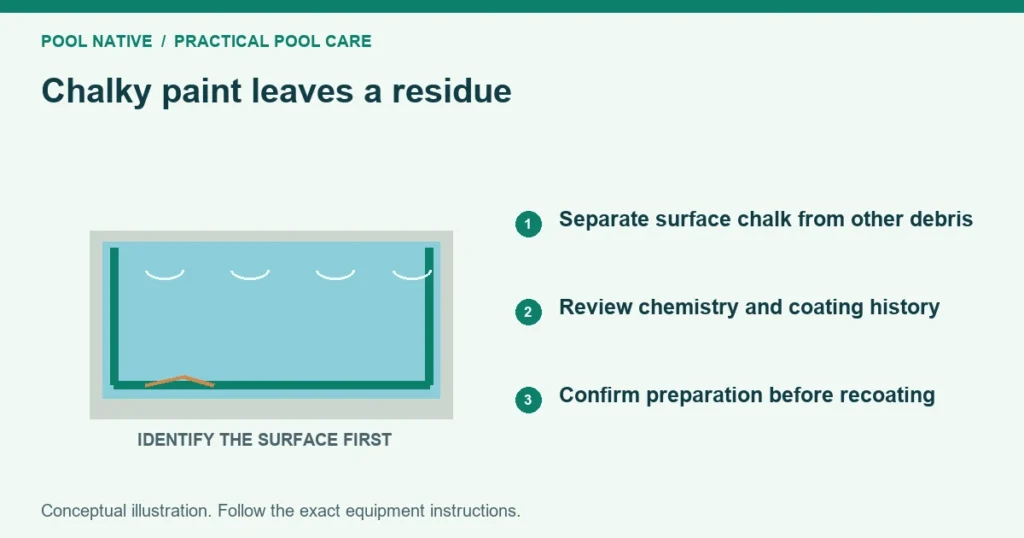
Chalky pool paint releases fine powder from its surface. Outdoor exposure, chemical conditions and wear can contribute, but powder in the pool is not automatically paint. Identify the material and check whether the coating remains bonded before choosing a treatment.
A thin layer of weathered pigment needs a different response from paint lifting in flakes. Hard white deposits need another approach again. Adding shock or repainting immediately can miss the actual problem.
First confirm that the pool is painted
Check the finish records or ask the previous owner. White plaster can shed dust, and fiberglass can have a factory gelcoat rather than paint. A blue color does not identify the surface construction.
If the coating history is unknown, photograph the finish and any naturally exposed layers. Use the paint identification process before applying solvents or abrasive cleaners. Do not drain the pool just to inspect a powdery area.
Note whether the residue appeared after painting, after a chemical treatment or gradually over several seasons. Those histories suggest different questions. Keep the observation separate from the explanation until the surface is identified.
Distinguish powder, crust and flakes
Use a clean soft cloth on a small accessible area without aggressive rubbing. Observe what transfers and what remains attached. Do not use a wire brush or an abrasive pad as a diagnostic test.
| What you observe | What to investigate next |
|---|---|
| Fine powder matching the paint color | Surface chalking, coating wear or cure history |
| Hard raised white material that stays attached | Mineral deposit and water balance history |
| Soft slippery film | Biological growth or accumulated contamination |
| Loose pieces with visible thickness or several colors | Paint adhesion and underlying layers |
| Gritty material from an unpainted cement finish | Plaster condition or deposits rather than paint chemistry |
These observations narrow the investigation; they do not identify a substance conclusively. Several materials can coexist. A painted wall can have both chalk and scale.
Photograph the cloth and test area under similar light. Repeat only a gentle comparison at another accessible location. Stop if the film lifts or the surface is easily damaged.
Why a bonded coating can become chalky
Sunlight and normal exposure can weather the outer coating surface. Ramuc describes chalking as a characteristic of epoxy exposed to ultraviolet light. That does not automatically mean the coating has detached from the pool.
Chemical conditions and concentrated chemical contact can also affect the finish. Review the paint manufacturer’s maintenance requirements and the pool’s water history. Do not assume a coating described as chemical resistant tolerates undiluted products sitting on it.
Abrasion is another consideration. A harsh brush or cleaner repeatedly crossing the same area may accelerate wear. Compare cleaner paths, steps and heavily used ledges with less disturbed surfaces.
The question is whether the coating remains serviceable after appropriate gentle cleaning. A recurring heavy residue, bare spots or widespread film loss deserves manufacturer assessment. A color change alone does not establish the remaining coating thickness.
Recently painted pools need a cure review
Powder, whitening or soft film soon after refilling is not necessarily ordinary aging. Check the exact product, final coat time and the conditions before water returned. Record rain or standing water during the cure period.
Ramuc’s troubleshooting guidance distinguishes several appearance problems, including early water exposure and chemical deposits. A white appearance is therefore not enough to diagnose one cause. Send photos and the application record before trying a corrective chemical treatment.
Use the refill timing checklist to review the job. Waiting after the pool has already been filled does not recreate the dry cure conditions the product required. Ask the manufacturer whether observation, treatment or coating repair is appropriate.
Clean gently and collect the residue
Follow the coating manufacturer’s cleaning method. Ramuc’s care guide favors soft nylon brushing and nonabrasive cleaning. It warns against harsh tools that can damage the finish.
Work a small area first and observe the result. Remove loosened debris with equipment suitable for the pool surface. Monitor baskets and filter condition because collected material still has to leave the circulation system.
A filter catching paint powder does not repair the coating. If gentle cleaning repeatedly produces substantial new residue, stop treating the filter as the solution. Investigate the source of continuing material loss.
Do not acid wash painted walls to see whether the chalk disappears. Do not add a clarifier solely because a coating is shedding. Those actions can change the water or finish without resolving the cause.
Review water care without guessing a chemical dose
Gather recent pH, sanitizer and other relevant water results, plus product addition records. Note any unusual treatment, spill or dosing equipment problem. A current normal reading cannot rule out earlier concentrated exposure.
Keep sanitation within the applicable product and pool guidance while the finish is assessed. Do not deliberately underchlorinate to protect the paint. Safe water and a compatible coating maintenance routine must both be maintained.
Add chemicals according to their labels and equipment requirements. Avoid direct concentrated contact with the painted surface. Never mix chemicals or use a skimmer as an assumed universal dosing point.
If the residue is a firm mineral crust, assess the water’s tendency to form deposits with a qualified pool professional. Treating it as worn pigment can lead to needless repainting. A surface specific cleaning method should follow identification.
Decide whether repainting is justified
Repainting becomes a consideration when the existing coating is worn through, unsuitable or no longer serviceable after assessment. It still requires confirmation of the existing paint and a sound base. New paint cannot bond reliably to retained loose chalk.
If the surface is peeling or blistered, use the coating failure guide. If it is largely bonded but faded, ask whether cleaning and monitoring are appropriate. These are different conditions even when both look unattractive from above.
Before accepting a repaint quote, ask how loose material will be removed and sound adhesion confirmed. Ask which layers remain and which exact system will cover them. Compare compatible coating options only after those questions are answered.
Keep a simple observation record
Record the location, date, residue appearance and cleaning method. Add whether the coating underneath stayed intact and how quickly residue returned. Include water results and any equipment or chemical changes.
For example, powder returning only along a cleaner route suggests a different investigation from uniform residue after a recent refill. Neither pattern proves the cause. The record gives the coating manufacturer a useful starting point instead of another photograph of cloudy water.


