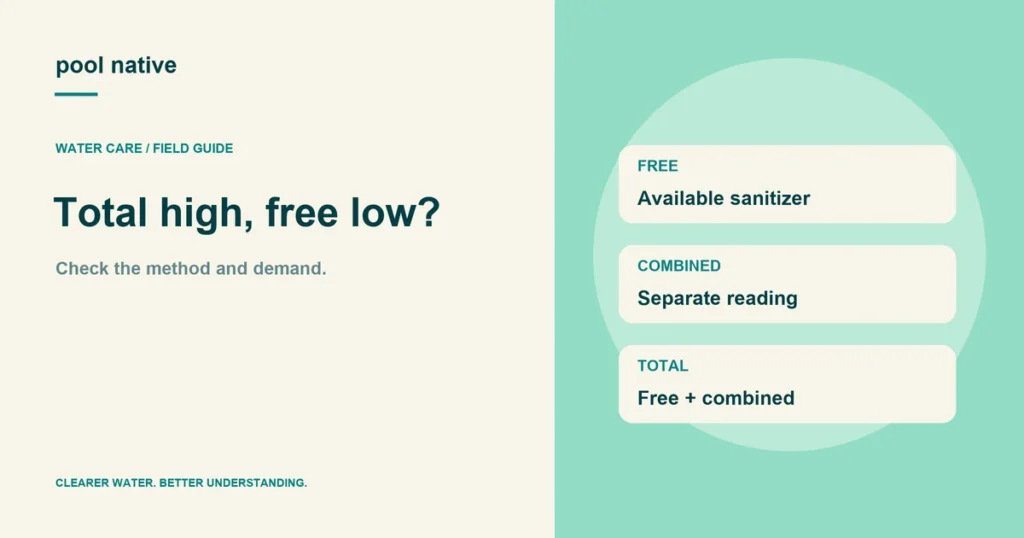
High total chlorine with low free chlorine can indicate a substantial combined chlorine result. But first confirm that the two tests are valid and measure comparable samples. A method interference, incorrect sequence, or broad color estimate can produce a misleading difference.
Do not treat high total chlorine as proof that the pool has enough available sanitizer. Keep swimming on hold if the free residual and other required conditions are not satisfied. The relevant measurement is not simply whichever number is larger.
Verify the pattern
Repeat the test with a fresh representative sample and the correct reagents. Confirm that the kit actually measures free and total chlorine separately. Follow the timing carefully rather than reading one sample much later than the other.
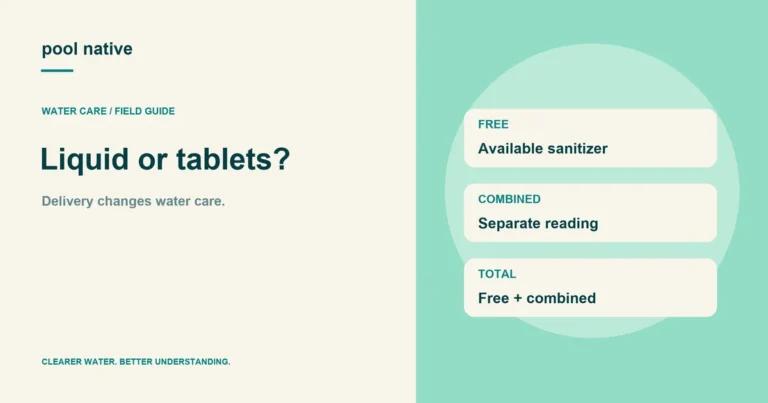
Subtract free from total only when the method supports that calculation. A FAS-DPD kit may have a direct combined chlorine step. The measurement comparison explains the difference.
Check recent use of nonchlorine shock or other oxidizers. Some can interfere with combined chlorine testing. Use the test maker’s specific removal or alternative procedure rather than adding a random neutralizer to the sample.
Review ongoing contamination and chlorine delivery
Heavy use, debris, and other contamination can increase sanitizer demand. Poor circulation can leave treatment uneven. A feeder or salt cell may also be delivering less than the setting suggests.
Record recent additions, circulation hours, and changes in use. Confirm CYA where relevant. Check the pump schedule and actual free chlorine trend rather than judging the system from one post treatment reading.
Remove leaves and other accessible debris with suitable equipment. Check baskets and filter operation using their normal safe service procedures. Physical cleaning supports treatment but doesn’t replace the required residual.
Avoid a blind breakpoint calculation
The familiar instruction to add ten times the combined chlorine reading is not a universal dosing formula. It confuses a simplified treatment concept with the chemistry of a particular sample. Interferences and different combined compounds make that shortcut unreliable.
Use a justified shock treatment program and the exact product label. Calculate from actual pool volume and strength. Keep each addition and subsequent measurement recorded so you can judge whether the response matches the plan.
Recheck after treatment
Allow the specified circulation and sampling interval, then measure with a suitable method. Don’t immediately stack another product because the first reading was disappointing. Verify that the test is capable of reading the treated water.
Persistent results despite correct treatment warrant professional investigation. Supply the full test record, product names, and timing. A fresh diagnosis is more useful than repeatedly treating an unexplained number.
If sanitation is restored and combined chlorine readings settle, return to the routine chlorine monitoring plan. Keep the useful lessons about demand or delivery in the maintenance record rather than treating the episode as a reason to shock blindly forever.