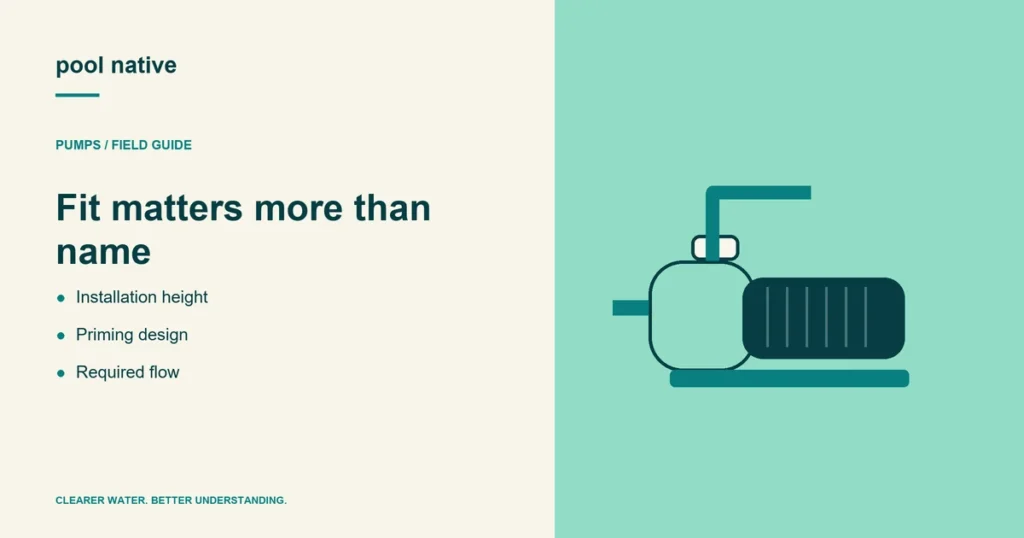
Above ground vs inground pool pump labels describe common applications, but the installation requirements decide compatibility. Check whether the pump receives a flooded water supply or must lift water to its inlet. Then match flow, connections, controls, and electrical requirements.
Don’t assume every above ground pump lacks self priming, or every inground pump suits an above ground installation. Model designs and regional product ranges differ.
Above ground vs inground pool pump: the inlet condition
A flooded inlet means water can reach the pump by gravity because the pump is below the water level. A suction lift arrangement places the pump above that level. The pump must be designed and installed for the actual arrangement.
Self priming doesn’t mean safe to run dry. Even a self priming pump requires the specified preparation and a suitable water supply. Use the priming guide with its own manual.
| Compatibility question | Why it matters |
|---|---|
| Where is the pump relative to the water? | Determines the required inlet and priming capability. |
| What flow does the system need? | Must suit the filter, plumbing, and connected equipment. |
| How do the ports connect? | Hose and rigid pipe arrangements may require different fittings. |
| What supply and controls are installed? | Electrical and automation compatibility must be confirmed. |
A larger pump isn’t automatically an upgrade
A small pool can still have restrictive plumbing, while a larger pool may operate efficiently at modest flow. Compare the pump curve with the system requirements. Horsepower alone doesn’t establish the operating flow.
Excess flow can exceed equipment limits or make the system harder to manage. Use the pump sizing process and filter flow requirements together. Don’t solve weak circulation before diagnosing its cause.
Inspect the replacement fit
Check port height, pipe size, mounting, service clearance, and the required weather protection. For hose connected systems, use approved adapters and supports. Avoid makeshift connections that pull sideways on the pump housing.
Have qualified personnel confirm the electrical supply and required protection. A plug or voltage label from another country isn’t a compatibility shortcut. Follow the exact product instructions and local installation requirements.
Choose the model from the installation
Ask the supplier to confirm the pump for your elevation, flow requirement, filter, and controls. Provide photos and model numbers instead of describing only the pool’s wall height. Keep that confirmation with the equipment records.
If replacing a complete kit pump, check the pool manufacturer’s permitted equipment arrangements. The above ground pool guide helps organize those system details. A suitable replacement should restore a verified operating setup, not merely fit the available space.