An above ground pool still needs reliable sanitation, circulation, cleaning, and safe access. What changes is the equipment layout and the structure holding the water. Care that suits a permanent steel wall pool may be wrong for a seasonal frame pool.
Start with the exact pool manual, not just its diameter. Save the pump, filter, ladder, and sanitizer instructions separately. Accessories supplied together can still have different care and storage requirements.
Identify which kind of pool you own
Permanent wall pools and portable frame or inflatable ring pools have different installation and winter limits. Some seasonal pools must be drained and stored when temperatures fall below their specified limit. Leaving one assembled because a neighbor does it is not the same as following its instructions.
Record the model, liner material, operating water depth, and approximate water volume. Use actual filled depth when calculating volume, not the wall height on the box. Those gallons or liters determine chemical quantities.
Inspect the structure from outside. Look for displaced supports, unusual leaning, liner strain, or erosion around the base. Don’t try to level a filled pool by lifting a leg or packing material under it; follow the maker’s corrective procedure.
| Care decision | Portable seasonal pool | Permanent wall pool |
|---|---|---|
| Cold weather | Check the maker’s drain and storage threshold | Use the approved assembled closing plan |
| Structural concern | Stop use and follow the support correction procedure | Have wall, base, or support damage assessed |
| Equipment removal | Label removable hoses and fittings | Identify permanent plumbing and isolation points |
Know the circulation path
Trace water from the pool outlet through the pump and filter and back to the return. Identify shutoff valves, inlet screens, hoses, and any connections used for cleaning. Keep suction fittings intact and never operate with a missing or damaged protective cover.
An above ground pump may sit below water level and rely on gravity for its initial water supply. That affects lid opening, valve isolation, and priming. Use pump startup guidance with the actual equipment manual rather than copying an inground setup.
Check flexible hoses for kinks, deterioration, loose connections, and poor support. Avoid loading a pool wall fitting with a heavy unsupported hose. Keep electrical supplies installed and protected as required; a convenient extension cord is not a substitute for the proper arrangement.
Build the care routine around measurements
Test sanitizer and pH on a schedule appropriate to residential pool guidance and use. Check other measurements required by the treatment system and finish. A small water volume can respond sharply to an inaccurately measured addition.
Use the water testing procedure and record the actual result before adding chemicals. Pool clarity isn’t proof of adequate sanitation. Don’t apply a chemical dose intended for 10,000 gallons to a much smaller pool without recalculating it.
Skim leaves before they sink and brush using equipment approved for the liner or surface. Vacuum settled debris with a compatible cleaner. A metal brush or sharp vacuum edge can damage a liner even when it looks effective on another pool.
A 2,000 gallon pool contains one fifth of 10,000 gallons. If a product label allows proportional dosing, its 10,000 gallon reference amount scales by 0.2 for the same intended change. It does not scale by the pool’s diameter or advertised wall height.
Check minimum increments, package use instructions, and measurement accuracy before using that fraction. Some products cannot simply be divided and stored after opening. Small volume makes careful weighing more important, not optional.
Give the filter its own care plan
Small cartridge pumps may use elements that need attention more often under heavy debris loads. Larger sand systems have their own cleaning and backwashing instructions. The supplied pump’s operating hours don’t tell you whether the filter needs service.
Use filter type and cleaning guidance to identify the right route. Don’t backwash a cartridge system. Don’t run without the required element simply because a dirty one restricts flow.
Use the above ground pump upgrade guide when planning a change to the supplied circulation package. Record hose sizes and adapter types before replacing components. A larger pump is not automatically compatible with the existing filter and wall fittings.
Keep access and surroundings part of maintenance
Follow applicable barrier and ladder requirements, including how access is secured when the pool is unattended. An ordinary pool cover is not necessarily a safety cover. Keep furniture or stored equipment from becoming an unintended climbing route.
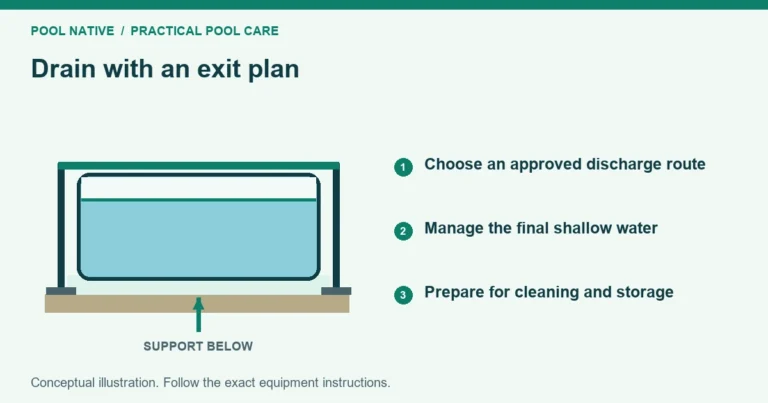
Check the ground for persistent wet areas and investigate unexplained water loss. Splashing and evaporation can lower the level, but a leak can undermine support. Avoid draining a permanent pool without understanding its structural requirements.
Plan closing before cold weather arrives
Choose between continued operation, approved assembled winterization, and draining for storage using the pool’s instructions and climate. Read above ground winterization for the assembled route. Portable pool storage instructions may require a different process entirely.
Save removed fittings, plugs, and labels together for reopening. Record what was disconnected and why. That turns next season’s startup into a documented reversal instead of a box of unidentified parts.