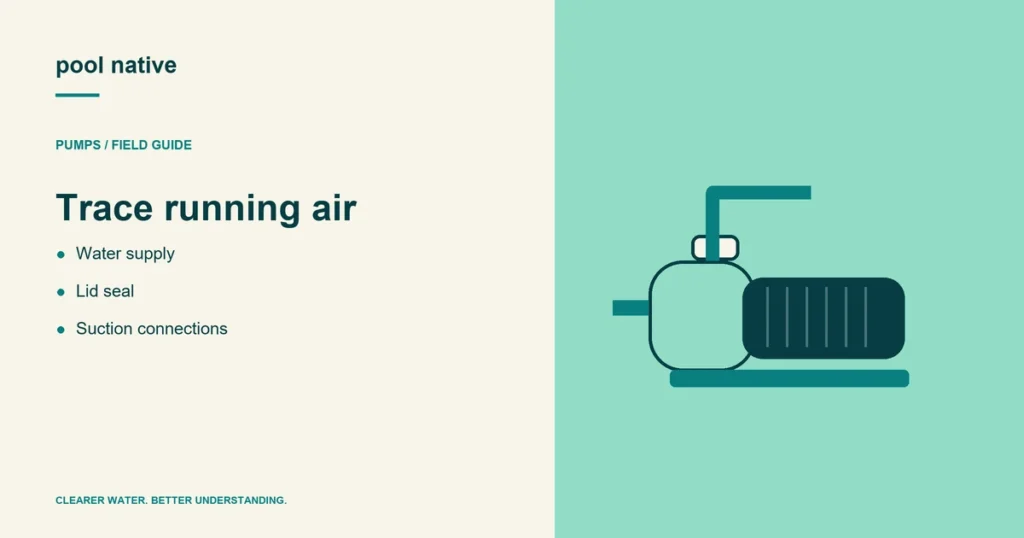
Air in a pool pump basket can be a brief startup purge or a sign of an unstable water supply. Watch whether the pocket clears and circulation settles. Persistent bubbles, surging water, or repeated loss of prime need investigation.
An air leak on the suction side may draw air inward without dripping water outward while running. A dry connection therefore doesn’t rule out air entry.
Read air in the pool pump basket with the operating pattern
| Pattern | Next observation |
|---|---|
| Brief bubbles after basket service | Confirm the prescribed startup clears air and restores stable flow. |
| Continuous bubbles while running | Check water supply and accessible suction side connections. |
| Air begins after connecting a vacuum | Check hose filling, connection sealing, and water level. |
| Basket empties only after shutdown | Investigate the separate drainback pattern. |
Start at the pool
Observe the water level and skimmer without reaching into suction openings. A low level or stuck weir can interrupt water delivery. Check for debris affecting normal entry.
If a vacuum is connected, note whether the symptom disappears after returning to the known normal setup. Follow safe connection procedures. A hose carrying air can make the pump look like the source of the problem.
Check what was recently opened
After lid or basket service, inspect the lid seal through the prescribed shutdown and depressurization process. Debris, a displaced ring, damage, or incorrect seating may prevent sealing. Follow the lid seal guide.
Other possible entry points include suction plumbing joints, drain plug seals, and valve seals. Identify the actual component before buying parts. Don’t smear adhesive over joints while the pump runs.
Never open a hot pump that has been running without water. Follow the cooling and safe access instructions in its manual. Stop unsuccessful operation rather than repeatedly attempting a long dry prime.
Pair air observations with pressure and flow
Record RPM, filter pressure, return flow, and whether the basket level surges. Compare the same operating state. The low pressure guide helps interpret a simultaneous drop in circulation.
A small stable pocket isn’t enough evidence to name a failed part. Follow the pump manufacturer’s expected operating behavior. Worsening air, weak circulation, or failed equipment flow needs attention even if the motor sounds normal.
When to move beyond accessible checks
Persistent air after supply, basket, and lid checks may require testing by a qualified technician. Provide the timing and recent service history. Avoid dismantling valves or underground plumbing by guesswork.
If the pump cannot establish circulation, use the failed priming route. If water disappears only overnight, use the shutdown drainback guide. Keeping these patterns separate makes the next check more useful.
After correction, verify stable operation at each normal speed stage. Check that connected equipment receives the flow it needs. Record what changed and whether the symptom actually stopped.