Stop operating an automatic pool cover if it will not open or close normally. Repeated button presses can turn a small obstruction into a damaged rope, track or drive. Secure the pool while you identify what the system actually does.
Do not swim with the cover partly over the water. If it is stuck open, maintain the pool’s other access barriers. Do not count a partially closed cover as a functioning safety barrier.
Describe the failure before trying again
| Response | Useful next check |
|---|---|
| No light, sound or movement | Identify controller power and the documented supply checks |
| Controller rejects input | Check the correct code and operating sequence |
| Controller accepts input but motor is silent | Record indicators for system service |
| Motor hums or clicks but cover stays still | Stop; check visible load and obstruction conditions |
| Cover moves, then stops | Note the location, direction and any error indication |
| Only one side moves normally | Stop and use the uneven cover guide |
Note whether it fails while opening, closing or both. A fault occurring at the same track location differs from a system that never starts. Record any recent power outage, storm, pool draining or maintenance.
For input and indicator questions, use the keypad troubleshooting guide. A lit keypad does not establish that the drive has usable power.
Remove obvious operating loads first
Check for standing water, snow, ice, leaves and objects in the travel path. Remove only what can be handled safely under the cover instructions. Do not move a loaded cover to avoid pumping or cleaning it.
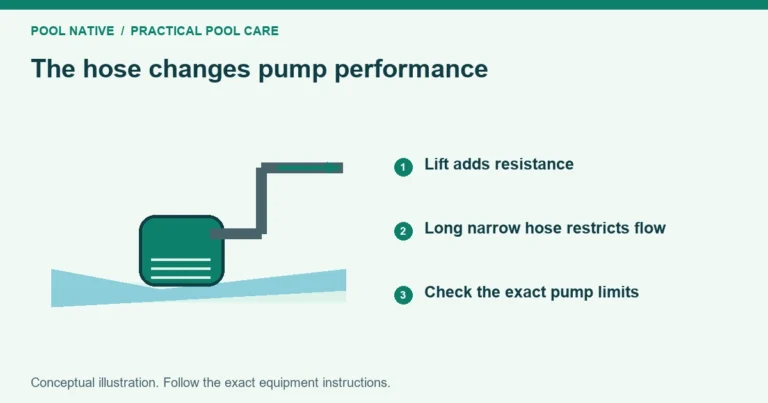
Confirm that the cover pump, hose and cord have been removed before opening as required. Check removable ladders and other pool accessories. A forgotten object can interfere with the leading edge even when the track looks clear.
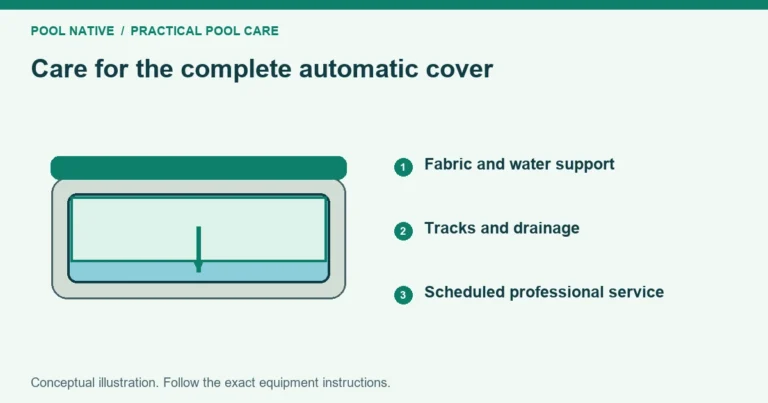
Look at the pool water level. A cover that depends on water support may struggle over a low pool. Do not tighten or increase motor force to compensate for missing water.
If the pool has been drained for work, consult the installer before moving the cover. A dry pool changes both support and friction. Restore the approved operating conditions rather than experimenting with the controls.
Check power without opening electrical equipment
Confirm the intended user controls and any externally accessible disconnect position. Follow the manual’s owner checks. Do not remove an electrical panel or reach into a wet housing to look for a light.
If protection has tripped, investigate the cause rather than resetting it repeatedly. Burning odor, damaged wiring, water in electrical equipment or repeated trips require professional attention. Keep the system off until assessed.
A power reset is appropriate only when the exact manual calls for it under the observed conditions. Record the error before resetting. Cycling power can erase a useful clue without resolving the fault.
If the motor sounds but the cover does not move
Release the control immediately. Check visible cover loading and the travel path from a safe position. Do not push the leading edge while another person holds the button.
A slipping clutch, worn drive part or jammed mechanism can create similar symptoms. The sound alone is not enough to select a repair. Tell the technician whether the cover remained still or moved slightly before stopping.
Do not raise a torque or current limit to overcome resistance. Cover Pools specifically separates excess load from an actual clutch adjustment need. Its manual directs owners to service help for complex repairs.
Never bypass a protective stop or replace a designed weak link with a stronger improvised part. Those changes can transfer force to more expensive components. They may also alter the system’s safety behavior.
If it stops at a particular point
Record the leading edge location and which side arrives there first. Photograph the track area while the system is stopped. Look for visible debris, a lifted joint or contact with another object.
Clean only accessible areas through the approved method with power isolated as directed. Do not loosen the track to straighten it by eye. A recurring obstruction at a joint needs an installation or wear assessment.
If alignment is changing, stop further travel and read crooked cover troubleshooting. Repeated full cycles are not a useful test when the edge is leaving its intended path.
Can you move it manually?
Some systems have an emergency manual procedure. Others require specific disconnection steps, tools or service assistance. Hydraulic and electric drive instructions are not interchangeable.
Do not pull on ropes, roll the tube by hand or remove a drive connection without the exact procedure. Stored tension and moving parts make guessing unsafe. Contact the installer if you cannot perform the documented method as intended.
Before manually opening, establish how the pool will be secured afterward. A cover that can be pulled open may be much harder to close. Do not trade a stuck closed cover for an unsecured pool without a plan.
Make the service request useful
Provide the cover brand, model, controller type and any displayed error. Include the direction, stopping location, sound and recent changes. Send an overall pool photo alongside close views of visible damage.
State whether top water is removed and whether pool water is at its required level. Mention if the cover is partly open or the housing flooded. These details help the technician prepare and prioritize the repair.
After repair, observe a complete normal opening and closing under supervision. Confirm full travel, proper stopping and restored drainage. Add the service finding to your automatic cover maintenance record.