Opening a pool means restoring equipment safely, removing winter debris, establishing reliable water treatment, and checking access before anyone swims. Pulling off the cover and adding shock is only part of the job. The sequence depends on how the pool was closed and what equipment was protected.
Find the closing record, manuals, and stored fittings before starting. If you don’t know what was plugged, disconnected, or isolated, get that identified first. An incorrect restart can damage equipment before the water looks any different.
Inspect the pool and surroundings
Check the cover, barriers, deck, visible fittings, and pool structure. Look for damage, unusual water loss, or displaced equipment. Keep children and pets away during cover removal and equipment work.
Remove debris and standing water from the cover using its approved method. Avoid dumping contaminated cover water into the pool. Clean, dry, and store the cover according to its instructions once removed.
Reverse the documented closing steps
Locate the plugs, drain caps, baskets, gauges, and accessories removed at closing. Match each part to its actual location. Inspect seals and replace damaged parts with the correct components.
Restore filter internals and any required media according to the manual. A DE system may need its specified recharge after service. A cartridge system needs the correct elements and closure assembly before pressurization.
Do not assume all valves should simply be open. Restore the documented operating path for the pool, heater, and any spa or solar circuits. Have unfamiliar plumbing identified before starting the pump.
Establish water supply and circulation
Restore the water level required by the system. Keep the pump and heater off until their startup conditions are satisfied. Use the pump priming procedure with the actual manuals.
Stand clear of filter closures during startup and follow the air release instructions. Check for steady circulation and leaks. Stop if the pump fails to prime or equipment behaves abnormally.
Record a clean filter pressure reference at a known speed and mode after confirmed service. Verify that the controller clock and schedule survived winter correctly. Use pump scheduling to set the operating plan for current conditions.
Clean and test before treating
Remove debris, brush with a compatible tool, and vacuum as the system allows. Obtain valid sanitizer, pH, and broader water readings. Check CYA, hardness, and alkalinity rather than assuming last season’s values still apply.
Choose corrections from the results and exact product instructions. Fresh fill startup applies if substantial new water changes the chemistry, but new plaster still has its own commissioning process. Avoid an automatic stack of chemicals from a generic opening bundle.
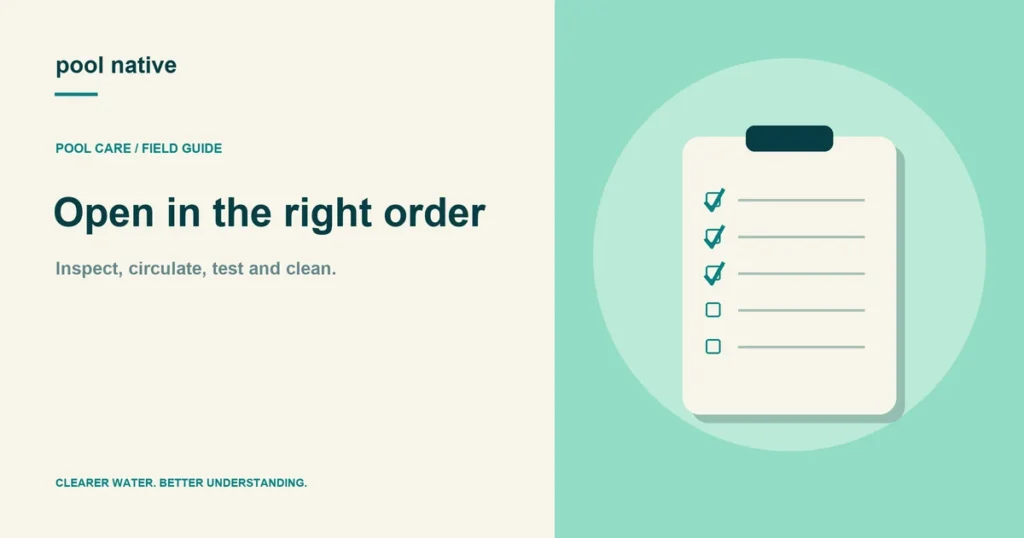
Keep a clear opening checklist
- Equipment assembled, required plugs removed, and drainage fittings restored.
- Pump primed, filter functioning, and no unresolved leaks or alarms.
- Water measurements and treatment response recorded.
- Bottom clearly visible and product reentry conditions satisfied.
- Barriers, ladders, suction covers, and access arrangements checked.
Complete the weekly maintenance routine after startup and keep testing through the first operating days. A pool can change quickly as temperature and use increase. Opening is complete when the system is stable, not when the last bag is empty.