When a pool cleaner booster pump is not working, first distinguish a pump that will not start from one that runs without supplying the cleaner properly. Check the filtration pump and control schedule before assuming the motor has failed. A booster needs the correct water supply as well as electrical power.
Stop a pump that hums without starting, repeatedly trips protection, leaks near electrical components, or runs without water. Do not keep cycling the switch to see whether it recovers. Electrical testing and pump repairs belong with a qualified professional.
Identify the actual symptom
Observe the equipment from a safe, dry location using its normal controls. Do not remove covers, touch wiring, or open a pressurized connection. Record what happens when the scheduled cleaner period begins.
| What happens | Safe first check | What needs professional diagnosis |
|---|---|---|
| Completely silent | Displayed schedule, operating mode, and filtration pump status | Power supply, relay, wiring, or motor fault |
| Hums but does not start | Switch it off and note when it began | Starting components, seized parts, or electrical supply |
| Starts, then trips a breaker or protective device | Leave it off and record the device that tripped | Electrical or motor fault; repeated resets are not a repair |
| Runs but cleaner has little flow | Confirm supply pump operation and accessible water path | Internal blockage, wear, seal, or installation problem |
| Runs, heats, and stops repeatedly | Stop use and check for blocked external ventilation | Cooling, electrical supply, or motor condition |
The same sound can have more than one cause. A hum does not identify a capacitor, and silence does not prove a dead motor. These observations tell a technician where to begin without exposing the owner to live electrical work.
Confirm that this cleaner uses a booster
Check the cleaner model and the equipment connected to its line. A Polaris 280 uses a booster, while a Polaris 360 operates from the filtration return arrangement. Do not add or energize a booster because every pressure cleaner is assumed to need one.
Identify the booster model separately from the cleaner. Its startup, supply, and control instructions govern the pump. A replacement with similar horsepower is not automatically compatible with the existing wiring or plumbing.
The pressure cleaner setup guide explains the two supply arrangements. If the equipment labels or pipe routes are unclear, have them identified before changing schedules. Guessing which pump feeds which circuit can create a dry running condition.
Check the filtration pump first
The cited Polaris PB4SQ is not self priming and depends on water from the filtration pump. Its manual prohibits running it dry or without the cleaner connected. Do not detach the cleaner and run the booster as an improvised output test.
Confirm the filtration pump has established normal circulation. Check the pool water level and inspect for persistent air in the pump basket from outside the closed lid. If circulation is unstable, resolve that before restarting the booster.
Clean accessible baskets and screens with the appropriate shutdown procedure. Service the filter when its instructions indicate cleaning is due. Do not open a filter, pump lid, union, or drain plug while the system is pressurized.
A variable speed filtration pump must supply adequate water throughout the booster period. Merely seeing its display lit is not enough. Have the required operating setting established for the actual installation rather than copying a universal RPM value.
Compare the two schedules
Look at the filter schedule, cleaner schedule, operating mode, and any recent clock change. A manual mode, service mode, or overlapping feature schedule may alter expected operation. Record the displayed settings before changing an owner adjustable schedule.
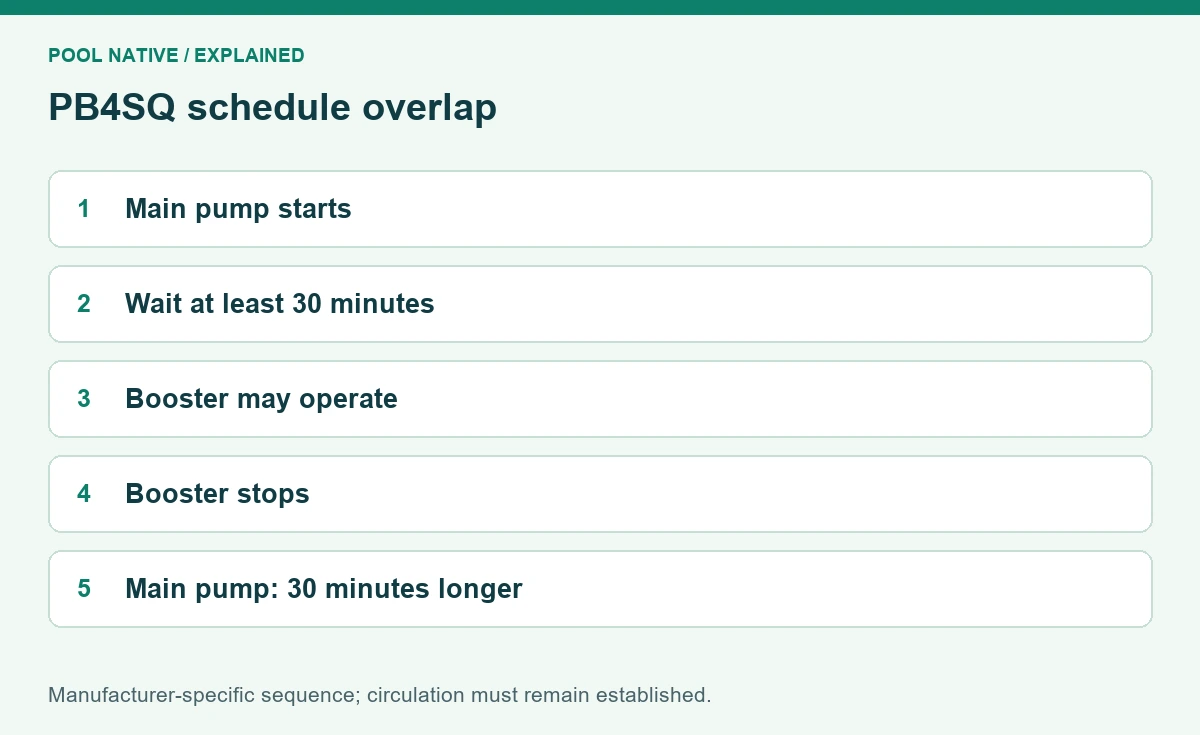
For the cited PB4SQ, the control instructions require the filter pump to run whenever the booster runs. They specify starting the booster after 30 minutes of filtration and stopping it 30 minutes before filtration ends. Follow the pump and control manuals for the installed system.
For example, a filtration window from 9 AM to 5 PM leaves a PB4SQ timing window from 9:30 AM to 4:30 PM. That does not mean the cleaner needs all seven hours. Its actual cleaning period must fit inside the permitted window and water supply conditions.
Do not bypass an interlock, move wires, or force a relay closed to make the booster start. If the displayed schedule is correct but operation is not, provide those settings to the service technician. Controls and electrical supply need proper testing.
If it runs but the cleaner is weak
Inspect the cleaner’s accessible screen, feed hose, and swivels after shutdown. Check for a kink, split, or loose connection. Water lost along the route can reduce cleaner performance even when the booster motor runs normally.
Measure cleaner wheel RPM using the model’s procedure once normal operation is safe. The RPM measurement guide explains how to avoid counting during backup. A low reading confirms poor operating performance but does not locate the fault by itself.
Look separately at wall relief discharge and unintended leakage. The wall fitting guide explains why visible relief flow cannot establish that the cleaner receives enough water. Do not block the relief outlet to compensate for weak movement.
If the external path is sound, professional checks may include the impellers, seals, supply, and installation. The PB4SQ manual identifies internal debris and wear among possible causes of low pressure. It also directs pump repairs to qualified service personnel.
If it leaks or stops when hot
Record where water first appears without touching the running pump. Leakage at a hose connection differs from water between the motor and pump body. Keep the pump off if water threatens electrical components or the leak is substantial.
Clear loose items obstructing external ventilation only when safe and with equipment stopped. Do not wrap a running motor to quiet it or protect it from rain. Repeated heat related shutdown still needs diagnosis rather than progressively shorter timer settings.
Avoid tightening plastic fittings aggressively. The cited PB4SQ manual warns that excessive tightening can crack the housing. A damaged seal or body needs the correct repair, not a coating of adhesive around the leak.
Give the technician a useful fault record
Provide the booster and cleaner models, the symptom, both schedules, and any recent equipment change. Include the cleaner RPM only if it could be measured safely. Mention whether normal pool circulation also has a problem.
After repair, verify the scheduled start and stop sequence as well as cleaner operation. Check for leaks and confirm the original symptom is resolved through a complete run. A pump that starts once has not yet demonstrated reliable operation under its normal schedule.