A pool cover pump not working needs one first distinction: is it silent, waiting for enough water, or running without discharge? Those symptoms lead to different checks. Identify the exact model before testing it or opening any parts.
Keep children and pets away from standing water and the cover. Do not step onto the cover to retrieve the pump. If the supply is flooded or the cord is damaged, keep clear and arrange safe electrical isolation.
Classify the symptom before changing anything
| What you observe | First useful check |
|---|---|
| No sound or activation | Safe power supply, required water depth, and the model’s sensor arrangement. |
| Runs but no outlet flow | Intake, priming or air release provisions, hose route, and discharge lift. |
| Stops with shallow water remaining | Specified shutoff and restart levels; this may be normal. |
Record whether the problem followed frost, a storm, storage, or moving the hose. Note any change to the pump’s position. These details help distinguish a new obstruction from an electrical or mechanical fault.
Check power without repeated resetting
Confirm the plug and required protective supply are accessible and dry. Follow the manufacturer’s normal power checks. Do not repeatedly reset a breaker or GFCI that trips again.
A recurring trip, damaged insulation, burning smell, or water at an electrical connection needs professional attention. Do not bypass protection or open the sealed motor housing. Unplug safely before touching or moving the pump.
Check the start depth at the pump
A puddle elsewhere on the cover does not establish the water depth around the sensor. The pump may be sitting on a fold, tilted, or outside the collection area. Reposition only while disconnected and using the approved handling method.
For example, the WAYNE WAPC250 needs about 2 1/8 inches to start and stops near 3/4 inch. It will not immediately restart in the shallow water left behind. Those numbers apply to that model’s instructions, not every cover pump.
Little Giant’s APCP-1700 uses a float arrangement that can need accessible cleaning when debris obstructs it. Follow its float maintenance instructions with power disconnected. Do not force or lock a sensor into the on position.
If the pool cover pump runs but does not move water
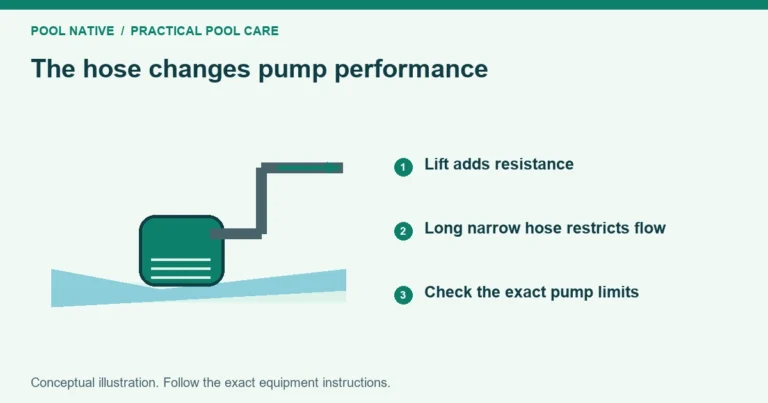
Inspect the discharge hose along its full route. Look for a closed outlet, kink, frozen section, excessive rise, or debris restriction. A hose that worked in a different position can become the problem after being moved.
Check the intake strainer and model specific priming or air release provisions. Clean only the parts the owner manual identifies as serviceable. Do not drill an improvised vent hole or remove an internal component based on another pump’s instructions.
The WAPC250 manual identifies its priming hole as a maintenance point. Its automatic operation also has a pumping height limit separate from the headline flow rating. Use the applicable diagram and limits when diagnosing that model.
If a manufacturer provides a controlled test procedure, follow it exactly, including water depth and electrical precautions. A generic bucket test is not appropriate for every pump. Starting in a test container also does not prove that the installed hose route is suitable.
Check the cover as well as the pump
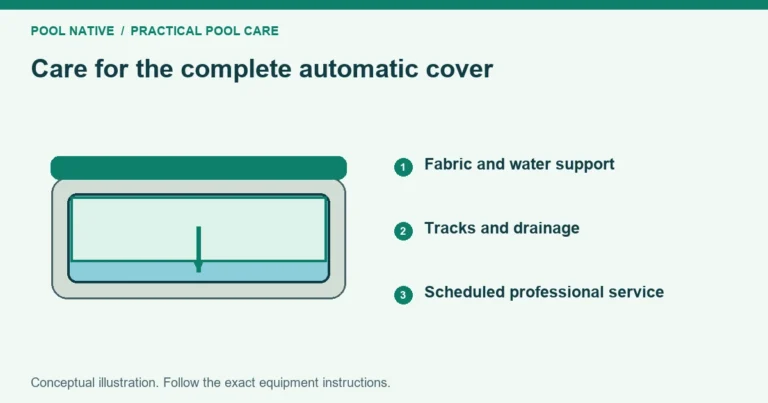
A pump cannot reliably drain a collection area it cannot reach. Multiple separated puddles, heavy debris, or a tilted base may prevent useful removal. Follow the cover’s placement requirements rather than pulling the fabric into a new shape.
Watch for signs that water is coming through a damaged cover from the pool below. Stop if the pool level is falling unexpectedly. Follow the cover support and maintenance requirements before continuing drainage.
Stop when the remaining repair is not an owner task
Contact the manufacturer or service provider if safe power, placement, and permitted cleaning do not restore operation. Provide the model, symptom, water depth, hose size, lift, and conditions when it fails. Include photographs of the setup taken from a safe position.
If replacement is necessary, use the cover pump selection checks. Match the actual installation rather than buying the same headline flow rate. After repair, verify a complete start, pumping, and stop cycle before relying on automatic operation.