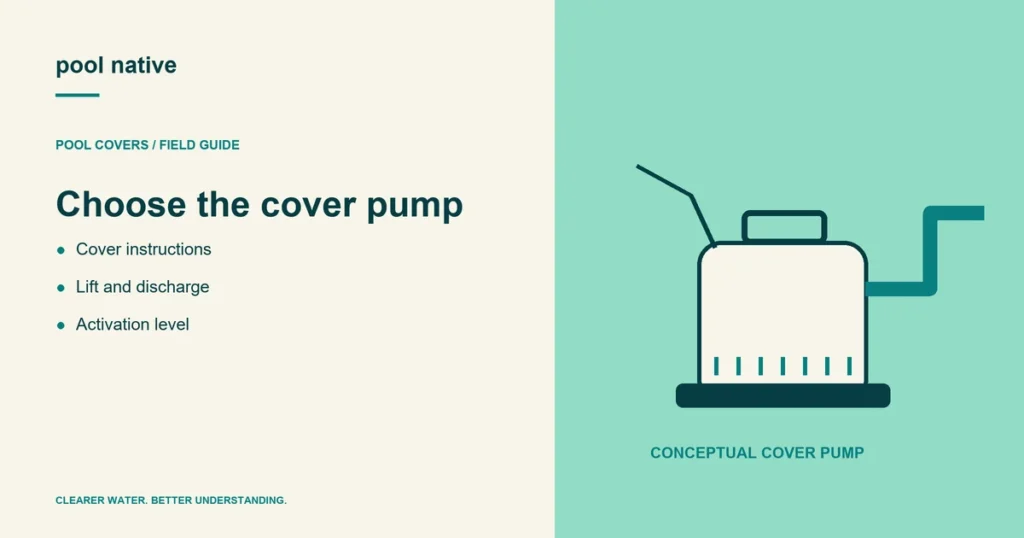
A pool cover pump needs to remove water from the cover at the depth and discharge conditions your setup creates. Choose it by automatic activation, cover suitability, hose route, and rated performance. The largest gallons per hour number is only one part of that decision.
Check the cover’s instructions first. A weak, torn, or leaking cover needs attention before you place a pump on it. A pump drawing through a damaged cover can remove pool water as well as rainwater.
Automatic operation is different from shallow pickup
An automatic pump usually needs water to reach a starting level. It may stop at a lower level and leave a shallow layer behind. That remaining water is not necessarily a fault.
The Little Giant APCP-1700, for example, lists activation at 2 inches and shutoff below 1 inch. The WAYNE WAPC250 manual lists a different start and stop range. Check your exact model instead of assuming all automatic pumps behave alike.
A manual pump may let you control when it operates, but requires the monitoring specified by its manufacturer. Do not defeat an automatic sensor to make a pump behave like a manual one. Dry running and unsuitable placement can damage equipment.
Match the pool cover pump to the discharge route
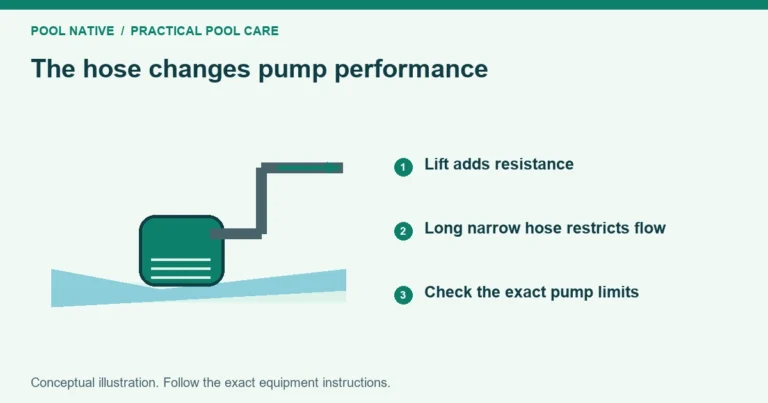
Measure the vertical rise the water must overcome and plan the full hose route. Hose diameter, length, bends, and fittings add resistance. A short, straight route can perform differently from a long garden hose climbing across the yard.
Read the performance information at your operating conditions, not only at minimum head. Also check any separate limit for automatic operation. A pump’s maximum lifting capability is not a sensible target for useful drainage.
| Selection detail | Question to resolve |
|---|---|
| Cover and base | Is this pump suitable for the cover, with the specified protective strainer or base? |
| Activation | Will water at the pump reach its start depth without creating an unacceptable accumulation? |
| Hose | Which outlet, adapter, washer, and hose size are required? |
| Performance | What flow is available at the actual lift and discharge arrangement? |
| Power and access | Can it reach the permitted protected supply and be retrieved safely? |
| Weather | What must happen before freezing conditions or a long absence? |
Set up a safe removal and discharge path
Position the unplugged pump as the cover and pump instructions require. Use the designated handle or retrieval arrangement. Never lift or drag it by the electrical cord.
Keep the base upright and clear of leaves that can block its intake. Do not walk onto the cover to place it. A suitable rope arrangement or professional assistance is preferable to leaning beyond safe reach.
Route the hose to a permitted destination where discharged water cannot return to the cover or flood a structure. Secure it against movement without kinking it. Keep the power connection dry and use the required electrical protection.
Do not use damaged cords, improvised joins, or an unsuitable extension lead. Have an electrician resolve a supply that does not meet the instructions. Unplug before repositioning or performing maintenance.
Observe the first complete cycle
Confirm that the pump starts under its specified conditions and sends water to the intended outlet. Watch the hose for kinks, leaks, and unexpected movement. Verify that the pump stops as described once the water falls.
If it runs but does not discharge, stop and use the cover pump troubleshooting checks. Do not let noise stand in for proof of pumping. A blocked intake, trapped air, or unsuitable discharge route can prevent useful removal.
Keep checking after installation
Automatic operation does not remove the need for inspections. Clear accessible debris with power disconnected and follow the model’s maintenance directions. Check after storms and before leaving the pool unattended for an extended period.
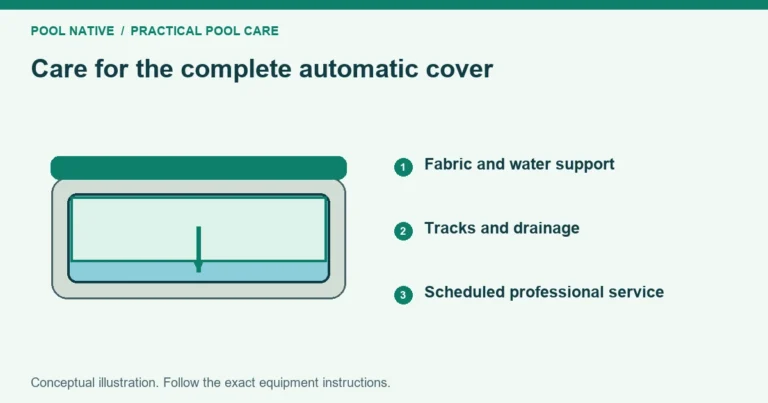
Follow the freezing precautions for both pump and cover. A feature described as freeze protection does not authorize every winter use. Keep the cover’s water support and operating requirements in the same maintenance record.
These model examples explain selection differences; they are not a ranked product recommendation. Confirm current specifications, seller, and compatibility before purchasing. The right choice is the one that fits your cover and discharge conditions.