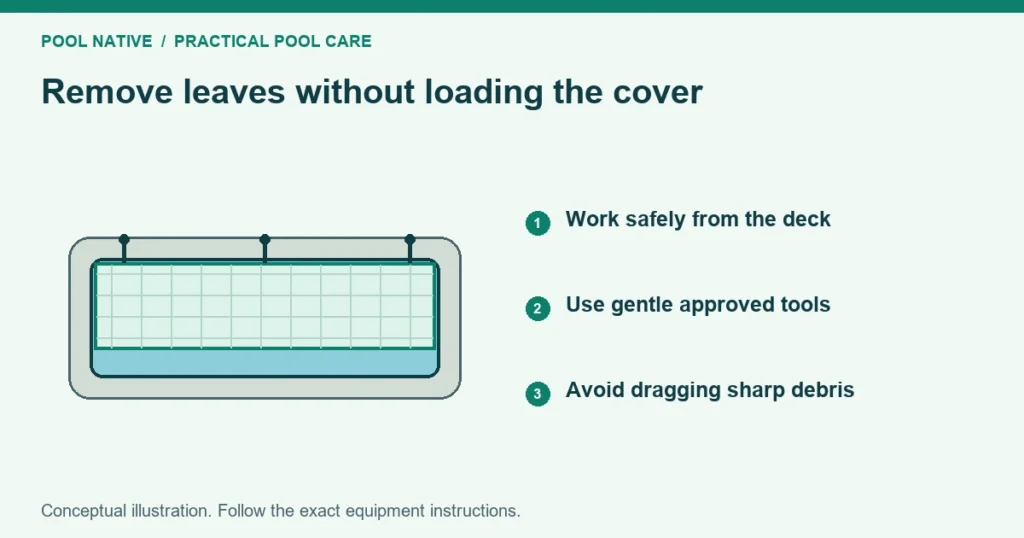
Remove leaves from a pool cover while they are still manageable, before releasing the cover’s attachments. Use a method suited to dry leaves or wet debris. Keep the load on the cover contained so it does not spill into the pool.
Work from stable ground and keep everyone off the cover. A safety cover’s emergency function is not permission to walk across it with cleaning tools. Stop if the task requires reaching beyond a safe working position.
Choose the method by the debris condition
| Debris | Useful approach | Avoid |
|---|---|---|
| Loose dry leaves | Approved blower or gentle soft tool from the deck | Blowing toward an uncovered pool edge |
| Wet leaves in shallow top water | Suitable net in small loads | Dragging a heavy mat across the fabric |
| Debris blocking a drain panel | Clear the accessible obstruction gently | Cutting or opening the panel |
| Frozen leaves or ice | Follow the cover’s thaw instructions | Chopping, scraping or pulling frozen fabric |
| Branches or a very heavy load | Arrange safe removal help | Walking onto the cover or using sharp rakes |
Loop Loc lists a long handled broom, skimmer, blower or rinsing as options for its covers. Use your cover’s approved method. A tool safe for one fabric can damage another.
Plan where the leaves will land
Clear a collection area away from the pool edge. Place bags or a tarp where you can empty the net without carrying debris over the water. Work with the wind where practical, rather than repeatedly blowing leaves back onto the cover.
Keep electrical tools within their instructions for wet locations. Do not trail a power connection through standing water. A blower should move dry debris; it is not a pump for a wet cover.
If the cover is sagging or attachments look strained, assess that first. Use the cover sagging checks. Pulling a large wet mat can add force to an already overloaded area.
Remove dry leaves in sections
Start with accessible loose debris and direct it toward the planned collection area. Keep the tool from scraping the fabric. Use gentle passes rather than pressing hard enough to stretch the cover.
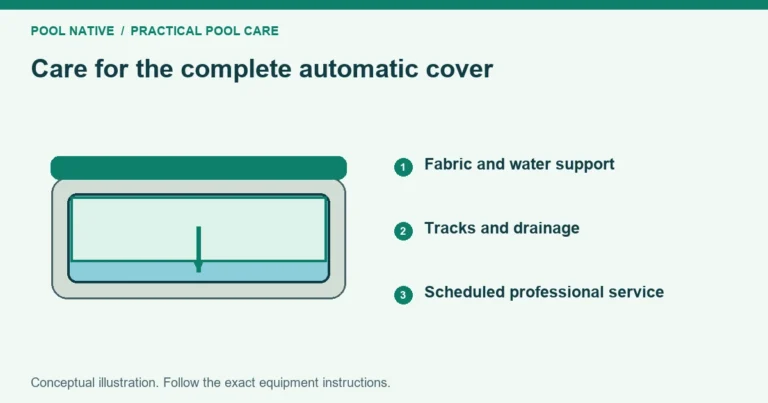
Do not direct leaves into the track or cover housing of an automatic system. Clear that area under its own maintenance instructions. See automatic cover care for the separate mechanism routine.
If leaves are stuck to damp material, change methods rather than increasing force. Allowing safe drying may help where the cover’s conditions permit. Do not leave a blocked drainage area unattended while waiting.
Handle wet leaves in small loads
Check the drainage arrangement first. Remove top water as the cover instructions require while monitoring pool water beneath. A damaged cover can allow the pump to draw pool water too.
Lift leaves with a suitable net in manageable amounts. Avoid dragging the net edge across seams, straps or panels. Empty it away from the pool each time.
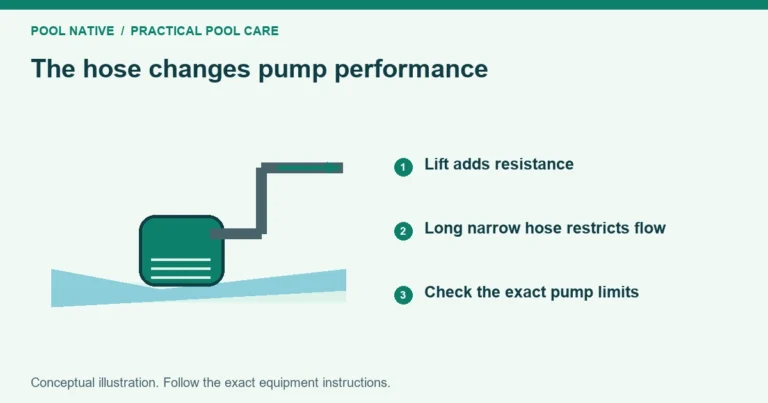
Clear drain panels and pump intake areas without dismantling energized equipment. Shut off and retrieve a pump according to its manual before cleaning its intake. Do not lift it by the cord.
A wet leaf mat can be surprisingly difficult to move. If it cannot be reached without leaning over the pool, use professional help. A longer pole does not make an unstable stance safe.
Use a leaf net cover only as intended
A compatible seasonal leaf net can collect debris above a winter cover. Install and remove it according to its instructions. It is not a replacement safety barrier or a support for people.
Remove accumulated leaves before the net becomes too heavy to handle. Do not leave it frozen into a load it was not designed to carry. Confirm compatibility before adding it over a safety or automatic cover.
Before removing the main cover
Clear the top water and debris by the approved method first. Arrange enough help and follow the attachment release sequence. Fold the dirty surface inward so remaining material stays contained.
Do not drag the cover over rough coping or raised anchors. Keep hardware from scraping the fabric. Use the cleaning and storage process once it is off the pool.
If some debris enters the water, remove it and complete the opening checks before swimming. Note where leaves accumulated most heavily. That identifies the sections to inspect more often during the next winter cover season.