Pool cover sagging can be normal drape or a sign that support, drainage or attachments have changed. Identify the cover before adjusting it. A winter tarp resting on water should not be tightened like an anchored safety cover.
Check water above and below the cover. Removing the wrong water can make the problem worse. Keep everyone off the cover, including apparently solid snow or ice.
Is the shape new or expected?
Compare the installation with its manual and any earlier photographs. A low area present from correct installation differs from a new pocket after rain. Look for a changed edge position, loose strap or falling pool level.
| Cover arrangement | Expected support | Concerning change |
|---|---|---|
| Winter tarp | Drape supported by pool water | Fabric hanging from edges over a low pool |
| Anchored safety cover | Specified tension and supporting water range | New ponding, loose hardware or uneven stretch |
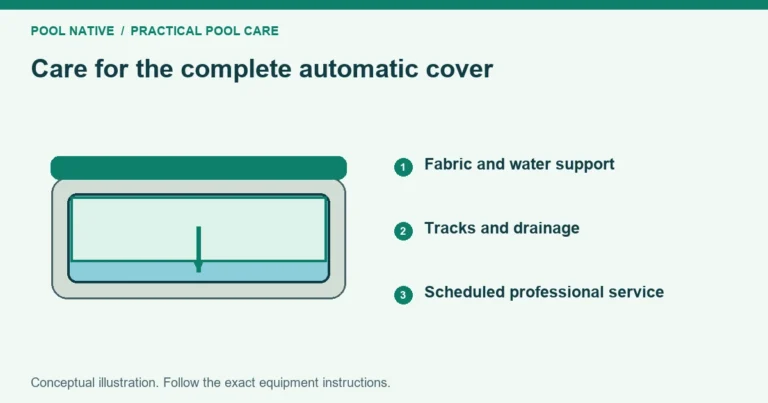
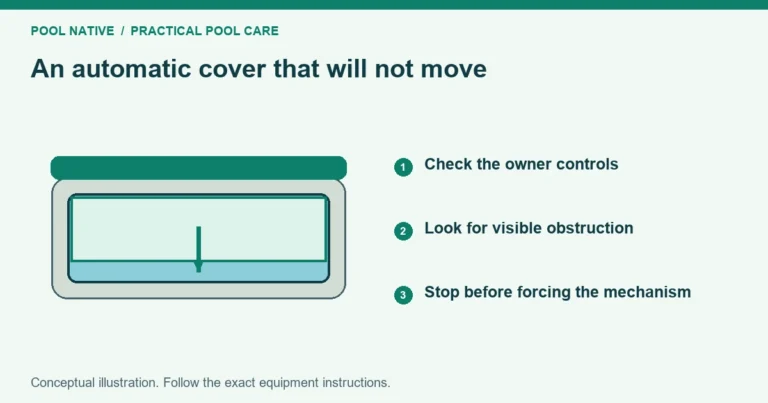
| Automatic cover | Model specific water support and tracks | Low water, top load or uneven leading edge |
| Floating solar blanket | Contact with the water surface | Submerging damaged areas or a tangled fit |
For a solar blanket, start with normal solar cover use. For an automatic cover with uneven travel, use the alignment fault guide. Do not apply tarp adjustments to either system.
Check the pool water level beneath it
Use the approved access or observation method without stepping onto the cover. Compare the level with the cover’s requirements. A leaking pool can lower the support gradually through winter.
If water is low, determine whether it was deliberately lowered, leaked away or was accidentally pumped out. Correct the cause as well as the level. Repeated topping up can conceal a leak.
Loop Loc warns that water may pass through seams when snow pushes a solid cover into pool water. A cover pump can then remove pool water from beneath. Watch both levels during pumping rather than assuming all discharge is rainwater.
Check drainage on the top
Look for leaves blocking mesh or a drain panel. Remove reachable debris using the appropriate leaf removal method. A clear panel is useful only if water can reach it under the correct cover tension.
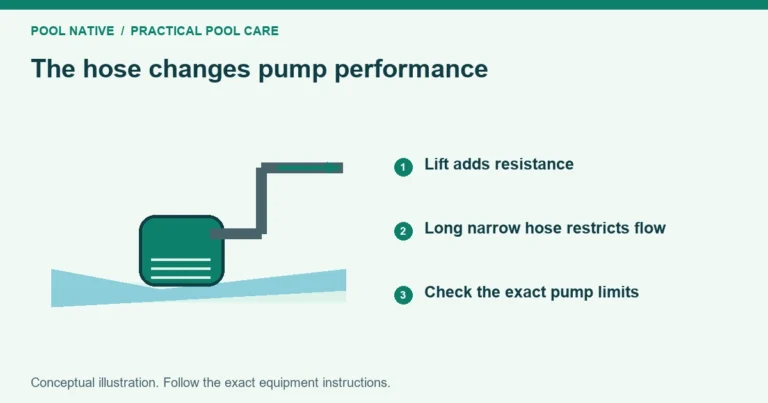
For an all solid cover, verify the required pump is actually discharging. Check the hose route for kinks or freezing. If the pump runs but cannot remove water, use the equipment’s troubleshooting instructions.
Do not cut a drain hole into the cover. Do not substitute an arbitrary heavy pump for the approved arrangement. The cover and drainage equipment must work together.
Inspect attachments after reducing the abnormal load
Follow the manufacturer’s procedure before releasing tension. Check for torn webbing, loose springs, failed grommets or moving anchors. Do not compensate for one failed point by overloading the next.
If an anchored cover needs adjustment, use its specified spring compression and sequence. There is no universal number of turns or tension setting. A professional should assess damaged hardware and deck movement.
For a tarp, verify sufficient drape and the correct perimeter retention. Wind retention problems can accompany an edge pulled inward. Tightening the cable cannot replace missing water support.
If snow or ice is involved
Keep off the cover and avoid chopping or pulling frozen material. Follow the cover manufacturer’s snow and thaw instructions. Different systems have different requirements for supporting water and pump operation.
Arrange professional help if the load cannot be managed from a safe position. Do not try to free a pump frozen into the cover by force. Restore the required drainage when thawing permits the specified procedure.
An air pillow does not remove snow or make ice safe to stand on. If its position changed, assess it within the approved pillow arrangement. Do not pull the loaded cover aside merely to center the pillow cosmetically.
Decide whether the cover can return to service
After the cause is corrected, check fit, drainage and every attachment. Photograph the restored condition and record the pool level. Inspect again after the next rain or thaw.
A torn or permanently distorted safety cover needs manufacturer assessment. Do not assume restored appearance restores safety performance. Maintain the pool’s access controls while repairs are arranged.