A solar pool cover is most useful when it is easy enough to use every day. Float it in the correct orientation when the pool is idle, remove it completely before swimming, and protect it when stored. Its main practical benefit is reducing evaporation and the heat lost with it.
A bubble blanket is not a safety cover. It does not support people or replace fencing and supervision. Keep children and pets away from it whether it is on the water or rolled beside the pool.
Understand what the cover changes
Sunlight can warm an uncovered pool already. A suitable solar blanket helps retain energy while allowing or absorbing some incoming sunlight, depending on its material. It does not create a fixed amount of heat like a powered heater.
Evaporation carries heat away from the water. Covering the surface reduces that loss, so yesterday’s warmth can survive longer into the next day. Wind, air conditions, pool exposure and uncovered time affect the result.
The EPA identifies covers as a useful way to reduce pool evaporation. That does not mean every pool will gain the same number of degrees. Evaluate your own pattern with consistent temperature observations.
Fit it before judging performance
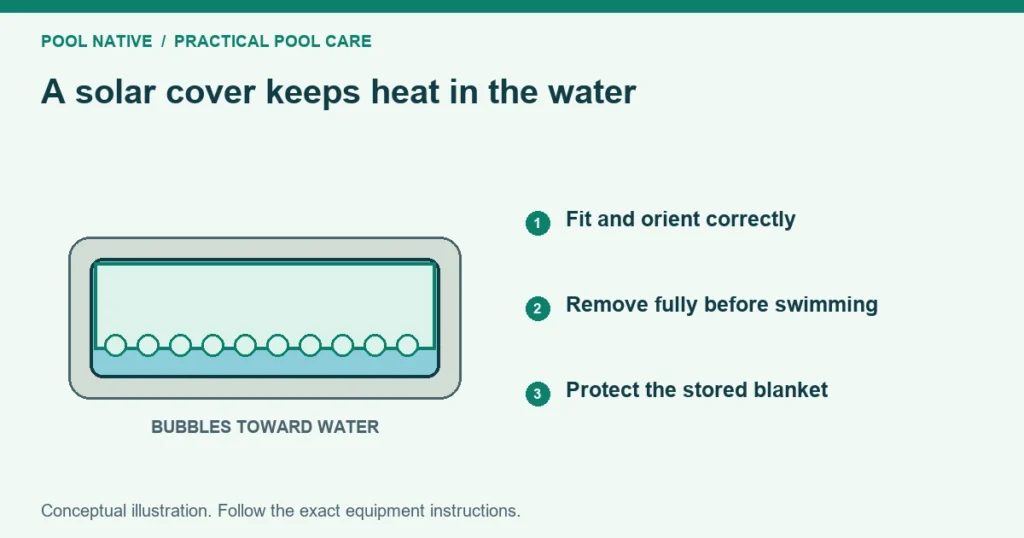
For a conventional bubble blanket, the bubbles face the water and the smooth surface faces up. Check markings and the product instructions before trimming. Specialty foam or reflective covers may use a different construction.
The cover should occupy its intended water surface without large folds, excessive drag or unintended openings. A waterline cut and an approved upturned edge serve different handling preferences. Follow the manufacturer’s fit guidance rather than adding a universal overlap.
Plan reel placement before the final cut. A reel mounted across the middle can require a different fold allowance from one at the end. Use the cutting sequence and reel fit checks together.
Do not improvise with rocks, hanging weights or unapproved ties to hold the blanket down. If it repeatedly bunches or enters the skimmer, review its fit and the circulation pattern. Correct the cause rather than securing it as though it were a winter tarp.
Use it during idle periods, including overnight
Overnight use can preserve heat collected during the day or supplied by a heater. Put it back after swimming when the water and cover instructions allow. Leaving it off every cool night can erase much of the intended benefit.
Daytime use depends on the material and your goal. A cover designed to admit solar energy can remain on an idle pool as directed. If the water is already too warm, review the heating and cover schedule instead of assuming more retention is desirable.
A cover cannot make a shaded pool receive direct sunlight. It can still reduce evaporative loss there. If you need a particular temperature at a particular time, compare active heating options.
Keep circulation and testing purposeful
Follow the pool’s normal circulation requirements. Mix the water appropriately before evaluating the whole pool temperature. A warm surface layer is not proof that the deeper water has reached the same temperature.
Do not shut off required filtration because a blanket is in place. Check that the cover does not obstruct the skimmer or conflict with a cleaner. Equipment compatibility comes from the relevant manuals.
Test sanitizer and water balance regularly after changing cover use. Chemical demand can change, but there is no universal percentage reduction to apply blindly. Adjust from measured results and the product label.
Remove the cover for chemical treatment when the instructions require it. Replace it only after the relevant water conditions are restored. A fixed waiting time copied from another treatment may be wrong.
Remove it completely for swimming
Clear loose debris first so it does not fall into the water during removal. Use the reel or approved folding method without dragging the blanket over rough coping. Keep the operating path clear of children and pets.
Never swim under or beside a partially covering blanket. Remove the full sheet and secure the stored roll. Do not leave loose straps or material where they interfere with safe pool access.
If one person cannot manage the blanket safely, change the handling arrangement. A suitable reel or manufacturer approved split design may help. An awkward cover that stays unused will not deliver its intended benefit.
Protect the roll immediately
A blanket behaves differently off the water. Sunlight can overheat folded or rolled layers and damage the material. Put the approved reflective protective cover over it promptly and use the specified shaded storage arrangement.
Do not leave it in a sunny pile while everyone swims. Do not assume the material’s outdoor use rating covers unprotected rolled storage. The water normally carries heat away from the spread blanket.
Inspect for brittleness, peeling or enlarged pockets between layers. Material deterioration needs a different response from ordinary condensation inside intact bubbles. Keep a shedding cover out of the pool.
Check whether your routine is working
Record evening and morning temperatures at a consistent location after comparable mixing. Note weather, heater operation and when the cover was removed. Look for reduced overnight loss as well as daytime gain.
A cover may be helping even if a cold spell still lowers the pool temperature. The question is whether the retained energy meets your swimming goal. Do not compare two very different weather days and treat the difference as a product test.
For seasonal storage, use the cleaning and drying checklist. Before replacement, review selection criteria with the handling lessons from your current setup. Fit and daily usability deserve as much attention as the label’s thickness.