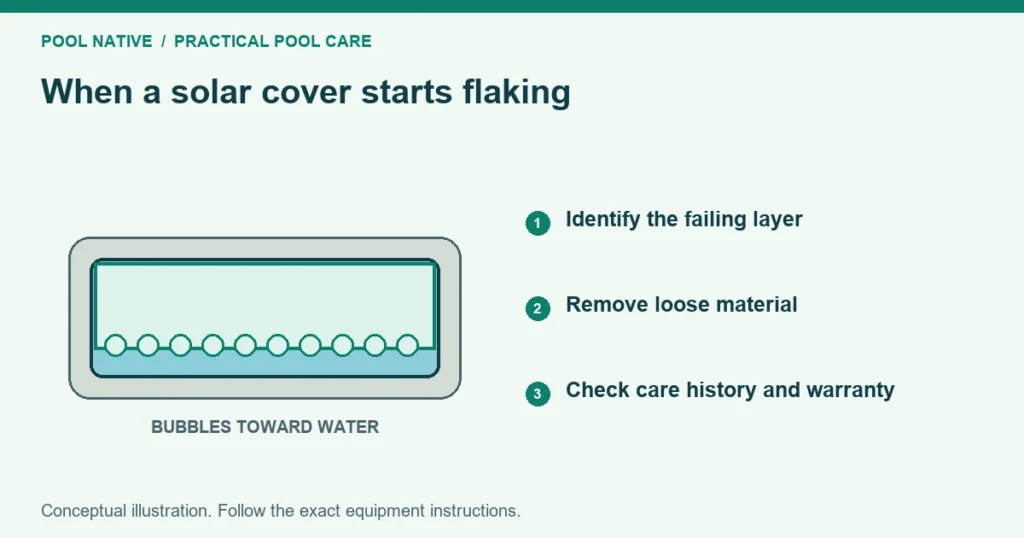
Remove a solar cover that is shedding plastic into the pool. Handle it gently, collect loose pieces and inspect the pattern of damage before disposal. Widespread brittle flaking is different from one puncture or moisture inside intact bubbles.
Keep photos, the product label and purchase record. A manufacturer needs those details to assess a possible claim. Do not cut a sample or discard the sheet until you have checked its claim instructions.
Identify the type of damage
| Appearance | What to investigate |
|---|---|
| Brittle flakes break away when handled | Widespread material deterioration |
| Large pockets where layers separate | Delamination, possibly associated with overheating |
| One tear beside a snag or attachment | Local mechanical damage |
| Collapsed bubbles over an area | Material or chemical exposure assessment |
| Moisture inside otherwise intact pockets | May differ from a rupture; ask the manufacturer |
A photograph cannot reliably prove the cause of every failure. Age, sunlight, temperature, chemicals and handling can interact. Avoid assuming that all premature damage is either a factory defect or owner misuse.
Daisy separates surface peeling from layer separation in its care resources. That distinction helps describe the claim. Send both a close view and an overall view showing where the damage occurs.
Why a rolled cover can overheat
On the pool, the spread blanket is in contact with water. Off the pool, folded layers can trap heat from sunlight. A material made for outdoor floating use can still be damaged in an unprotected roll.
A repeating band or enlarged pocket pattern may help the manufacturer investigate storage heat. Note whether those areas line up when rolled. Do not deliberately leave the cover in the sun to reproduce the damage.
Fit the approved protective storage cover immediately after removal. Use the required shade arrangement as well. A few exposed outer layers are not equivalent to full protection.
If the blanket has been left in a pile beside the pool, record that honestly. The useful goal is preventing the same failure in the replacement. There is no benefit in buying a thicker sheet while keeping an unsuitable storage routine.
Review chemical exposure without guessing a dose
Check your water records and the cover’s permitted conditions. Include periods of shock treatment, unusual sanitizer readings or dosing equipment changes. A single normal test today does not describe the sheet’s entire exposure history.
Do not reduce necessary sanitizer protection simply to preserve the blanket. Follow pool treatment requirements and remove the cover when its limits require it. Resolve any compatibility conflict with the supplier.
Avoid a blanket percentage cut to chemical dosing after installing a cover. Demand can change, but testing determines the adjustment. Use the water testing routine to maintain a useful record.
Remove the sheet without scattering fragments
Choose calm conditions and get help if needed. Keep the damaged side contained while lifting or rolling it by the approved method. Do not shake the cover over the pool to clear loose material.
Move it onto a clean containment surface away from drains. Collect detached pieces before wind spreads them. Avoid dragging brittle edges across rough paving.
Keep everyone out of the water during removal. Do not swim underneath to catch fragments. A solar blanket remains an entrapment hazard regardless of its condition.
Clean the pool and inspect collection points
Use a suitable fine net for accessible floating pieces. Remove settled debris with the pool’s normal compatible cleaning method. Do not deliberately send a large load of plastic through the circulation system.
Inspect and clean baskets and the filter as their manuals require, with equipment safely isolated for maintenance. Note whether fragments continue appearing after the blanket is removed. Hidden pieces can emerge from folds or collection areas.
Do not discharge plastic debris into storm drains. Bag collected fragments for an approved disposal route. A pool that looks clear still needs its usual water quality checks before swimming.
Can the cover be repaired?
An isolated tear in otherwise sound material may have a manufacturer approved repair. Ask about the exact sheet and location. A patch that obstructs rolling or tears adjacent material is not a successful repair.
Widespread brittle flaking cannot be reversed with tape or a surface coating. Collapsed or separated bubble structures may also be beyond practical repair. Follow the manufacturer’s assessment rather than attempting to glue many failing pockets individually.
Keep a local defect separate from overall age related deterioration. The extent of damage matters more than the number of warranty years printed on the package. Warranty length is not a promise that every failure receives a free replacement.
Prepare a useful warranty request
Include model, purchase date, seller, photos and the damage location. Describe storage protection, water treatment and the first sign of failure. Follow the required sample and return process.
Ask whether the warranty is prorated and what costs remain. Confirm whether shipping, handling or a new protective cover is included. Do not dispose of evidence before the supplier responds.
For disposal, check the local facility’s acceptance rules for the actual material. A recycling symbol alone does not establish that household collection accepts the sheet. Keep attachments and loose plastic contained.
Change the cause before installing a replacement
Review blanket selection, reel capacity and protected storage together. Correct snagging, poor fit or incompatible treatment exposure. Reusing the same damaging arrangement can shorten the new cover’s service too.
Keep the new receipt and photograph its starting condition. Then use the daily cover routine. Early inspection can catch a local issue before it becomes another pool full of fragments.