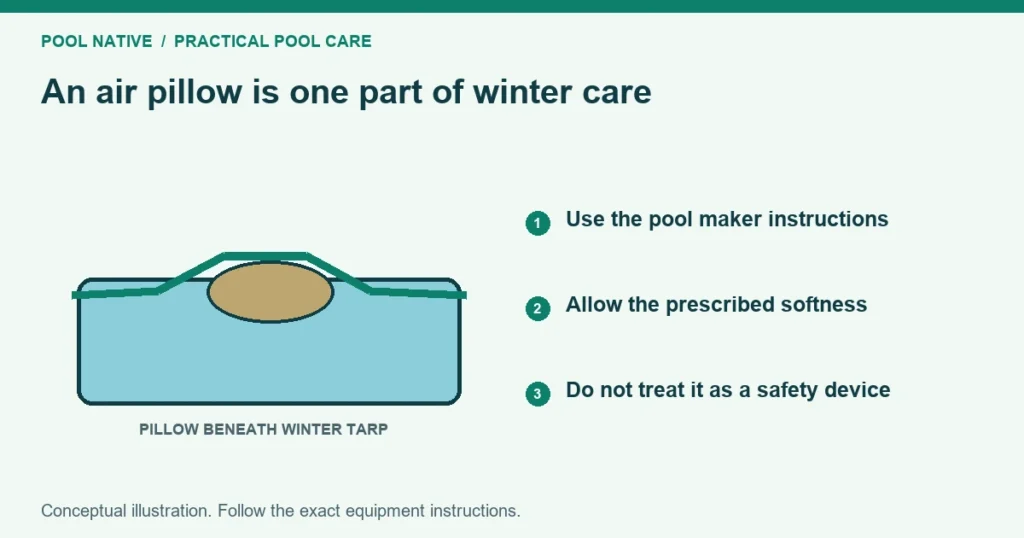
A pool air pillow belongs only in a closing arrangement that calls for it. It creates a raised area beneath a compatible above ground winter cover. It does not replace supporting pool water, drainage or a safety barrier.
Check the pool and cover instructions together before choosing one. An anchored safety cover or automatic cover should not receive an improvised pillow arrangement. Those systems have their own support requirements.
What a pool air pillow does
An air pillow is commonly intended as an ice compensator: a compressible space within the winter cover arrangement. Norland describes its pillow as compressing when surrounding pool water freezes. This is the intended mechanism, not a promise that the pool cannot suffer freeze damage.
The pillow can also change where rainwater and debris collect on the cover. Raising the center does not make the cover drain itself. Water collecting elsewhere still needs the cover manufacturer’s prescribed care.
The distinction matters when deciding whether to add more air. A rigid pillow pulled tightly against the fabric is not the goal. Follow the pillow’s inflation instructions so it retains the intended ability to compress.
Do not treat it as a guarantee against ice damage. It does not stop the pool from freezing or make every winter load harmless. Maintain the pool’s required closing procedure and cover inspections.
The pillow is also not a flotation aid for swimmers. Keep people and pets off the cover. The safety cover distinction still applies when a tarp has an air pillow beneath it.
Choose size through the cover arrangement
Start with the cover manufacturer’s recommended pillow size and number for the pool. Check that the inflated shape fits beneath the cover without stretching it. More pillows or a taller pillow are not automatically better.
Consider the actual inflated dimensions rather than only the flat package dimensions. Confirm the attachment points and the method for holding the pillow in place. Use a product intended for the winter cover application.
For example, Doheny’s winter cover instructions show a centered pillow with the cover forming a loose raised shape. The surrounding material still rests on pool water. That is a specific setup example, not a rule for every brand.
If the instructions provide no sizing guidance, ask the supplier for a compatible arrangement. Do not choose by an unsupported universal chart. Include the pool dimensions, cover cut size and required water level in the question.
Inflate and place it before the cover
Inspect the pillow for damage and check the valve. Inflate using the product’s instructions and permitted pump. Do not make it rock hard or use an arbitrary percentage copied from another pillow.
Place it using the approved ties or positioning accessories. Use only the intended attachment points. Keep ropes from creating an access or entanglement problem around the pool.
Install the cover with its required drape and edge retention. Check that the pillow has not pulled the cover tight above the water. Review winter cover compatibility if the combination appears too small or strained.
Confirm the pool water level before leaving the setup. A pillow cannot carry the entire cover across a pool drained too low. Sagging cover checks help distinguish missing water support from a pillow problem.
If the pillow moves to one side
Inspect the cover’s shape, drainage and attachment condition first. A shifted pillow is not automatically an emergency. Its significance depends on the required arrangement and whether the cover remains properly supported.
Do not pull a loaded cover open merely to restore a centered appearance. Wait for safe conditions and follow the manufacturer’s repositioning procedure. Get help if snow, ice or top water makes handling unsafe.
Check why it moved when the setup is accessible. A failed tie or incompatible positioning accessory needs correction. Do not fasten it to a convenient structural part without approval.
If it deflates during winter
Check whether the cover still has its required water support and drainage. Monitor for new sagging or strained edges. Follow the supplier’s advice on replacement within the actual winter conditions.
Do not walk onto ice to reach the pillow. Do not pull frozen fabric or chip ice away from it. A controlled repair in safe conditions is preferable to damaging the cover while chasing the pillow.
Continue seasonal cover inspections after correction. Check top water, debris and the pool level separately. The pillow is one component of the closing system, not a substitute for those checks.