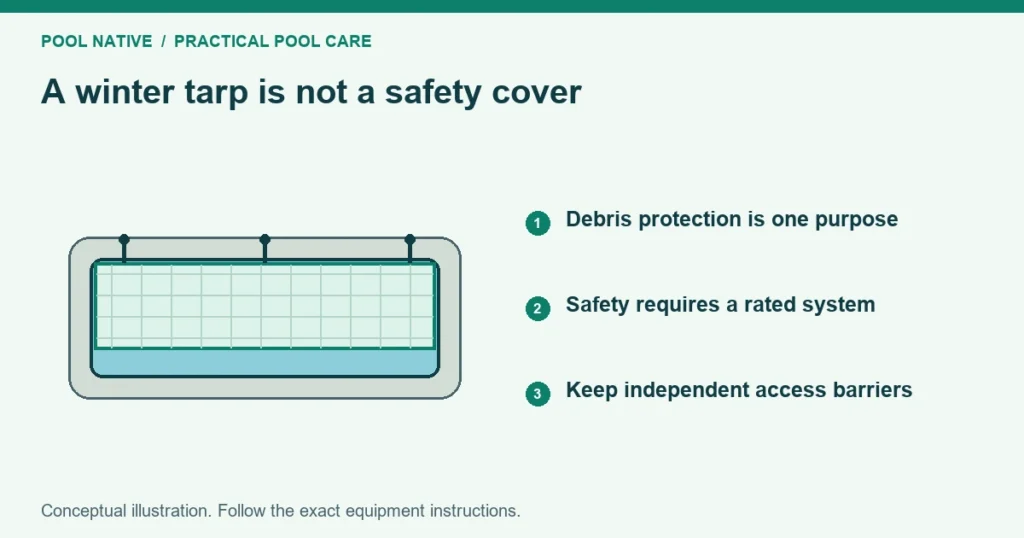
A pool safety cover vs winter cover comparison starts with intended protection. A safety cover is a specified system designed for that safety function. A winter cover may simply keep seasonal debris out.
“Winter” describes when a cover is used, not proof of safety performance. A safety cover can be used through winter. An ordinary tarp does not become a safety cover because it is thick, tightly tied or sold with a long warranty.
Compare the complete system
| Question | Safety cover | Ordinary winter tarp |
|---|---|---|
| Intended function | Documented safety performance when properly installed and maintained | Seasonal debris protection |
| Attachment | Specified anchors, springs, tracks or other complete system | Often cable or waterbag retention |
| Fit | Must address pool shape and access gaps | May drape over the water and pool edge |
| Drainage | Part of the safety and maintenance requirements | Managed according to tarp instructions |
| Owner checks | Fabric, hardware, fit, drainage and supporting water | Retention, water, debris and material condition |
Do not use this table to identify an unknown cover from a distance. Find its label, manufacturer and installation information. A previous owner describing it as “the safety cover” is not documentation.
What to verify before relying on a safety cover
Ask for the applicable safety performance documentation for the exact product. ASTM F1346 is a relevant US safety cover standard. Confirm what the manufacturer documents and what your local authority requires for the installation.
Then check the installed system. All specified attachments must be present and sound. The cover must fit the pool, including steps, raised walls and other features.
An opening beside a raised spa cannot be judged only by how strong the main fabric is. A loose anchor cannot be offset by tightening the next strap. Have those conditions assessed by the cover installer.
Standing water is another hazard. A child or pet can be endangered by water collected on top, even if the fabric remains intact. Maintain the specified drainage arrangement and supporting pool water level.
For material options within this category, use mesh versus solid safety covers. Both can be safety systems when correctly specified. “Mesh” and “solid” alone do not establish that status.
Why tightening a tarp is not a safety upgrade
A conventional winter tarp often relies on pool water beneath it for support. Its cable or waterbags retain the edges according to its instructions. Those components are not a substitute for a designed safety cover system.
Do not stretch a tarp tightly across the opening to make it appear load bearing. Do not attach improvised weights or ropes and then treat it as safe to walk on. The appearance of tension is not a safety test.
Use winter cover installation and care for a seasonal debris cover. Keep the required barriers and supervision in place. Remove the cover completely before swimming.
Existing covers need condition checks
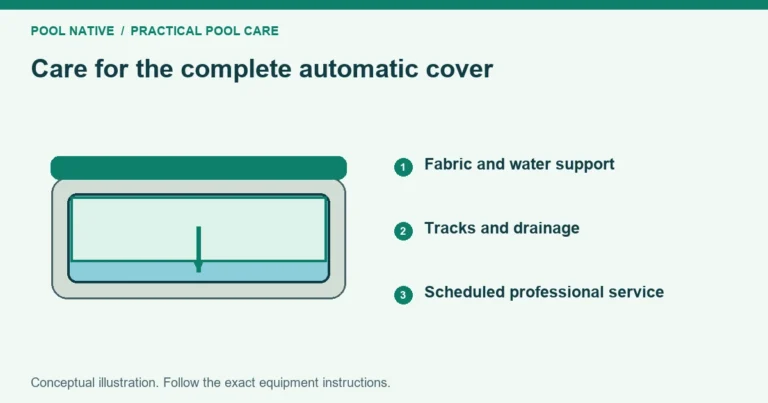
Look for torn fabric, worn webbing, loose stitching, damaged springs and moving anchors. Check areas rubbing against coping or raised features. Aging and abrasion can change a cover’s performance.
Do not infer condition from warranty years remaining. A warranty defines contractual coverage, often with exclusions or prorated terms. It does not certify every installed cover for its full printed duration.
If damage is present, follow the manufacturer’s inspection and repair route. Do not assume a household patch restores safety performance. Use anchor troubleshooting for seized hardware, with installer help where needed.
Above ground pools require compatible attachment
A deck anchored safety cover needs an installation designed for the actual pool and deck. A pool without a suitable surrounding deck may need another approved arrangement. Do not fasten an inground system to a portable frame by improvisation.
For a seasonal above ground cover, start with winter cover compatibility. Verify its retention system and water support requirements. Keep its debris function distinct from the access protection you need.
Ask these questions before purchase
- What exact safety performance is documented for this model?
- Does the proposed installation include all pool steps and raised features?
- What hardware and deck conditions are required?
- How will rainwater leave the cover?
- What water level must remain beneath it?
- Who will inspect it and handle repairs?
Ask the local authority how the proposed cover fits the pool’s barrier requirements. Do not assume a cover eliminates fencing or alarms. Requirements vary by location and installation.
Keep the home pool safety plan active during installation, removal and repairs. A cover temporarily unfastened for maintenance is not performing its usual protective role. Never let children or pets play on any pool cover.