The mesh vs solid pool cover choice is mainly a decision about water passage, debris exclusion and seasonal upkeep. Compare complete safety cover systems. An ordinary solid winter tarp is not the solid safety cover discussed here.
There are three useful arrangements to compare: mesh, solid with a drain panel, and all solid with a pump. Each needs maintenance. Choose the one whose drainage and handling requirements you can reliably meet.
Mesh vs solid pool cover: compare the water path
| Arrangement | Rain and snowmelt | Owner’s main drainage task |
|---|---|---|
| Mesh safety cover | Pass through the fabric into the pool | Keep the fabric clear and monitor pool water level |
| Solid safety cover with a drain panel | Pass through the designated panel | Keep the panel clear and maintain the specified cover setup |
| All solid safety cover | Collect on top until removed | Keep the required cover pump operating and monitor both water levels |
Mesh reduces dependence on a separate top surface pump, but the water enters the pool. An all solid cover can exclude more fine debris while adding pump responsibility. A drain panel is a compromise with its own cleaning needs.
Check the actual product, not just the category name. Mesh density and panel design vary. A product described as virtually solid may still be a water permeable mesh.

What will opening the pool involve?
Mesh allows water and some fine material through. Solid material blocks that direct route, but a drain panel still admits water. Neither arrangement guarantees a clean opening regardless of winter care.
Light transmission also differs by material. Ask for the specific manufacturer’s published performance information. Do not assume every mesh admits the same light or that an opaque cover eliminates the need for water care.
Consider your tree load. A heavy mat of leaves can obstruct drainage on a mesh cover or a solid cover’s panel. An all solid cover still needs debris removed before the cover is taken off.
Use cover leaf removal methods during the season. Waiting until spring can leave a much heavier cleanup task. The material choice changes how debris reaches the water, not whether debris arrives.
Who will maintain the cover through winter?
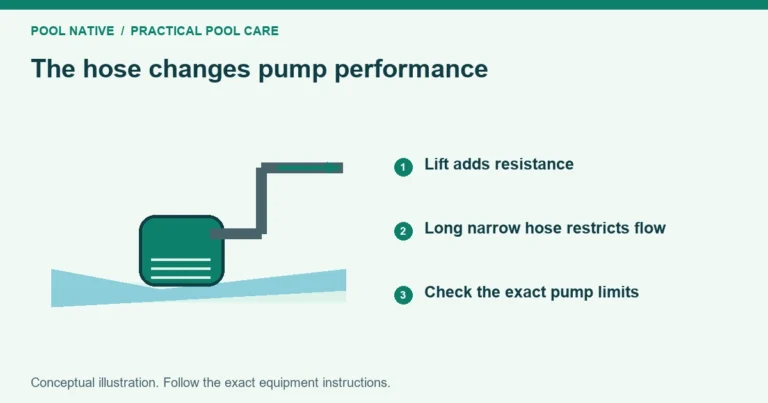
An all solid cover without drain panels needs the specified pump. Confirm a suitable electrical supply, hose route and someone available to inspect it. Automatic operation does not make the arrangement unattended maintenance.
Loop Loc warns that water can sometimes pass through seams when snow pushes a solid cover against pool water. A top pump can then remove water from the pool itself. Check the pool level as well as the top surface.
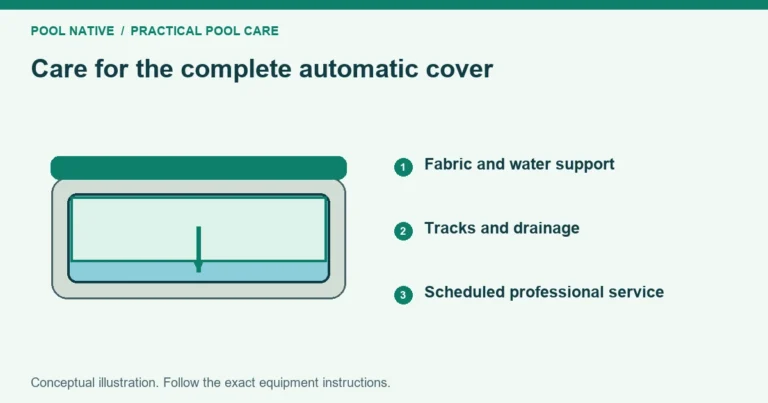
Mesh and panel covers also require water level monitoring. Rain entering the pool can raise its level. A leak can lower the supporting water beneath any cover.
Use the exact water level range required by both the cover and pool closing plan. Different cover systems specify different ranges. Resolve any conflict with the installer before closing.
If you travel for long periods, arrange inspections before choosing a system. Include storms, freezing conditions and power interruptions in that plan. The most suitable material is partly a question of available care.
Compare handling and storage
Ask for the finished cover’s weight and the recommended handling method for your pool size. Material names alone do not tell you whether one person can remove it comfortably. Wet debris and hardware add handling difficulty.
Plan a clean area for folding and a suitable storage location. Protect the fabric from rough coping and dragging. Follow cover cleaning and storage guidance after removal.
Do not choose a lighter product by sacrificing the required safety specification. Equally, a heavier fabric is not automatically a safer installation. Fit, attachments, drainage and condition all contribute.
Reusing existing anchors needs confirmation
The same pool dimensions do not establish matching strap locations. Changing manufacturer or material can change the cover’s grid and anchoring requirements. Meyco notes that some materials require particular anchor spacing.
Ask whether the manufacturer can reproduce the existing cover or use its stored drawing. If not, follow its measurement process. Use the replacement cover measurement guide to gather pool and anchor information separately.
Have the anchors and deck assessed as well. A new cover attached to damaged hardware is not a complete renewal. Include repairs and any changed attachment locations in the quotation.
A decision you can act on
Choose mesh when its drainage, light transmission and opening routine suit your conditions. Choose an all solid system when you want its debris exclusion and can maintain its pump. Consider a drain panel model when its layout and cleaning requirements fit the site.
Before ordering, obtain the safety documentation, installation drawing, water level instructions and maintenance requirements. Compare total installed cost, including hardware and drainage equipment. Treat warranty duration separately from expected service life.
For the distinction between a safety system and a seasonal tarp, read safety covers versus winter covers. Whatever material you select, keep people and pets off it and maintain the pool’s required access controls.