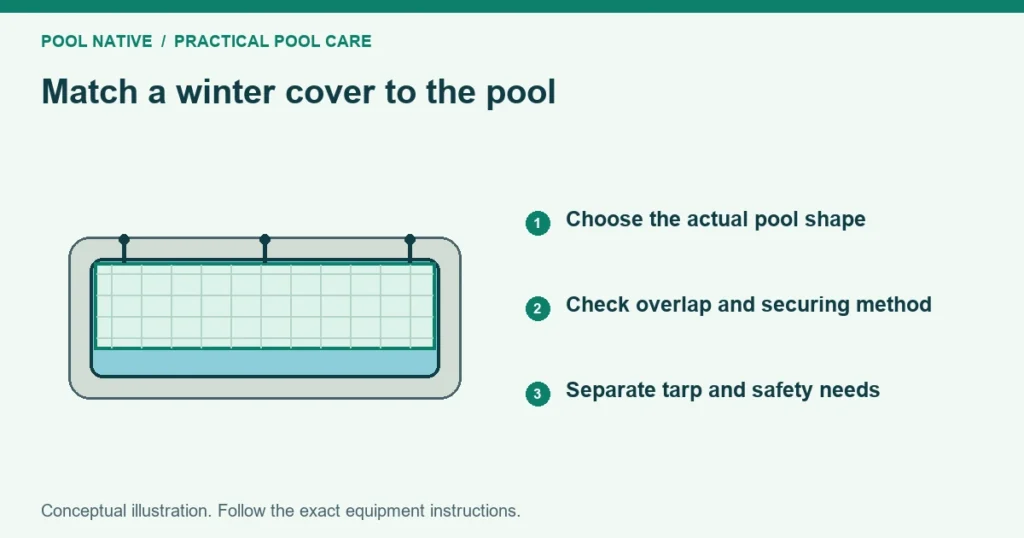
An above ground pool winter cover must fit the pool’s construction and closing arrangement. Match the specified pool size, shape and attachment method. Check whether the cover is a seasonal debris cover or a documented safety system.
Start by confirming the pool is meant to remain assembled through winter. A cover cannot make a seasonal pool suitable for conditions its manual excludes. Use the above ground closing plan before buying.
Match the cover to the pool structure
Permanent wall pools and portable frame pools do not necessarily accept the same clips or cable arrangement. Rails, braces and liner sleeves differ. Choose a cover explicitly suitable for the actual model or construction.
If the pool has surrounding decking, a compatible safety cover may be an option. That requires the correct deck and attachment design. Do not attach an inground safety cover to a frame using improvised fasteners.
For the safety distinction, read safety covers versus winter covers. A heavy tarp and strong cable do not establish a safety rating. Keep required barriers in place regardless of the seasonal cover choice.
Check nominal size and actual cut size
A listing may name the pool dimensions while supplying a larger cover with overlap included. Another listing may describe the actual cover dimensions. Read the sizing instructions before adding your own allowance.
Record the pool’s actual shape and dimensions. Include any features that affect the cover’s route over the rail. Do not assume a round cover can be stretched into an oval arrangement.
The cover needs enough material to follow its intended drape and retention path. Too little fabric can load the edges instead of resting as designed. Excess material can also complicate fitting and water collection.
Use the measurement guide if the size description is unclear. Ask the supplier to confirm the pool dimensions and finished cover dimensions in writing. Keep that confirmation with the order.
Understand what carries the load
An ordinary winter cover commonly rests on pool water beneath it. Its edge fasteners retain it against wind; they are not meant to suspend the full winter load. The specified water level is therefore part of compatibility.
Check that the cover’s support requirement works with the pool closing procedure. A low waterline can leave fabric hanging from the rail or cable. Tightening the edge does not restore missing support.
If an air pillow is specified, use the approved arrangement. Pool air pillow guidance explains its role and limits. A pillow does not make the cover safe to walk on or eliminate drainage care.
Compare attachment systems before accessories
Confirm what the cover includes: cable, winch, grommets or other parts. Check whether clips fit the rail profile and are approved for that cover. More clips are not automatically better if they concentrate stress on unsuitable material.
Do not hang bricks, water jugs or other heavy objects from the cover. Those loads can damage the edge or pool. Avoid drilling or fastening through structural parts without approval.
For a windy site, identify how the approved system closes gaps beneath the edge. Wind entering under loose fabric can cause repeated flapping. Use the wind retention checks rather than inventing a weight system.
Judge durability through the specifications
Compare the material, seam construction and reinforced attachment areas. Check abrasion protection where the cover contacts the pool. Ask what replacement parts and repair service are available.
Read the warranty terms, including prorated coverage and exclusions. A long warranty is not a promise that the cover lasts that many winters. Wind damage, abrasion and incorrect water support may be treated differently from a manufacturing defect.
Avoid choosing solely by a vague description such as “commercial grade.” Look for concrete installation and care documentation. A product you cannot identify or maintain is a poor basis for a winter plan.
Include the maintenance arrangement in the purchase
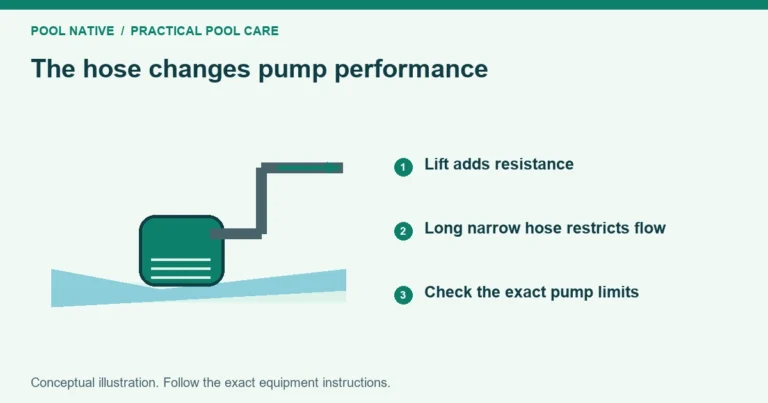
Determine how top water is managed under the cover instructions. Plan a compatible cover pump where required and a suitable discharge route. Do not assume a small siphon works without the necessary elevation difference.
Consider nearby trees and access for debris removal. Plan where the cover will be cleaned and stored. Include any required pillow, retention hardware and drainage equipment in the total cost comparison.
Before ordering, confirm these five items: exact fit, approved attachments, required water level, drainage method and safety function. Then follow seasonal cover installation and care. The right cover is one that fits both the pool and the care you can provide.