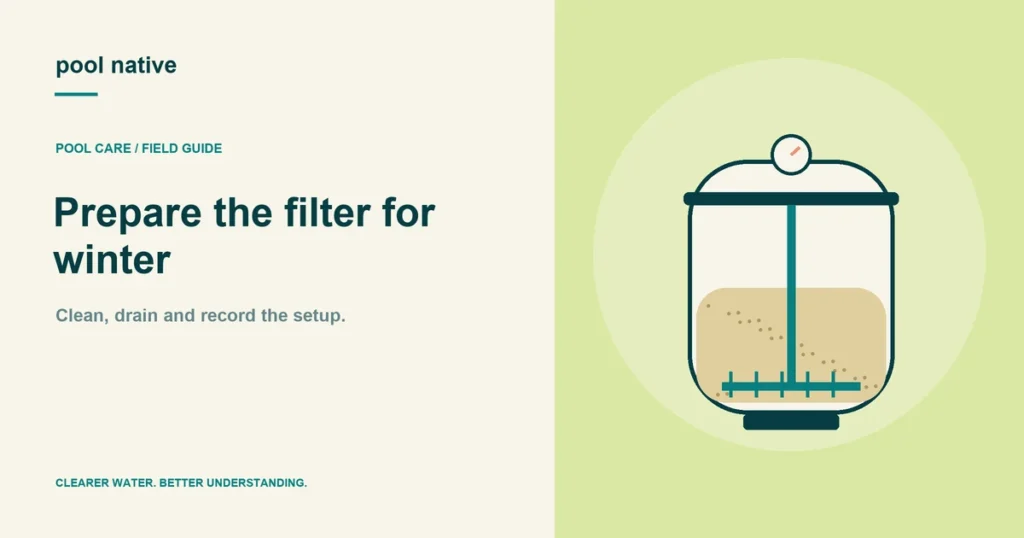
Winterizing a pool filter means protecting the housing, internal parts, valve, and connected plumbing according to the exact model’s instructions. The procedure differs between sand, cartridge, and DE filters. Turning the pump off and removing one visible plug does not prove the whole system is drained.
Make filter protection part of the complete closing plan. A drained filter cannot protect a water filled heater or isolated pipe. Arrange qualified service if the required isolation and drainage points are unclear.
Identify the filter and its winter instructions
Record the model, valve type, drain locations, and connected equipment. Read the manual’s winter storage and startup sections together. Some parts removed now must be restored in a particular way before spring pressurization.
Shut down and prevent automatic restart as directed. Release system pressure before opening any closure or drain under the specified procedure. Never assume the gauge reading alone makes a housing safe to open.
Follow the route for the media type
| Filter | Questions for the manual |
|---|---|
| Sand | How is the tank drained, what valve position is specified, and does media remain installed? |
| Cartridge | How are elements cleaned, dried or stored, and the housing protected? |
| DE | How is spent media removed, the assembly cleaned, and recharge handled at restart? |
Don’t assume every multiport valve has a winter position. Never change its position while the pump operates. Use the actual valve’s instructions, including any restrictions on leaving it between settings.
Cartridge and DE elements need inspection for damage during authorized service. Use cartridge cleaning guidance where applicable. Do not apply an acid wash or other aggressive treatment merely because the pool is closing.
Verify drainage rather than guessing
Follow the specified venting and drain sequence so water can leave the intended spaces. Check that the outlet isn’t blocked. Protect connected valves and piping according to their own instructions.
Do not pressurize the filter with compressed air to chase trapped water. Compressed gas in pool equipment can create a severe hazard. Any professional plumbing clearing procedure must protect the filter and use suitable equipment and limits.
Store removed plugs, gauges, seals, and other parts in a labeled location that suits their materials. Do not leave small items where they can be lost or mistakenly installed in another component. Photograph the completed configuration.
Prepare the restart record
Record which drains remain open, which parts were removed, and which circuits were isolated. Mark the equipment so it is not energized in a drained or incomplete state. Keep the manual and replacement part information with the record.
At opening, inspect and reassemble correctly, restore required media, and follow the startup and air release procedure. A DE filter may need a specified recharge; do not assume last season’s charge remains usable. Use the pool opening checklist before normal operation resumes.