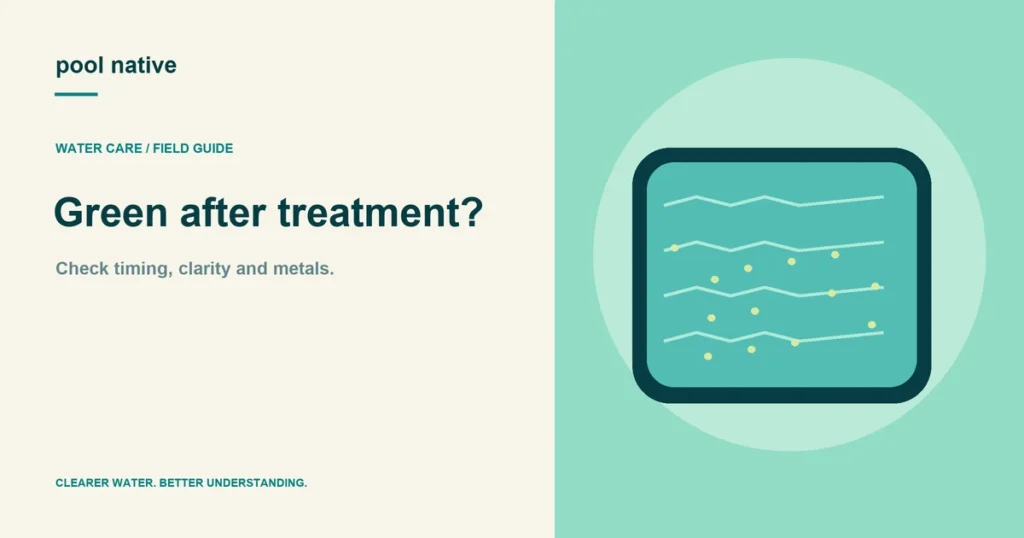
If pool water turns green immediately after adding shock, consider metal oxidation as well as algae. Chlorine or another oxidizer can change dissolved metals into visible colored material. More shock is not automatically the next step.
The timing is useful evidence, but it is not a diagnosis by itself. A pool can contain metals and algae at the same time. Keep swimmers out until sanitation, pH, clarity, and product conditions are confirmed.
Separate an immediate color change from ongoing growth
Note whether the water changed within minutes of treatment or became greener over the following day. Record the product, amount, source water, and any recent metal containing algaecide. Well water and equipment related metal issues deserve attention.
Clear tinted water after an oxidizer can point toward dissolved or oxidized metals. Cloudy green water with attached growth and inadequate sanitizer may point toward algae. Neither observation is conclusive enough to justify a large blind chemical addition.
Confirm the treatment chemistry
Identify the existing sanitizer system and the product that was added. Biguanide and chlorine systems can have serious compatibility problems during an uncontrolled switch. Stop and obtain the correct conversion guidance if incompatible chemistry may be involved.
Test free chlorine and pH with methods valid at the current concentration. Check CYA and other relevant water balance readings. A high chlorine interference can make the apparent pH or chlorine result misleading.
Investigate metals before adding another oxidizer
Use suitable iron and copper testing or a professional water assessment. Tell the tester that oxidation already occurred and whether staining or particles appeared. A simple water test may not describe metal already deposited on surfaces.
Don’t use a stain remover, sequestrant, or filter aid without understanding its role and compatibility. Binding metals is not necessarily the same as removing them from the pool. Follow the exact product and filter instructions.
Avoid aggressively brushing stained areas with an unsuitable tool. That can damage the finish without addressing the chemistry. Stop if you are unsure whether the mark is a deposit, stain, or surface defect.
If algae remains the supported explanation
Follow the algae diagnosis route and a treatment labeled for the problem. Include compatible brushing, debris removal, and working filtration. Correct the sanitizer supply or maintenance issue that allowed growth.
Don’t conclude that shock caused algae merely because green water became more noticeable afterward. Treatment can reveal a preexisting problem or leave suspended material requiring removal. Cloudy water diagnosis helps separate those conditions.
Keep a short timeline
Record the appearance before treatment, the immediate change, subsequent tests, and any staining. Photos from the same viewpoint can help show progression. They support the history but cannot identify a metal or organism alone.
If the cause remains unclear, pause additional products and seek qualified advice. Bring the timeline and exact labels. That is more useful than describing every green pool as the same problem.