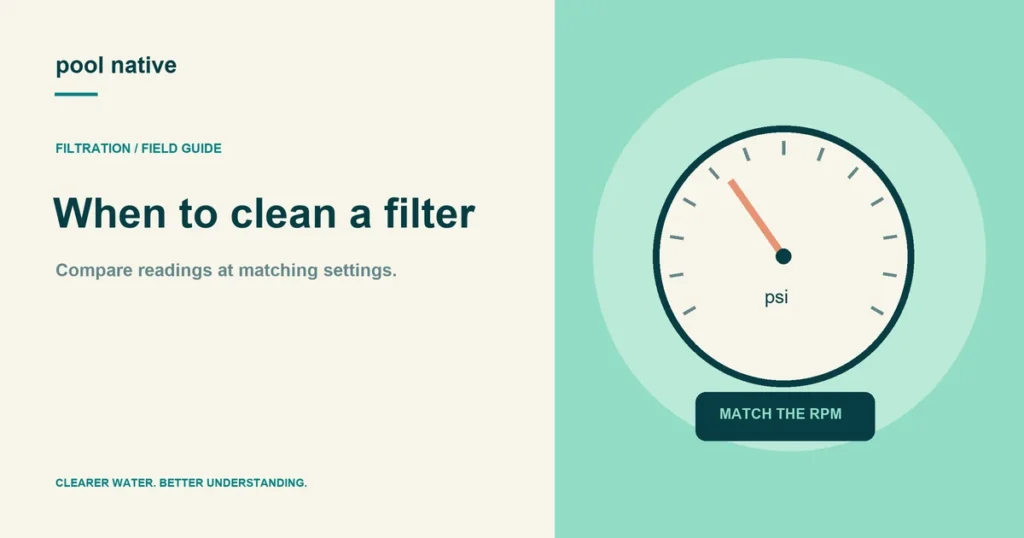
How often to clean a pool filter depends on its manual, debris load, and operating readings. Use a confirmed clean baseline under matching conditions. A calendar reminder can prompt an inspection, but it doesn’t prove the media needs cleaning.
The most useful comparison includes pressure, pump setting, and operating mode. Leaving out the setting can turn a normal speed change into a false cleaning alarm. Looking only at pressure can also miss a flow problem.
How often to clean a pool filter: use its specified trigger
Find the cleaning section for the exact filter model. It may specify a pressure rise, a flow change, a routine interval, or additional conditions. Follow that guidance rather than borrowing another filter’s number.
For example, the current Pentair Clean & Clear Plus support guidance uses a rise of 10 psi over starting pressure. That example isn’t a universal threshold. The reading still needs to be compared at the same operating conditions.
Never wait for a cleaning threshold if the equipment develops a dangerous condition or exceeds a limit. A leaking closure, damaged tank, or abnormal startup requires a separate response. Switch off and seek qualified service as appropriate.
Establish a clean baseline that means something
- Confirm the filter has been correctly serviced and is operating normally.
- Use the intended comparison setting, not a temporary startup or cleaning override.
- Record pump RPM or flow setting and the pool or spa mode.
- Record pressure after operation stabilizes, plus actual flow if appropriately measured.
- Save the date and the cleaning procedure used.
For a DE system, the reference follows the required media recharge. For any system, a changed valve path can change the reading. Keep that context in the record.
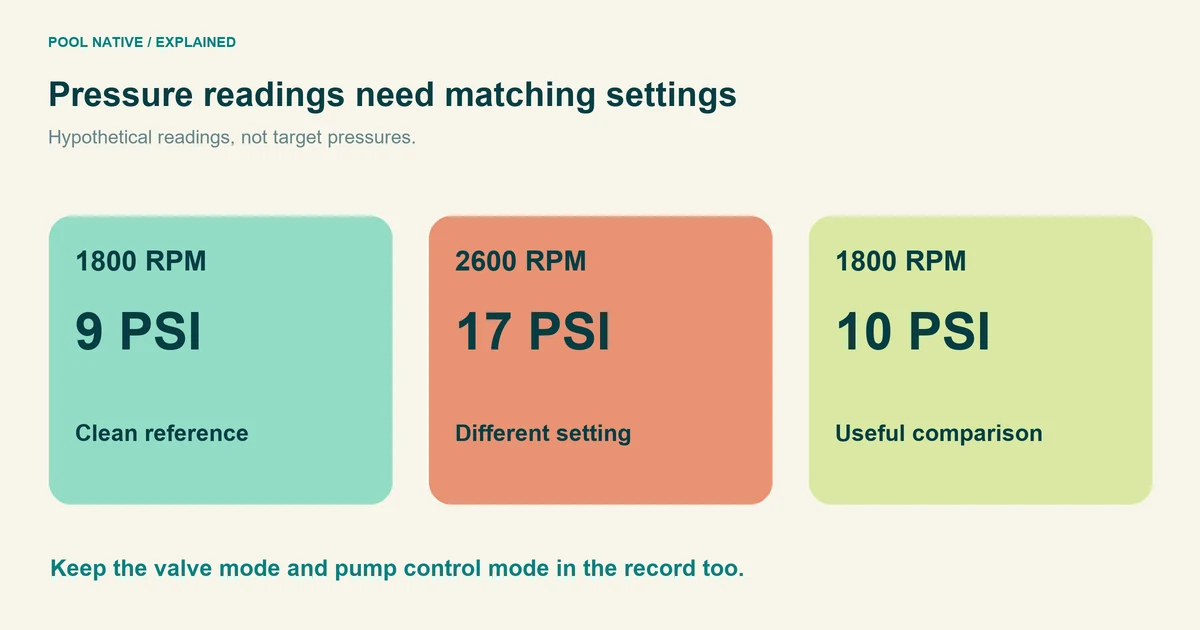
The illustrated values are hypothetical. They show why two different speeds cannot establish how much pressure rose from filter loading. They aren’t target pressures for your pool.
Compare the same mode with the same mode
Suppose your clean pressure was recorded during ordinary pool circulation. A later reading during spa operation isn’t a direct comparison. Return paths and equipment demands may differ.
The same issue applies to variable speed pumps. Match the speed when using a speed based baseline. For a flow controlled system, record the flow target and actual behavior because speed can change to maintain flow.
If equipment or plumbing changes, establish a new reference only after proper commissioning. Keep the old record with a note explaining the change. Don’t erase useful history.
Let conditions determine how often you inspect
Heavy debris, pollen, construction dust, or an active water cleanup can shorten the time between service needs. A lightly used pool may behave differently. Watch the actual load and measurements.
Inspect more frequently when conditions change. Your weekly pool checklist can organize the review, but it isn’t a limit on how often you look. A rapid change deserves attention before the next scheduled session.
Don’t treat a short cycle as automatic proof of worn media. The filter may be collecting a large amount of material because another problem continues. Record water appearance and recent events alongside the pressure.
Choose the cleaning method for the filter type
| System | Usual cleaning route | Important distinction |
|---|---|---|
| Sand | Model specific backwashing | Cleaning the bed is different from replacing it |
| Cartridge | Remove and clean the elements | A standard cartridge filter isn’t backwashed |
| DE | The model’s backwash or service procedure | Required media replacement is part of restoring operation |
Use the backwashing instructions by valve type or the cartridge cleaning workflow. Don’t improvise a cleaning method from a similar looking tank.
Scheduled internal inspections or seasonal service can still apply even if pressure hasn’t reached a cleaning trigger. Read the full maintenance section. One gauge threshold isn’t the whole maintenance plan.
If pressure is still high after cleaning
First check whether you’re comparing the same settings. Then distinguish pressure that never recovered from pressure that recovered and rose again. Those patterns suggest different next checks.
Persistent restriction can involve deposits, incomplete cleaning, or the downstream flow path. Rapid reloading can reflect continuing debris or water problems. Neither pattern establishes a replacement decision on its own.
Follow the high pressure diagnostic sequence before repeating cleaning or ordering media. Don’t keep redefining the higher reading as normal.
When low pressure isn’t a reason to postpone attention
Low pressure with weak flow can point toward a supply or pump problem. A faulty gauge can also hide a change. Don’t assume a low number means the filter is clean and everything is working.
Check the system’s visible behavior without opening pressurized equipment or testing suction with your hand. If circulation is abnormal, use the wider filter and flow triage. The next step may be diagnosis rather than cleaning.
A useful cleaning record ends with the result: pressure, settings, flow observations, and any remaining issue. Keep those in the maintenance log. They make the next decision easier than a reminder that says only “clean filter.”