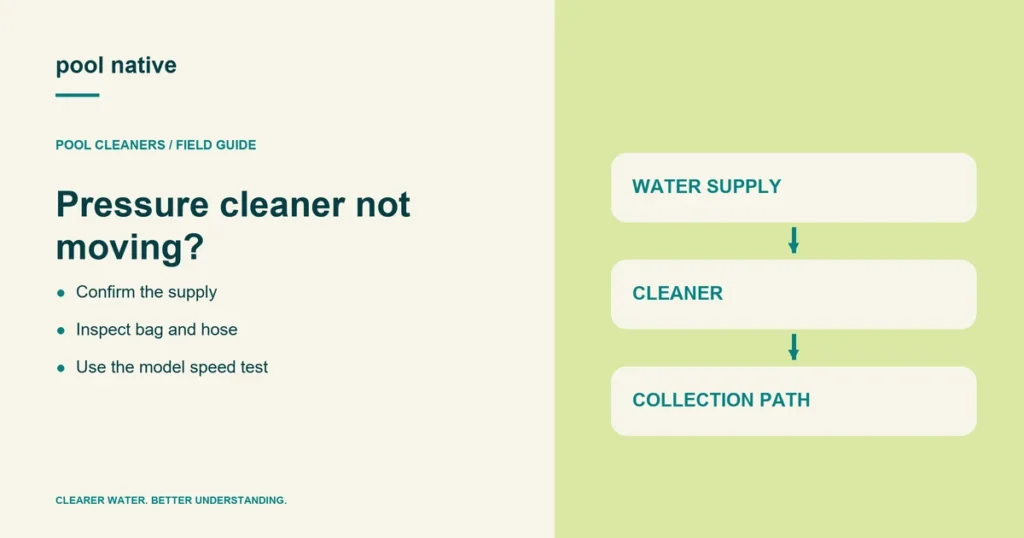
When a pressure pool cleaner stops moving, check its water supply before buying drive parts. An overloaded bag, blocked screen, or leaking feed hose can reduce performance. The correct adjustment procedure depends on the exact model.
Identify whether the installation requires a booster pump. A Polaris 280 does; a Polaris 360 does not. Do not troubleshoot a boosterless cleaner as though a missing booster were the fault.
Confirm the supply is operating correctly
Check the circulation schedule and the cleaner’s required supply arrangement. Where a booster is used, it must operate with the appropriate water supply from the filtration system. Do not run it dry to see whether the cleaner responds.
If the pool pump has lost prime or the normal returns are weak, address that first. Use pump priming troubleshooting for a pump that will not establish flow. Cleaner adjustments cannot compensate for an unreliable supply.
Empty the bag and inspect the feed path
Shut down the relevant supply before disconnecting or servicing the cleaner. Empty the collection bag and check that it is correctly attached. A heavy bag can affect contact with the floor and make movement look like a drive failure.
Clean the screen identified by the model manual and inspect hoses, connections, and swivels. Look for splits, loose joints, or a section that has become distorted. Do not remove a screen permanently to increase flow.
During a permitted operating observation, note where water escapes. Some relief and backup functions deliberately discharge water. Distinguish those functions from an unintended hose leak before replacing a component.
Use the model’s movement test
Many pressure cleaner manuals include a wheel speed check, but there is no single correct number for all models. Follow the exact counting method and range for your cleaner. Do not handle an operating cleaner except as expressly allowed by that procedure.
| Finding | Next investigation |
|---|---|
| Speed below the specified range | Supply, screen, filter condition, and hose leaks |
| Speed above the specified range | Approved flow regulation for that model |
| Normal speed but poor travel | Bag load, float condition, obstruction, or drive wear |
| Stops during a backup interval | Whether the valve resumes normal operation as specified |
A backup valve may temporarily change the cleaner’s motion by design. Observe long enough to distinguish its normal cycle from a valve stuck in discharge. Use the manual’s timing, not a value copied from another brand.
Check setup before internal repairs
Review feed hose length, float placement, thrust jet position, and other adjustments listed for your cleaner. Change one setting at a time and observe the result. A cleaner that repeatedly hangs at one obstacle may need a coverage adjustment rather than a new drivetrain.
With the supply isolated, remove accessible debris only as the manual permits. Stop before an unfamiliar internal repair. The Polaris parts guide explains why similar looking pressure cleaners can need different drive components.
Watch a full movement and backup sequence
Note what happens before the cleaner slows, during the pause, and when ordinary movement should resume. If it returns to normal after its specified backup interval, that pause may be expected. A valve that continues discharging beyond its normal operation needs a different check.
Identify the observed outlet using the model’s diagram before calling it a leak. A split feed hose and an intended discharge opening can both show escaping water. The location and timing help distinguish them.
Do not plug a relief or discharge opening to make the cleaner move faster. Use the manufacturer’s adjustment method. If the function remains unclear, provide a video and the fitting identification to support.
Compare operating conditions before and after the fault
A cleaner that slows after filter service may have a changed valve or control setting. A cleaner that slows as its bag fills may need emptying. Check those observable differences before assuming the same internal fault explains both.
When a booster is required, compare its schedule with the period when the circulation system provides its required supply. Restore controls through the normal operating sequence. Have uncertain timing or installation issues corrected instead of repeatedly trying the booster without established flow.
After one correction, repeat the model’s operating test with the bag empty and the hose properly connected. Record both the result and any remaining symptom. Correct wheel speed with poor floor travel points toward a different investigation from persistently low speed.
Give service support useful evidence
Record the model, booster arrangement, measured operating check, and whether the bag was empty. Add photographs of the wall fitting and any suspected leak. Include what happens before, during, and after a backup interval.
If the cleaner still will not move with correct supply and setup, that record supports a targeted inspection. Use the cleaner troubleshooting guide if the unit is actually robotic. For installation comparisons, see pressure versus suction cleaners.