Clean, drain, and dry the robotic cleaner before storing it for winter. Protect its cable, filters, and power components in a location that stays within the manufacturer’s storage limits. A cordless robot also needs the battery preparation specified for its exact model.
Daily charging instructions and seasonal storage instructions can differ. Do not assume a cleaner should stay on its charger all winter just because that is how you keep it ready during summer.
Finish the cleaning before the final shutdown
Remove the robot using its approved retrieval procedure and isolate its power. Empty the filter and rinse the media, frame, brushes, and accessible collection areas as directed. Follow robot filter cleaning if fine sediment remains in the panels.
Inspect the cable or charging connection for visible damage. Check accessible tracks, brushes, clips, and collection flaps. Record problems now so you can arrange service before reopening the pool.
Drain water before packing
Let the robot drain in the position shown in the manual. Give cleaned parts time to dry before enclosing them. Do not leave dirty water trapped in a basket or pack wet equipment tightly into a sealed container.
Keep the filter assembly and any removable accessories together. Reinstall dry parts when the manufacturer directs it, or label them clearly if stored separately. A photograph of the correct assembly can make spring setup easier.
Store a corded cleaner without stressing the cable
Arrange the floating cable in broad loops without kinks, tight ties, or weight pressing on a connector. Do not hang the robot from the cable. Use the recommended caddy or supported storage arrangement.
Store the power supply separately from wet equipment and protect its connectors. Follow the model’s temperature range rather than assuming any garage is suitable. A space that freezes or becomes very hot can fall outside the manual’s limits.
Use the cordless battery instructions precisely
Maytronics’ Liberty guidance gives a useful example of the distinction between daily and seasonal care. For extended storage, it calls for the robot to be off and disconnected from the charger. It also specifies at least 50 percent battery charge before storage.
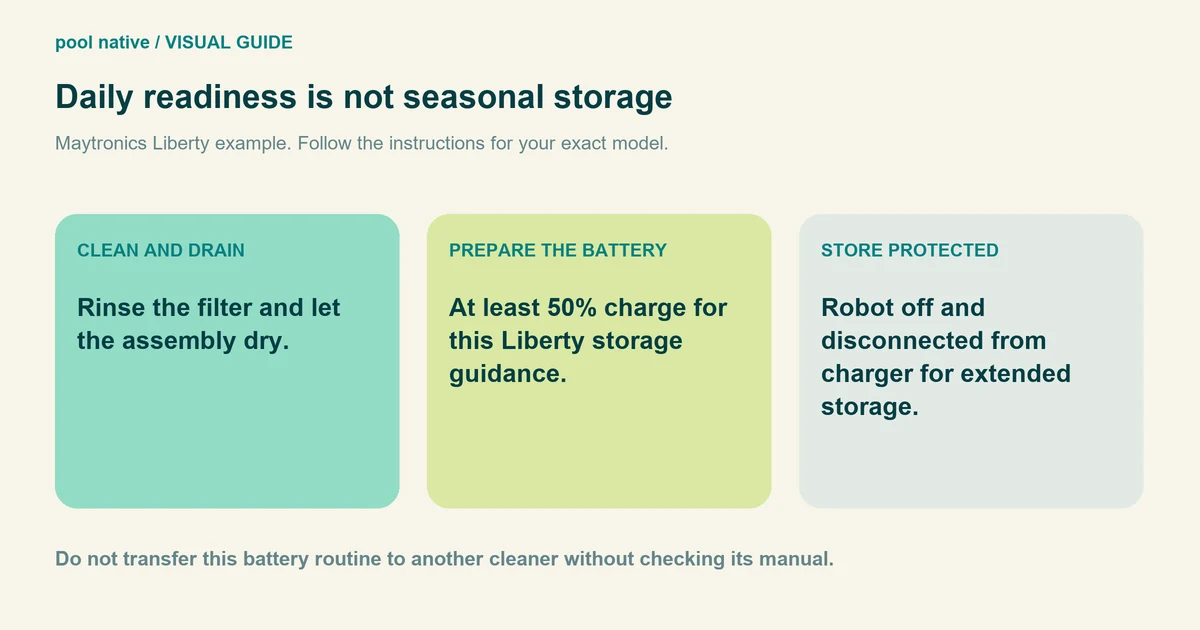
The same guidance requires drainage, a clean dry filter, and protection from sun, rain, and frost. Do not transfer that charge target or storage range to a different brand or battery model. Check whether your own manual requires periodic checks or recharging.
Use only the approved charger. A damaged, swollen, leaking, or unusually hot battery unit needs manufacturer guidance before further charging or storage. Do not open the battery enclosure to attempt a seasonal service.
Choose the storage spot before packing the robot
Check the actual conditions in the proposed location, including cold nights and warm afternoons. A sheltered garage can still fall outside a manufacturer’s limits. Store the cleaner somewhere that satisfies its instructions throughout the season.
Keep it clear of leaking containers, standing water, and objects that could crush the cable or filter assembly. Leave enough space to retrieve it without pulling a connector. Use the intended carrying handle when moving the unit.
If you use a caddy, follow its support arrangement rather than resting the robot on an improvised narrow edge. Put small removable accessories in a labeled container beside it. Keep the model manual available for any required battery checks.
Prepare for the first cycle after storage
Unpack and inspect before charging or reconnecting power. Check for visible cable damage, damaged connectors, or a filter assembly that was stored apart. Resolve a damaged power component through the manufacturer’s service route before use.
Reinstall the correct clean media and confirm that its retaining parts close normally. A spring cleaning job may contain more debris than an ordinary summer cycle. Plan an early filter check rather than assuming the first cycle can run without attention.
For a cordless robot, follow its wake and charging procedure after extended storage. Do not treat a sleeping display as proof that the battery has failed. Use the model’s troubleshooting steps if it does not respond as expected.
Start the robot only after checking the pool’s operating conditions. Watch its movement and collection during that first permitted cycle. If a problem remained unresolved at shutdown, deal with it before resuming an automatic schedule.
Leave yourself a spring restart record
Keep the model, serial number, storage date, and any service issue with the cleaner. For a cordless unit, record the storage charge and any scheduled battery care required by its manual. This avoids guessing how it was left months later.
Before the next use, inspect the equipment, install clean filters correctly, and complete the required charging or setup process. Confirm pool water and temperature are within the operating limits. Watch the first cycle instead of immediately relying on an unattended schedule.
If a part needs replacement, use Dolphin parts identification or Polaris parts identification as appropriate. For short breaks between summer cycles, follow in pool storage guidance rather than applying the winter routine every day.