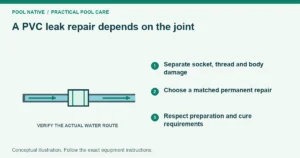
Pool PVC Pipe Leaks: Repair Options by Joint Type
Choose a pool PVC leak repair by joint type. Check access, alignment and cure requirements before cutting pipe or restarting equipment.
THE POOL NATIVE LIBRARY
Follow the water through pipes, valves and fittings.
Choose a pool PVC leak repair by joint type. Check access, alignment and cure requirements before cutting pipe or restarting equipment.
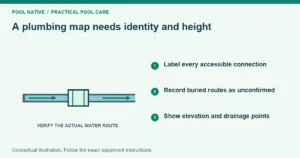
Label pool plumbing with verified routes, flow arrows and valve IDs. Build an equipment pad diagram that records normal operating positions.

Choose pool hose clamps using installed hose diameter, band fit and corrosion resistance. Check the connection before tightening a leak.
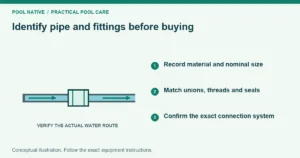
Identify pool pipes, unions and fittings by size, material and sealing method. Build a parts record before buying or cutting plumbing.

Measure pool PVC pipe size from the straight pipe, not a fitting. Use outside diameter and circumference while checking the pipe standard.

Fix a pool union leak by checking the seal, mating faces and pipe alignment. Learn why more tightening may worsen the actual problem.
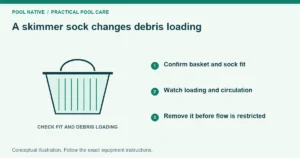
Learn when pool skimmer socks help, how to check basket fit and water flow, and when clogging or chemical use makes them a poor choice.
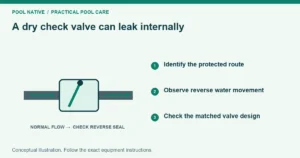
Trace a pool check valve that leaks backward, separate seal failure from other drain paths, and plan the right inspection and repair.
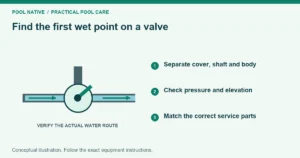
Find the source of a pool valve handle leak, distinguish shaft seals from cover damage, and check model details before planning a repair.
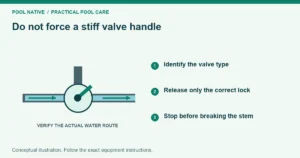
Check a pool valve that is hard to turn without breaking it. Separate locking, actuator and internal faults before choosing a repair.

Diagnose one pool return jet with weak or missing flow. Compare operating modes, inspect the correct fitting, and identify a branch problem.
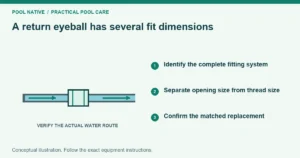
Match pool return eyeball size by connection, ball and opening. Understand flow tradeoffs and avoid buying a part that will not fit.