
THE POOL NATIVE LIBRARY

Plumbing & circulation.

Follow the water through pipes, valves and fittings.

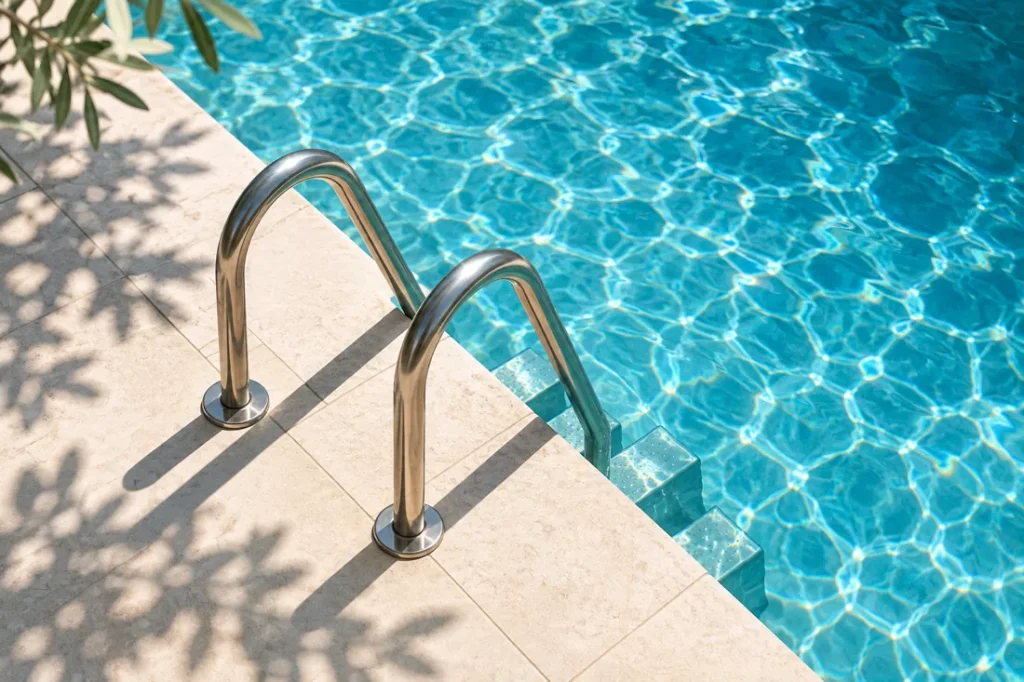
Stainless steel pool ladder beside sunlit water

From the library

34 guides to explore

Two skimmer ports. Connected route?; Plugged port?; Equalizer design?.

Why Are There Two Holes in My Pool Skimmer?

Two holes in a pool skimmer do not automatically mean two suction lines to the pump. One port commonly connects to the pump, while another may serve an equalizer, a main drain connection, or no active pipe. The skimmer model and the actual installation determine which is which.


Read the guide →
Check the weir door. Free movement; Correct fit; Replacement identity.

Pool Skimmer Weir Door Stuck or Missing

A pool skimmer flap that won’t open may be jammed, incorrectly fitted, or sitting above the usable water level. The flap, called a weir, must move freely as water enters. Start with the water level and visible debris before ordering a replacement.

Read the guide →
Read the valve. Type and model; Port labels; Position meaning.

Pool Valves: Identify the Type and Read the Position

Pool valve positions only make sense when you know which pipes each valve connects. Read the valve’s markings, identify the connected branches, and compare them with the pool’s documented operating setup. A handle pointing left is not a universal instruction for filtration, vacuuming, or spa use.

Read the guide →
Follow the blocked port. Read OFF marking; Trace both branches; Respect stops.

How a Three Way Pool Diverter Valve Works

A 3 way pool valve connects three pipes and uses an internal diverter to control the path between them. Depending on its approved configuration, it can select a branch or divide flow. Read the blocked port indicator and the installation diagram rather than guessing from the handle grip.

Read the guide →
Aim for useful movement. Watch floating debris; Check quiet areas; Adjust and compare.

Which Direction Should Pool Return Jets Point?

The best pool return jet direction is the one that produces useful circulation in your pool without disrupting its cleaner. Start from the installed position, watch how debris moves, then make one controlled adjustment at a time. There is no single compass direction or downward angle that fits every pool.

Read the guide →

LESS GUESSWORK. MORE POOL TIME.

Let’s do the numbers.