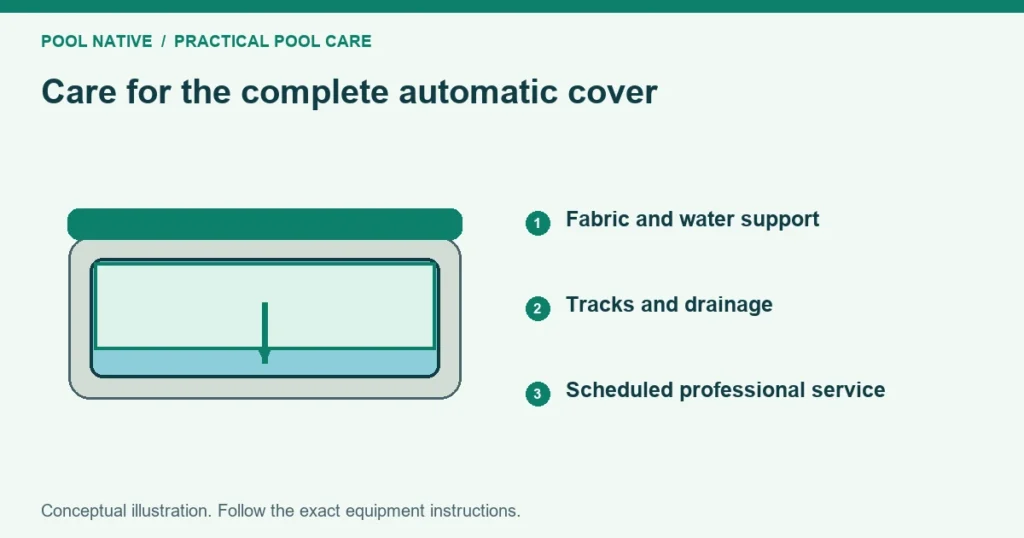
An automatic pool cover needs more than a working button. Clean travel paths, adequate pool water and dependable top water removal let the system move as intended. Watch the whole pool whenever you operate it and stop at the first sign of trouble.
Keep the exact owner’s manual with the controller information. Motor type, track design, control features and winter instructions vary. A maintenance procedure for another brand can damage yours even when the covers look similar.
Before every opening or closing
Confirm that nobody is in the pool and that its full surface is visible. Remove toys, ladders and other obstructions as the system requires. Never operate the cover over a swimmer or allow swimming beneath a partly retracted cover.
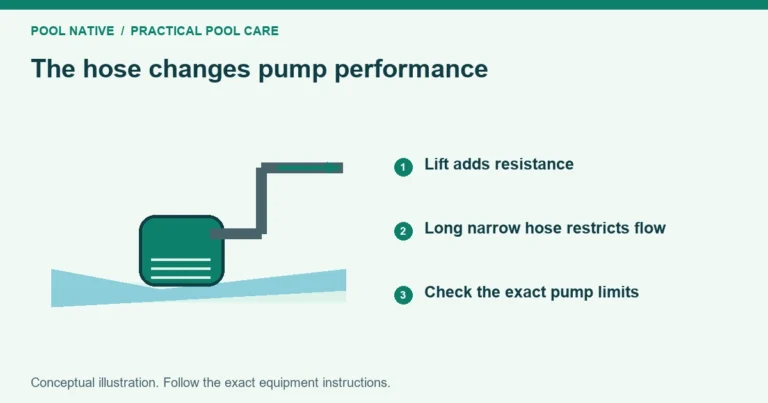
Remove accumulated water and debris before opening. Disconnect and remove the cover pump by its approved handling method. Check that its hose and cord cannot be caught by the cover.
Check the water beneath the cover as well. Automatic covers rely on the specified pool water level for support and proper travel. A low pool can increase drag and place the cover or track under abnormal stress.
Use the debris removal guide if leaves have accumulated. Do not use cover movement to dump a heavy load into the housing. Resolve the load before operating the mechanism.
Operate from the intended control position
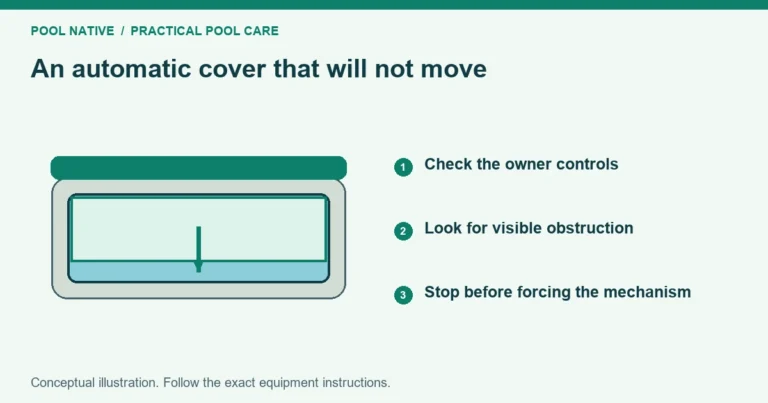
Use the installed controls exactly as instructed. Maintain a clear view for the entire movement, including the area near the leading edge. Do not hold a button down with an object or walk away while the cover moves.
Release the control if the cover hesitates, becomes crooked or encounters an obstruction. Do not repeatedly reverse it to force a path through debris. No movement troubleshooting and uneven travel checks cover those faults separately.
Confirm the correct fully open or fully closed position. Automatic stopping features do not remove the operator’s responsibility to watch. Use any required latch and secure the key or controller against unauthorized use.
After closing, restore the required cover pump arrangement. Confirm that its outlet remains clear and its electrical connection is suitable. Water accumulating on a closed cover is itself a hazard.
Build the routine around conditions
| When | Owner checks |
|---|---|
| Before operation | People, objects, top load, water level and visible travel path |
| After wind or heavy leaf fall | Debris at tracks, housing and drainage areas |
| After heavy rain or thaw | Pump operation, top water and pool water level |
| At the manual’s service interval | Fabric, moving parts, track condition and professional adjustments |
| Before winter or a long absence | Seasonal operating plan and someone able to inspect it |
Keep a record of new sounds, hesitation or changing alignment. A small change can identify wear before the cover stops completely. Do not use a generic annual checklist as permission to ignore a fault between visits.
Clean tracks without changing their alignment
Clear accessible dirt using the method in your manual. Cover Pools’ T4 instructions specify water for its tracks and extrusions. That is a cleaning instruction, not permission to loosen the track or apply a spray lubricant.
Arrange the cover in the required position before cleaning. Isolate the system as directed before work near moving parts. Keep hands and tools away from the travel path during operation.
Do not remove track screws to reach a stubborn obstruction. A raised screw, damaged joint or worn guide needs assessment. Cleaning cannot correct a mechanical alignment problem.
Track cleaning frequency depends on exposure as well as calendar time. Windblown grit or nearby construction can demand earlier attention. Look for the cause if debris returns immediately.
Keep the housing and drain functional
Leaves can collect where the cover rolls away. Check accessible areas and the drainage path according to the manual. Do not remove a heavy stone lid or enter a confined housing without the proper service arrangement.
Disconnect the cover’s power before maintenance near the mechanism. Follow the exact cleaning method; do not assume every motor or controller tolerates spraying. Never direct a pressure washer into the housing.
Standing water in the housing needs prompt attention. A motor described as water resistant is not a substitute for drainage. Record flooding or a blocked drain for the service technician.
Inspect fabric and water care together
Look for tears, stiff or brittle areas, worn edges and exposed reinforcement. Check places that rub against coping or other structures. Photograph changes rather than relying on memory at the next visit.
Use approved cleaning products and methods. Do not assume an automotive vinyl treatment is suitable. A cosmetic improvement does not restore damaged safety fabric.
Maintain water chemistry within the pool equipment and cover instructions. Follow the specified cover position and waiting conditions after chemical treatment. Do not trap concentrated fumes under the cover or invent a universal reopening delay.
A recurring rub mark deserves an explanation. Replacing fabric without correcting the contact point can repeat the failure. Ask whether the fit, water level, track or adjacent structure needs correction.
Leave adjustments to the right service procedure
Ropes, cables, sliders, pulleys and drive components wear differently. Use the manufacturer’s service schedule and a technician familiar with the system. Lubrication points and approved products vary substantially.
Do not increase torque simply because the cover struggles. Extra load from low water, debris or a failing component should be corrected first. A stronger drive setting can conceal the symptom while stressing other parts.
Ask the technician to record what was inspected, replaced and adjusted. Include the observed travel problem and its location. Keep the report with the cover model and controller details.
Winter and outage planning
Confirm whether your installed cover can serve in the intended winter arrangement. Some systems have specific snow, water level and drainage instructions. Neither universal winter approval nor a blanket prohibition fits every installation.
Plan how the pool remains secured if power fails or the cover stops partly open. Manual movement procedures are system specific and can require trained help. Do not discover that limitation after opening a cover you cannot close.
Use winter cover planning for seasonal context. A complete safety cover system still needs sound attachments, fabric, drainage and proper operation. Regular attention keeps those parts working together.