Inflatable pool maintenance depends on whether the pool is meant to be emptied after use or operated with filtration and disinfection. Start with that distinction. The word “inflatable” describes construction, not the water care system.
A shallow kiddie pool and a large inflatable ring pool can look related while needing different routines. Keeping yesterday’s water in a small pool is not automatically made suitable by adding a net or cover. Use the manufacturer’s care instructions and the appropriate public health guidance.
Choose the care routine before filling
| Pool arrangement | Appropriate care route |
|---|---|
| Small plastic or inflatable kiddie pool | Empty at least daily, remove debris, rinse and air dry |
| Larger portable pool designed for ongoing use | Operate the required filtration and disinfection system |
| Pool supplied without equipment but requiring it | Establish the specified system before use |
| Normally filtered pool with a failed pump | Stop use while restoring the required treatment system |
CDC advises against adding chlorine or bromine to small kiddie pools. Splashing changes their water volume quickly, and they lack filtration. Larger inflatable or plastic pools require filtration and disinfection according to their instructions.
Do not choose the category using an invented gallon cutoff. Check the intended operation, manual and equipment requirements. If the product information is unclear, ask the manufacturer before keeping water between uses.
Our guide to a small pool without a filter addresses that decision in more detail. A filtered portable pool can then use the testing and treatment routines appropriate to its system.
Make the setup part of maintenance
Use a level, suitable surface and the protection specified for the pool. Clear sharp objects before placing the liner. Do not drag the assembled pool to another position while it holds water.
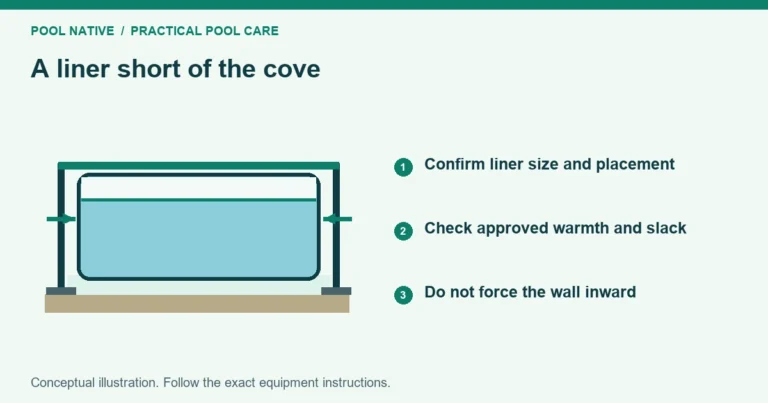
Follow the inflation and fill instructions. A support ring should not be overinflated to make it feel rigid. Air temperature changes its firmness, which is different from a water treatment issue.
Check the current recall information for the exact model, especially when buying used. Complete any required manufacturer remedy. Do not remove structural straps or alter supports as an improvised safety modification.
Plan access control before filling. Small portable pools can still pose a drowning hazard. Removing the ladder alone may not prevent a child reaching the water.
Use the home pool safety guidance to plan barriers, supervision and emergency readiness. Check local requirements for the actual pool. A debris cover is not automatically a safety cover.
Before each use
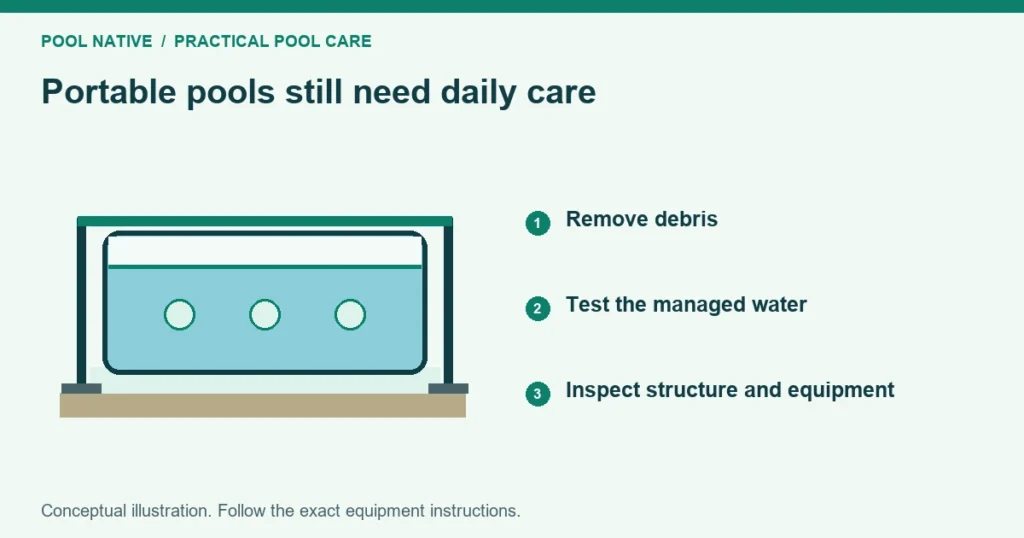
Inspect the pool’s structure, air chambers and fittings. Look for new leaks, softened supports or damaged material. A changing ring or frame needs attention before swimmers enter.
Remove visible debris with a suitable net. Check the floor for sharp objects. Do not use tools that can puncture the liner.
For a filtered pool, confirm the equipment is working and test the water as instructed. Use the water sampling and testing method to get meaningful readings. Clear appearance alone does not establish suitable swimming water.
For a small kiddie pool, use fresh water and the drain and clean routine. Do not judge retained water by smell. If daily emptying is impractical, reconsider the pool type rather than improvising long term treatment.
During use: reduce contamination and watch the water
Closely supervise children without distractions. Keep the supervising adult focused on the pool. Shallow water does not make unattended use acceptable.
Keep people with diarrhea or vomiting out. Encourage bathroom breaks and keep dirty footwear out of the water. These measures reduce contamination but do not replace the appropriate cleaning or treatment routine.
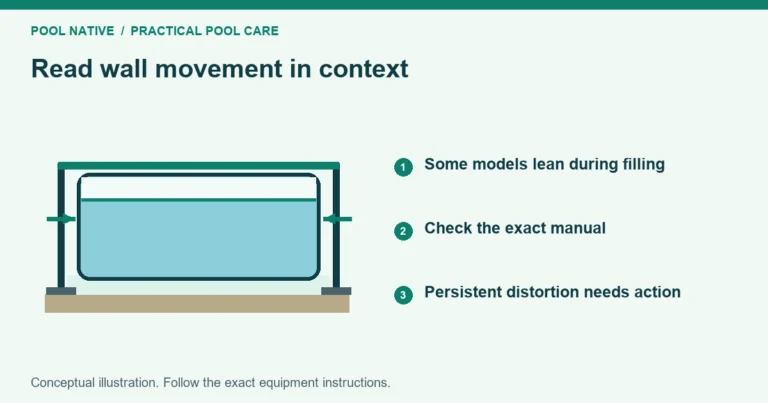
Do not let people sit or climb on a support ring or pool wall. Watch for unusual water loss or structural movement. Stop use if a ring deflates or the installation begins changing shape.
After using a small kiddie pool
Empty the water at least daily, as CDC recommends. Remove debris, rinse away dirt with fresh water and allow the pool to air dry. Keep the empty pool positioned so rain cannot create accessible standing water.
If someone poops or vomits in the water, remove swimmers and follow the CDC contamination procedure. That includes draining and cleaning, followed by the specified surface disinfection and rinsing. It is different from adding disinfectant to water for swimming.
Use the current CDC instructions for the bleach concentration, contact time and additional diarrhea precautions. Do not improvise a stronger mixture. Follow material compatibility and product label instructions as well.
Small kiddie pools are not appropriate for shared use by large groups from different households in child care or similar settings. CDC specifically advises against that arrangement. A home pool routine should not be repurposed as a public aquatic program.
After using a filtered portable pool
Continue its specified circulation and testing routine. Remove debris and clean the filter when its condition or instructions call for it. Do not assume a fixed cartridge cleaning interval suits every bather load.
Use the actual water volume when following chemical labels. Test first, then make the indicated adjustment. Never mix products or apply an unverified starter recipe.
Read how to interpret chlorine readings for a chlorine treated system. Salt chlorination also produces chlorine; it does not remove the need to test. Other systems need their own verified operating instructions.
Keep chemicals secured in their original labeled containers. Follow pool chemical storage guidance. A small pool does not make concentrated treatment products harmless.
Deal with problems by type
If the air ring repeatedly softens, use the ring air loss checks. A puncture repair and temperature related softening are different cases. Adding more air every morning can hide the actual cause.
If water becomes cloudy or the floor cannot be seen clearly, stop swimming and investigate. For small kiddie pools, return to the drain and clean routine. For larger filtered pools, restore the proper treatment and clarity before reopening.
Do not use vinegar, salt, essential oils or a cover as a substitute for the required disinfection system. A net removes visible debris, not all contamination. Cosmetic clarity is not the same as effective water care.
Finish the season according to the model
Confirm whether the pool should be dismantled or can remain assembled under specified conditions. The answer depends on the actual product and climate. Use the drying and storage checklist for a pool that is taken down.
Inspect the material and equipment before packing. Record damaged parts and model numbers. A complete storage record makes it easier to establish the right routine when the pool returns.