THE POOL NATIVE LIBRARY

Water care.

Understand test results, balance and water problems.

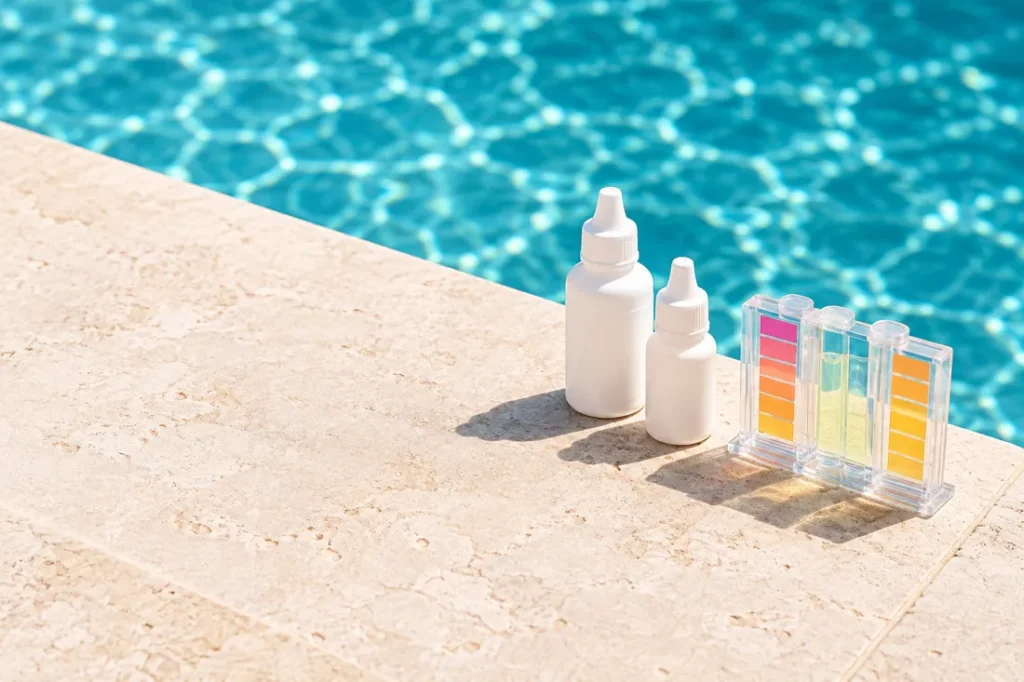
Water testing kit on limestone beside a swimming pool

From the library

73 guides to explore

Shock with a purpose. Choose the treatment, then verify.

Shocking a Pool: When, Why and How

Shocking a pool is a treatment step, not a universal cure for water that looks wrong. First identify whether you are addressing a sanitizer problem, algae, oxidation demand, or another condition. Then choose a product and procedure labeled for that purpose.

Read the guide →
Read the disappearing dot. Lighting and endpoint matter.

How to Read a Cyanuric Acid Turbidity Test

A cyanuric acid turbidity test measures how much cloudiness develops after the sample reacts with its reagent. In a common black dot test, you add reacted sample until the dot just disappears, then read the marked scale. The correct endpoint matters more than trying to report an impressively precise number.

Read the guide →
Ready to swim again?. The label and readings decide.

How Long After Shocking Can You Swim?

You can swim after shocking only when the product’s reentry instructions and the required water conditions are satisfied. A fixed wait such as eight hours is not reliable for every product or pool. Measure the water rather than deciding from the clock alone.

Read the guide →
Trace the cloudiness. Tests, treatments and filtration.

Cloudy Pool Water: Diagnose the Cause

Cloudy pool water is a symptom, not a diagnosis. Suspended dirt, inadequate sanitation, calcium precipitation, or poor filtration can all make water hazy. The fastest useful response is to check the timing, water tests, and circulation before adding a clarifier.

Read the guide →
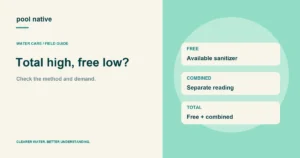
Understand chlorine. Read sanitizer in context.

Pool Chlorine: Interpret the Readings

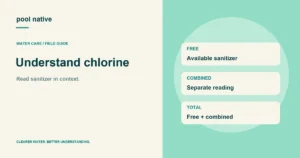
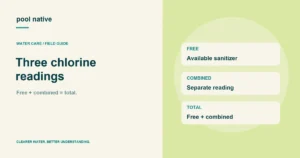
A pool chlorine reading only becomes useful when you know which chlorine was measured and what operating requirement applies. Free chlorine is the available residual used for routine sanitation decisions. Total chlorine includes free and combined chlorine, so the two numbers are not interchangeable.

Read the guide →
Pollen or mustard algae?. Use several clues together.

Mustard Algae or Pollen in the Pool?

Yellow pool deposits can be mustard algae, pollen, or ordinary sediment. A puff of dust when brushed does not distinguish them reliably. Use the timing, location, recurrence, surrounding environment, and water tests together before choosing a treatment.

Read the guide →

LESS GUESSWORK. MORE POOL TIME.

Let’s do the numbers.